Wood glue is essential for creating strong, reliable joints in furniture, woodworking and industrial wood products. Choosing the right adhesive affects bond strength, production speed and the quality of the finished product. This guide explains how to select wood glue for different materials, processes and service conditions, including TECHBOND water-based and hot-melt adhesive solutions.
Nội dung bài viết
What is wood glue?
Wood glue is a group of adhesives designed to bond natural wood, plywood, MDF, HDF, veneer and other wood-based surfaces. Bond performance depends on the wood species, moisture content, surface condition, pressure and curing time. For this reason, adhesive selection should not be based only on viscosity or fast drying.
Why choosing the right wood glue matters
Bond strength and durability
A suitable adhesive helps the joint withstand tensile and shear forces, natural movement in wood and everyday use. The wrong adhesive or poor application can lead to peeling, cracking or delamination.
Compatibility with different materials
Softwood, hardwood, veneer, plywood, MDF and other engineered boards have different porosity, moisture levels and surface energy. Wood containing natural oil or resin can also be more difficult to bond. Always test the adhesive on the actual material before production.
Production efficiency
Open time, pressing time and setting speed directly influence output. Water-based adhesives are suitable for processes that allow pressing and curing time, while hot-melt adhesives are useful for high-speed lines that require rapid bonding.
Safety and environmental considerations
Water-based or low-VOC adhesive options may help improve working conditions and support sustainability targets. Safety data, application limits and handling requirements must be checked in the technical documentation for each product.
TECHBOND water-based wood glue
Water-based adhesives are commonly polymer emulsions such as PVA, VAE or other specialist polymer systems. They form a bond as water evaporates and the polymer film develops, making them suitable for many porous wood surfaces and pressing operations.
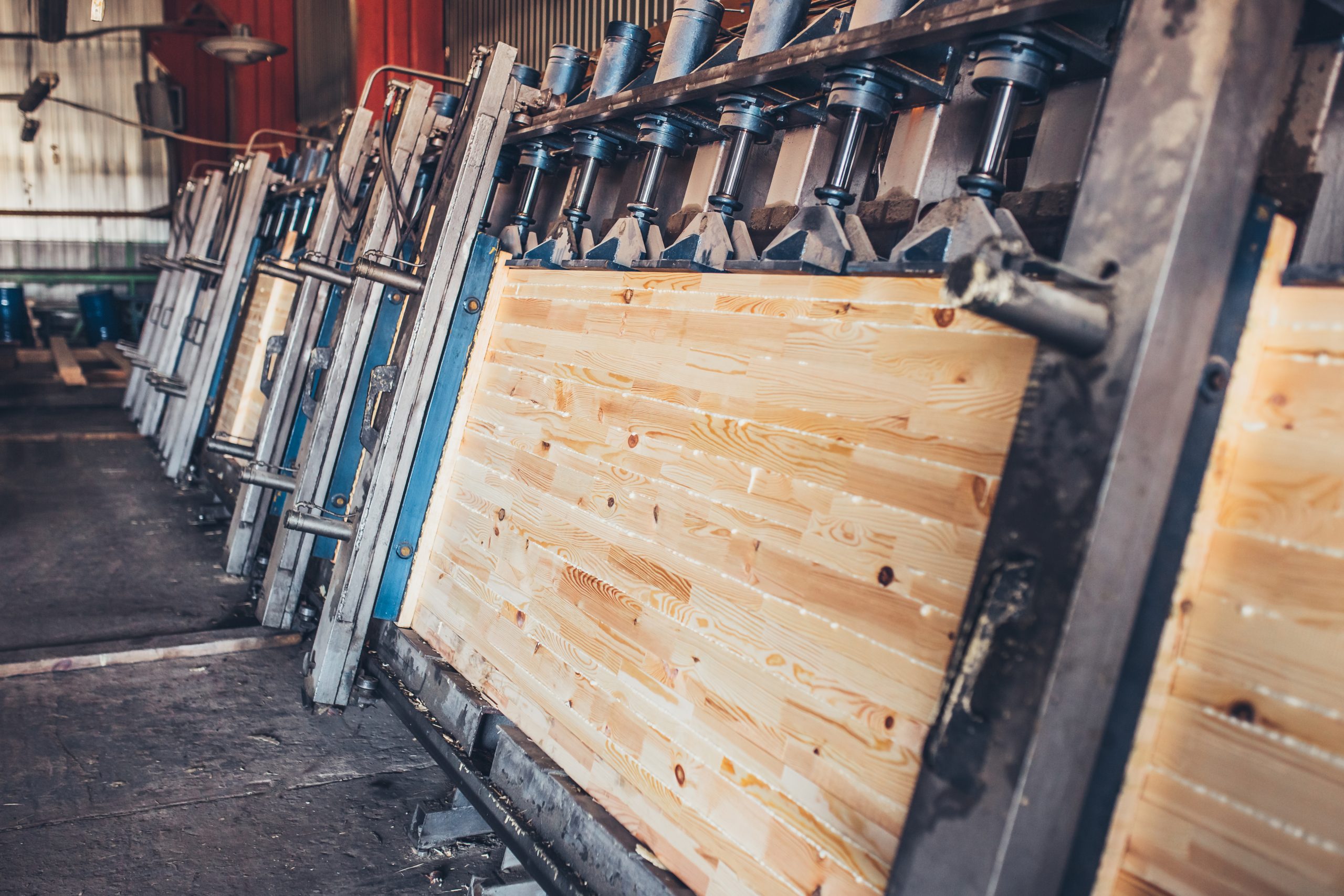
- Suitable for many softwoods, hardwoods and engineered wood boards.
- Can be considered for cold pressing, hot pressing and selected high-frequency pressing processes.
- Available grades may address D2, D3 or D4 requirements, subject to the product specification and applicable standard.
- Used for wood joining, finger joints, veneer bonding and furniture production.
For products exposed to humidity or outdoor conditions, select the appropriate moisture-resistance class and confirm the requirements against the product TDS and certification.
Hot-melt adhesive for high-speed woodworking
Hot-melt adhesive is solid at room temperature and is heated before application. It forms a bond as it cools, without waiting for water evaporation in the same way as a water-based adhesive.

- Edge banding for wood panels and faced boards.
- Profile wrapping, laminate bonding and applications requiring fast setting.
- Continuous production lines that need to reduce waiting time and increase output.
TECHBOND develops EVA, PO and PUR hot-melt adhesive solutions for different materials and processes. Selection should consider the substrate, equipment temperature, line speed, open time and required heat or moisture resistance.
How to choose the right wood glue
1. Identify the material and surface condition
Check the wood species, moisture content, flatness, coating and the presence of dust, oil or resin. Clean, dry and well-prepared surfaces generally provide more stable bonding.
2. Match the adhesive to the equipment and production speed
If the process includes pressing and a curing period, a water-based adhesive may be suitable. If the line requires rapid bonding for edge banding or profile wrapping, hot-melt adhesive may be more appropriate.
3. Define moisture-resistance requirements
Indoor furniture has different requirements from doors, flooring, kitchen products or outdoor components. D3 or D4 should not be interpreted as absolute waterproofing; check the applicable standard, test conditions and technical documentation.
4. Evaluate total operating cost
Consider adhesive consumption, line speed, defect rate, cleaning time, energy and equipment costs—not only the purchase price. A higher-priced adhesive may reduce total cost if it lowers defects and improves productivity.
5. Test before mass production
Run trials using the actual wood, moisture level, equipment and pressing conditions. Check joint strength, open time, pressing time, appearance and moisture resistance whenever the material or process changes.
Application checklist
- Clean the surfaces and ensure good contact.
- Apply a uniform amount according to the recommended spread rate.
- Control pressure, temperature, open time and pressing time according to the TDS.
- For hot-melt adhesive, control tank temperature, application rate and line speed.
- Inspect the joint and repeat testing when materials or adhesive grades change.
- Store the adhesive within the temperature, shelf-life and handling conditions specified by the manufacturer.
Why work with TECHBOND?
TECHBOND develops industrial adhesive solutions for woodworking, furniture, packaging, automotive and technical applications. Our technical team can review the substrate, equipment and production process to help identify a suitable adhesive approach.
When selecting wood glue, provide the material type, line speed, equipment, pressing conditions and end-use requirements. Contact TECHBOND to discuss your application and receive technical guidance.
Summary
The right wood glue depends on the wood, surface preparation, production speed, equipment, moisture exposure and finished-product requirements. Water-based adhesives suit many joining and pressing processes, while hot-melt adhesives support applications that require fast bonding. Test the complete process before full-scale production.

Need advice on the right industrial adhesive?
Share your materials, application and production process. TECHBOND will help recommend a suitable solution.
Request a consultation