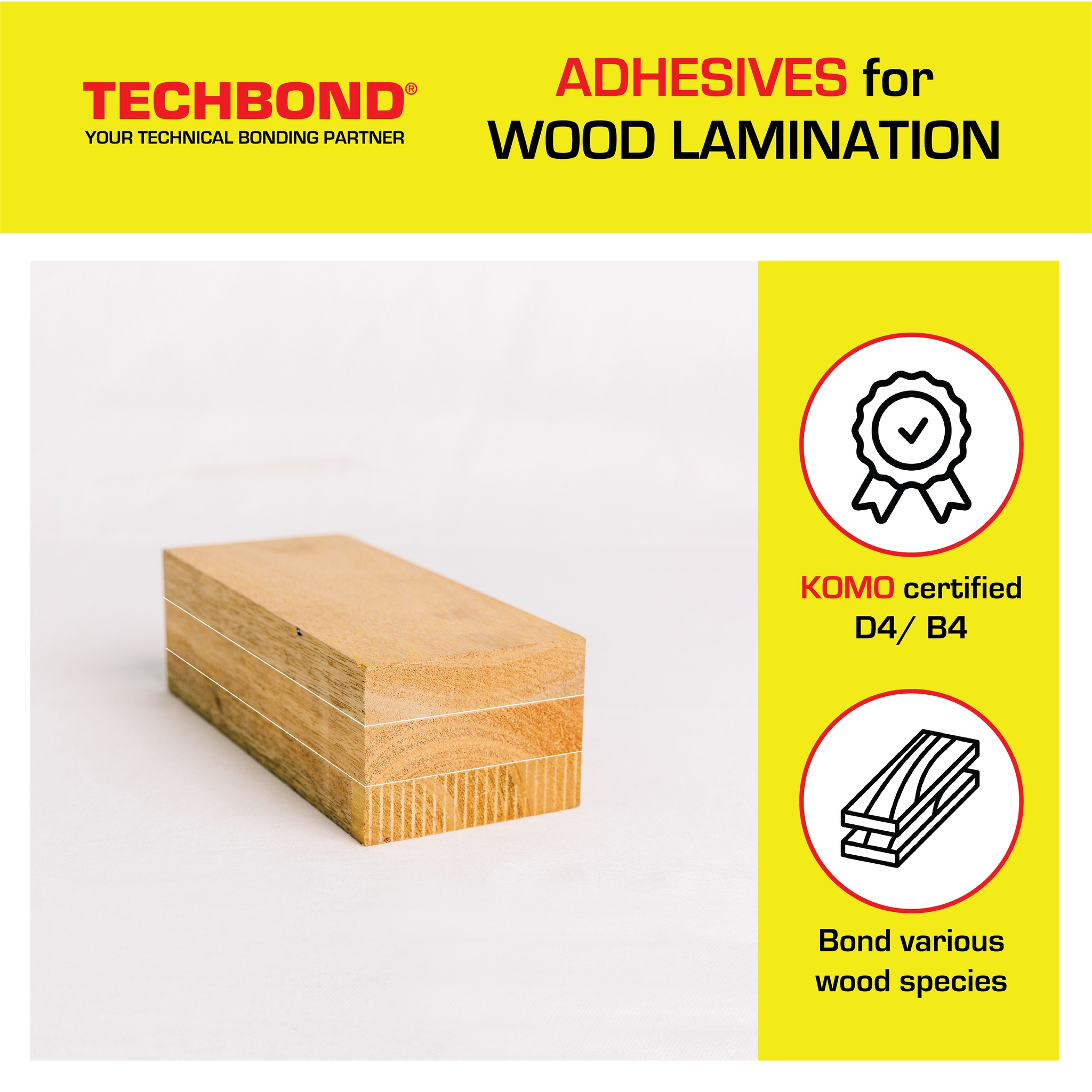
Two-component wood adhesive consists of separate A and B components that are mixed before application. This system provides strong bonding, water resistance, heat resistance and reliable load-bearing performance for demanding wood assembly processes.
Nội dung bài viết
What is two-component wood adhesive?
Component A is combined with component B at a specified ratio to initiate curing. The mixed adhesive forms a durable bond between wood surfaces and can be used for furniture, panels, finger-jointing and other industrial wood applications. Correct mixing is essential because an incorrect ratio may reduce strength and shorten service life.

Main advantages
- Strong adhesion for a wide range of wood materials.
- Good resistance to moisture, heat and mechanical stress.
- Suitable for industrial production when working time and pressing conditions are controlled.
- Stable bonding performance after full curing.
Application process
Prepare clean, dry and properly fitted surfaces. Measure components A and B accurately, mix them thoroughly, apply an even adhesive layer and assemble the parts within the recommended open time. Maintain suitable pressure during pressing and allow sufficient curing time before machining or loading the bonded parts.

Important considerations
Before production, test the adhesive with the actual wood species, moisture level, surface condition and equipment. Follow the product technical guidance for mixing ratio, temperature, working time and curing. TECHBOND can provide product selection support for specific wood bonding requirements.
Mixing and preparation
Before use, bring both components to the recommended working temperature and check the wood surfaces. The material should be clean, dry and free from dust, oil, loose fibers and old coatings. Measure component A and component B accurately according to the technical guidance. Mix until the color and consistency are uniform.
Apply the adhesive evenly to the prepared surfaces. Assemble the parts within the recommended open time, maintain even pressure during pressing and allow sufficient curing before machining or loading the bonded parts.
Performance and quality control
Record the mixing ratio, batch number, ambient temperature, wood moisture, pressing pressure and curing time. Test the adhesive on the actual wood species and surface condition. Check the bond after initial setting and again after full curing, especially when the finished product will face moisture, heat or mechanical stress.
Safety and storage
Store both components in their original, sealed containers and follow the recommended storage temperature and shelf life. Operators should use suitable protective equipment and work in a well-ventilated area.

TECHBOND Vietnam is a leading manufacturer of industrial adhesives in Vietnam. We specialize in providing a wide range of flexibly customized adhesive products to meet the diverse requirements of our customers.
Need advice on the right industrial adhesive?
Share your materials, application and production process. TECHBOND will help recommend a suitable solution.
Request a consultation