
Industrial wood adhesives are used to bond wood and engineered-wood components in furniture manufacturing. The appropriate adhesive must provide the required joint strength and finished appearance for the material and production process. This guide explains the main adhesive families, typical applications and factors that affect pricing.
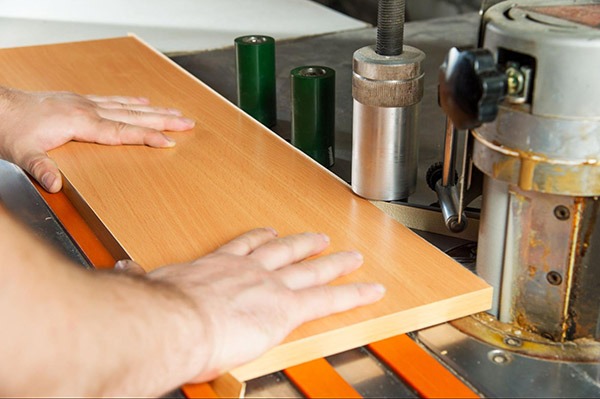
Selecting a wood adhesive requires attention to bond strength and the finished appearance.
Nội dung bài viết
1. What is industrial wood adhesive?
Industrial wood adhesive is a bonding material selected for solid wood or engineered-wood products, including furniture components and panels. Its suitability depends on the substrates, surface preparation, application method, pressing conditions and service environment. An adhesive joint can support a clean appearance, but it does not automatically replace mechanical fastening in every design.
2. Adhesive types used for engineered wood panels
Panel manufacturing may use several resin systems. Examples discussed in the Vietnamese article include:
- Phenolic resin adhesives: used in selected plywood and panel applications where water resistance and durability are required. Actual performance depends on the formulation, substrate and pressing process.
- Melamine-based resin adhesives: used in some moisture-resistant panel and furniture applications. The required grade should be checked against the panel specification.
- UF (urea-formaldehyde) resin adhesives: used in certain plywood, particleboard and MDF manufacturing processes. Emission classification and finished-panel compliance must be verified for the applicable product and market; an adhesive type alone does not establish an E0, E1 or E2 rating.
3. How are engineered-wood adhesives formulated?
Formulations differ by adhesive technology. Depending on the system, they may contain a bonding resin or polymer, additives that influence flexibility and processing, and a hardener or curing component. Fillers or other additives may help control application properties. Increasing any one ingredient does not necessarily improve bond strength; use the product technical data sheet and production trials to confirm performance.
- Bonding resin or polymer: forms the adhesive bond.
- Flexibility and processing additives: may adjust handling, film formation or cured-joint properties.
- Hardener or curing component: used where the adhesive system requires a chemical cure.
- Other additives: selected for the specific process and product specification.
Related guide: veneer adhesives and their applications.
4. Common adhesives for wood-processing applications
The following adhesive families serve different bonding and production requirements. Select a product by application rather than treating these systems as interchangeable.
4.1. PVA white glue for wood
PVA or PVAc white glue is a water-based adhesive whose main polymer is polyvinyl acetate. It is commonly supplied as a milky liquid and may be used for suitable wood assembly and panel-joint applications. Drying time and final resistance depend on the formulation, applied amount, substrate and process conditions.
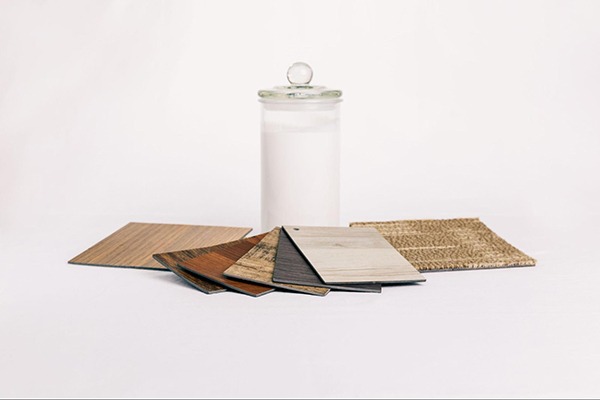
PVA white glue can provide reliable bonds when the formulation and process suit the wood substrate.
4.2. Two-component AB adhesive
A two-component AB system typically combines an epoxy resin (part A) with a hardener (part B) at the specified mixing ratio. It may be chosen for selected bonds requiring particular strength or resistance properties. Confirm compatibility, working time and curing conditions for the exact product. See TECHBOND’s two-part AB adhesive guide.
4.3. EVA hot-melt adhesive
EVA-based hot-melt adhesives are used in selected furniture and panel-processing steps, including applications that benefit from fast setting after cooling. Bond quality, appearance and resistance vary by grade and operating conditions; they should not be assumed to be waterproof for every application.
4.4. PUR adhesive for edge banding
Reactive polyurethane (PUR) hot-melt adhesive is used in some edge-banding processes where strong bonds and moisture resistance are required. It can be relevant for components exposed to humidity, such as kitchen or bathroom furniture, when the selected product and process meet the finished-product specification.
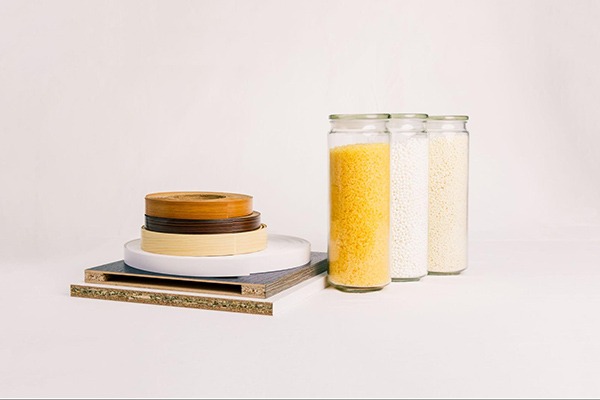
PUR adhesive is an option for wood edge banding where moisture resistance is required.
5. What affects industrial wood adhesive pricing?
The price depends on the adhesive technology and grade, pack size, order volume, technical requirements and production application. The Vietnamese source mentions a historical range of VND 58,000–130,000 per kilogram; this is not a current quotation and should not be used as a purchasing price. Contact TECHBOND with the substrate, bonding process and expected volume for an up-to-date product recommendation and quote.
6. Contact TECHBOND for industrial wood adhesives
TECHBOND MFG (Vietnam) supplies industrial adhesive solutions for wood-processing applications. Share the wood or panel type, application method, equipment and required bond performance so the technical team can recommend a suitable product and trial conditions. Final performance should be checked against the product’s current technical data and representative production samples.
- Website: TECHBOND Vietnam
- Hotline: +84 866 15 37 68
- Email: info@techbond.com.vn
For an application assessment, visit the English contact page. You can also explore TECHBOND’s woodworking adhesive solutions.

TECHBOND Vietnam is a leading manufacturer of industrial adhesives in Vietnam. We specialize in providing a wide range of flexibly customized adhesive products to meet the diverse requirements of our customers.
Need advice on the right industrial adhesive?
Share your materials, application and production process. TECHBOND will help recommend a suitable solution.
Request a consultation







