
Hot melt spray adhesive for mattress manufacturing is one way to bond foam, fabric and other layers in a controlled production line. The right adhesive and spray pattern help keep components in position while preserving the feel of the mattress. Selection must follow the actual material combination, end use and relevant product requirements. This guide explains where the method fits and what to test before scaling it.
Hot melt adhesive spray in mattress production.
Nội dung bài viết
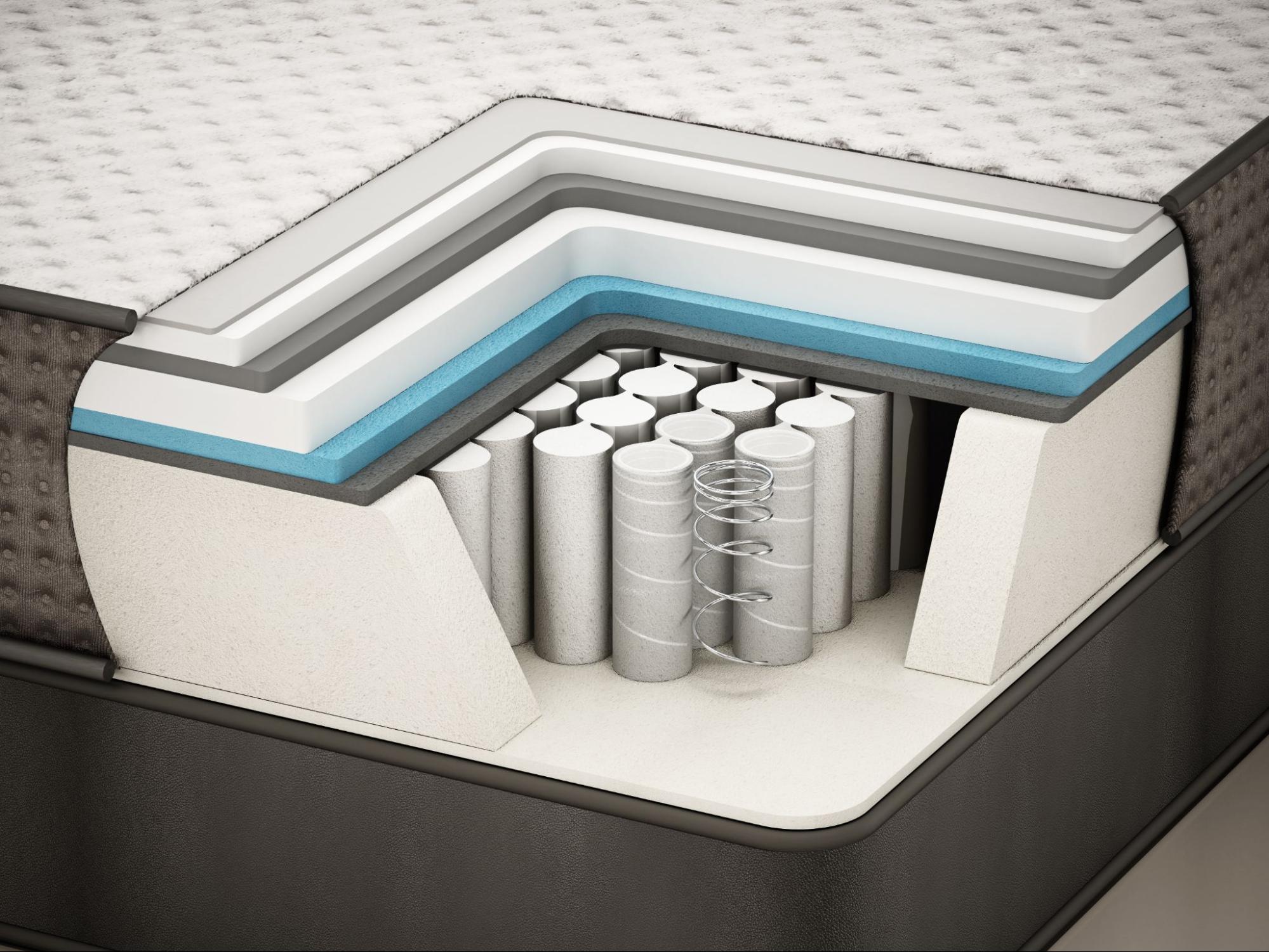
Mattress layers and adhesive requirements
A mattress may combine springs, foam, memory foam, nonwoven fabric, upholstery and other materials. Different constructions require different bonds. Spring mattresses, foam mattresses, latex designs and hybrid mattresses should each be evaluated with their exact components. A bond that works on polyurethane foam, for example, may perform differently on latex or a coated fabric. For background on a common foam polymer, see polyurethane.
- Spring mattresses: Spring units, foam comfort layers and nonwoven or textile layers may need controlled positioning during assembly.
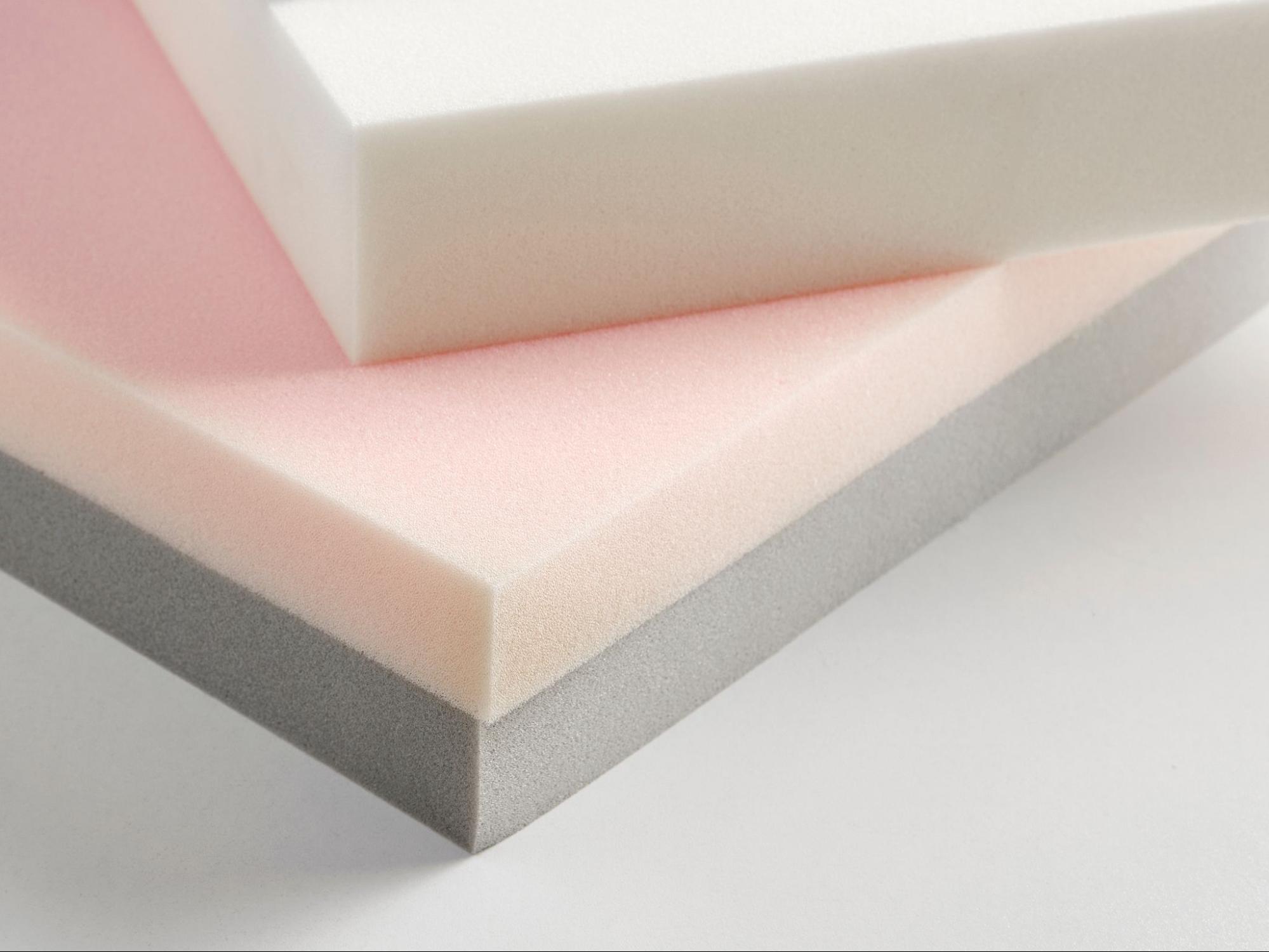
- Foam mattresses: Multiple foam grades or memory foam layers may be laminated together.
- Latex mattresses: Natural or synthetic latex must be tested with a compatible adhesive and spray method.
- Hybrid mattresses: Spring and foam elements create several distinct bond interfaces.
What a mattress adhesive must deliver
Hot melt spray adhesive for mattress manufacturing should provide sufficient adhesion without creating hard spots or excessive stiffness. Check flexibility under repeated compression, bond performance after storage, heat and humidity exposure, odor and any applicable emissions or material requirements for the finished mattress. These qualities vary by grade; obtain the exact technical documentation and run finished product tests.
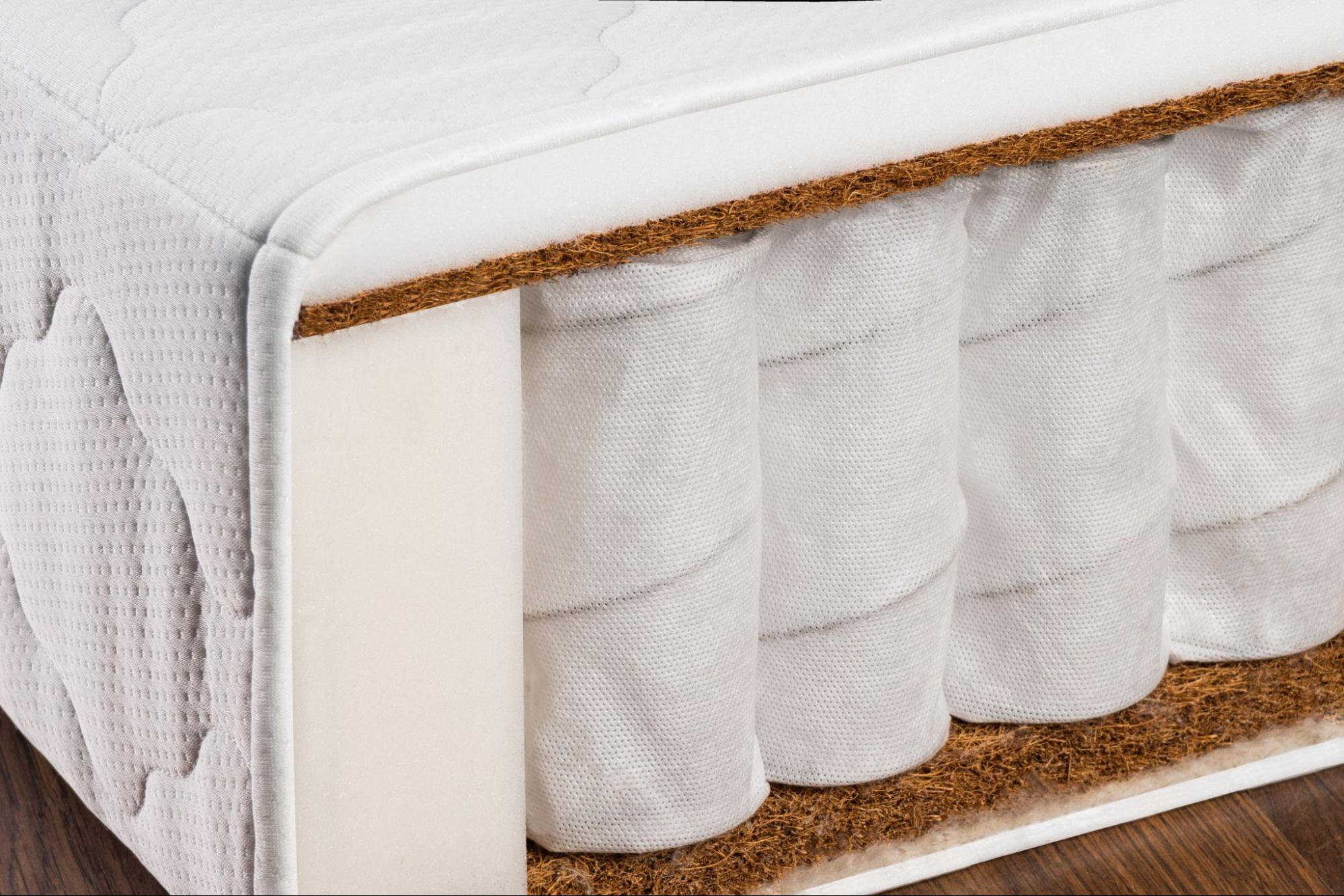
Each mattress layer needs a bond suited to its material and movement.
Potential benefits of hot melt spray bonding
Controlled, flexible assembly
For hot melt spray adhesive for mattress manufacturing, spraying can place fine adhesive strands or a specified pattern across the target area. A compatible grade may hold layers in place while allowing the finished mattress to flex. Validate comfort and repeated compression performance; application pattern and coat weight matter as much as the adhesive name.
Production speed
Hot melt systems can support fast assembly when the adhesive’s open time, material handling and line speed are matched. Production gains depend on the equipment and defect rate. Compare actual throughput and bond quality with the existing process before estimating savings.
Precise adhesive use
An automated applicator can control placement and amount more consistently than an uncontrolled manual process. This can help reduce overapplication, but only if nozzles are clean, pressure and temperature are stable, and the pattern is checked regularly.
Suitability for the finished product
Some hot melt grades do not rely on solvent evaporation during application, but suitability for a mattress cannot be assumed from that feature alone. Review the adhesive’s safety data, odor, emissions information and applicable finished product standards for the market. Check performance under expected heat and humidity.
A controlled spray pattern can reduce waste and improve repeatability.
Where the adhesive is applied
- Foam to foam: Spray a controlled pattern, assemble within the open time and apply the required pressure without crushing the foam.
- Spring assembly layers: Secure suitable padding or fabric to components as specified by the mattress design; avoid unintended adhesive on moving parts.
- Upholstery and cover layers: Check bond strength, hand feel and appearance on the actual textile and inner layer.
Compare EVA hot melt adhesives with polyolefin hot melt adhesives as starting points. Grade selection must be based on your foam, fabric and service conditions. Our hot melt adhesive overview explains the broader technology.
Why use automated hot melt spraying?
In a hot melt spray adhesive for mattress manufacturing line, automated spraying can apply a repeatable pattern to large foam and fabric surfaces. It may improve process consistency and material control across multiple mattress types. However, a machine does not guarantee a strong joint: nozzle condition, adhesive temperature, spray distance, coat weight, open time and compression should be documented and checked.

A simple production trial
- List every material pair and the required bond and comfort properties.
- Choose a grade and settings from the supplier’s technical data sheet.
- Spray representative samples on the actual equipment and record coat weight and pattern.
- Assemble within the stated open time and test after the specified conditioning period.
- Check bond integrity, flexibility, odor and appearance before approving the process.
For hot melt spray adhesive for mattress manufacturing, TECHBOND can review your materials and line setup and help identify grades to evaluate. A documented trial on the finished mattress is the basis for final approval.
TECHBOND MFG (VIETNAM) CO., LTD.
Address: No. 18, Street 23, VSIP II-A Industrial Park, Vinh Tan Ward, Tan Uyen City, Binh Duong Province, Vietnam
Sales hotline: +84 866 15 37 68
Email: info@techbond.com.vn

TECHBOND Vietnam is a leading manufacturer of industrial adhesives in Vietnam. We specialize in providing a wide range of flexibly customized adhesive products to meet the diverse requirements of our customers.
Need advice on the right industrial adhesive?
Share your materials, application and production process. TECHBOND will help recommend a suitable solution.
Request a consultation







