
The right glass bottle label adhesive keeps labels looking clean and attached from the labeling line through storage and use. Beer, wine, beverage, fragrance and other glass bottles can face very different conditions. This guide compares water-based and hot melt options and explains what to test before selecting an adhesive.
Nội dung bài viết
Why glass bottle labels need a suitable adhesive
A bottle label carries product information and helps customers recognize the brand. Its appearance depends on a reliable bond between the label and the glass. A poor match can lead to curling edges, blisters, sliding or complete detachment, especially when bottles become wet or cold. The adhesive must work with the bottle finish, label stock, application equipment and expected distribution conditions.
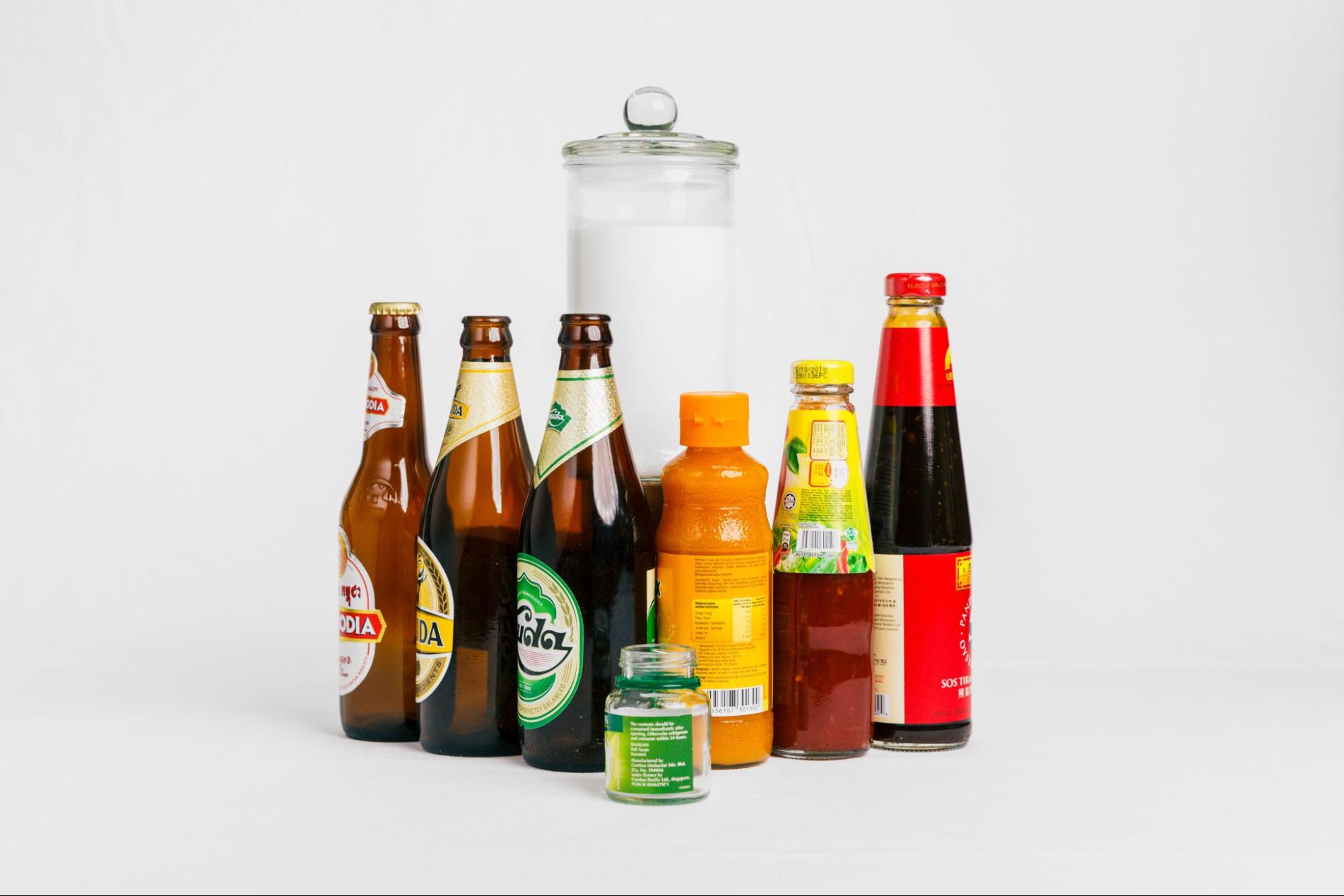
Labels communicate product information and support brand presentation on glass bottles.
Check the entire packaging system rather than the adhesive alone. Wet or dusty glass, condensation, textured surfaces, different paper coatings and changes in line speed can all alter the result. When bottles contain food or beverages, review the applicable packaging requirements for the complete construction and intended market.
Common adhesive options for glass bottle labeling
Water-based labeling adhesives
Water-based products can suit paper labels and appropriate bottle-labeling equipment. Their properties vary by formulation: drying time, wet tack, water resistance and wash-off behavior should be matched to the use. A returnable beer bottle may need a label that stays in place during sale but can be removed in a specified washing process. A single adhesive cannot be assumed to meet both goals without testing.
- Application: assess viscosity, coating amount and compatibility with the labeling machine.
- Performance: test adhesion on the actual glass and label stock after drying and under expected cold or wet conditions.
- Removal: where bottles are reused, verify wash-off behavior against the customer’s cleaning process.

Water-based adhesives are one option for bottle-labeling lines.
Hot melt labeling adhesives
Hot melt adhesives are applied in a heated state and set as they cool. They can support fast labeling operations when the grade and equipment are matched. TECHBOND describes a synthetic-rubber-based hot melt option for labels on PET and glass bottles in the Vietnamese source article. Properties such as tack, flow, heat stability and water resistance depend on the exact grade and should be confirmed in a line trial. See the English overview of hot melt adhesive and its advantages.
- Bond formation: check wetting of the label and glass at the chosen application temperature.
- Production speed: match open time and set time to the machine’s operating window.
- Service conditions: check labeled bottles after refrigeration, condensation and handling.
- Maintenance: monitor heating, coating and cleaning to avoid inconsistent application.
The source article refers to US food-contact adhesive provisions. Such statements must be checked against documentation for the specific adhesive grade, the full package design and the intended regulatory market. A reference to a regulation does not by itself certify every product or use.
How to choose a glass bottle label adhesive
Start with the bottle and label
Identify whether the glass is smooth, coated, embossed or textured. Confirm the label material, surface coating, size and wrap geometry. An adhesive that works with one paper label may behave differently with metallized or film labels. Run trials on the exact bottle and label combination rather than a generic sample.
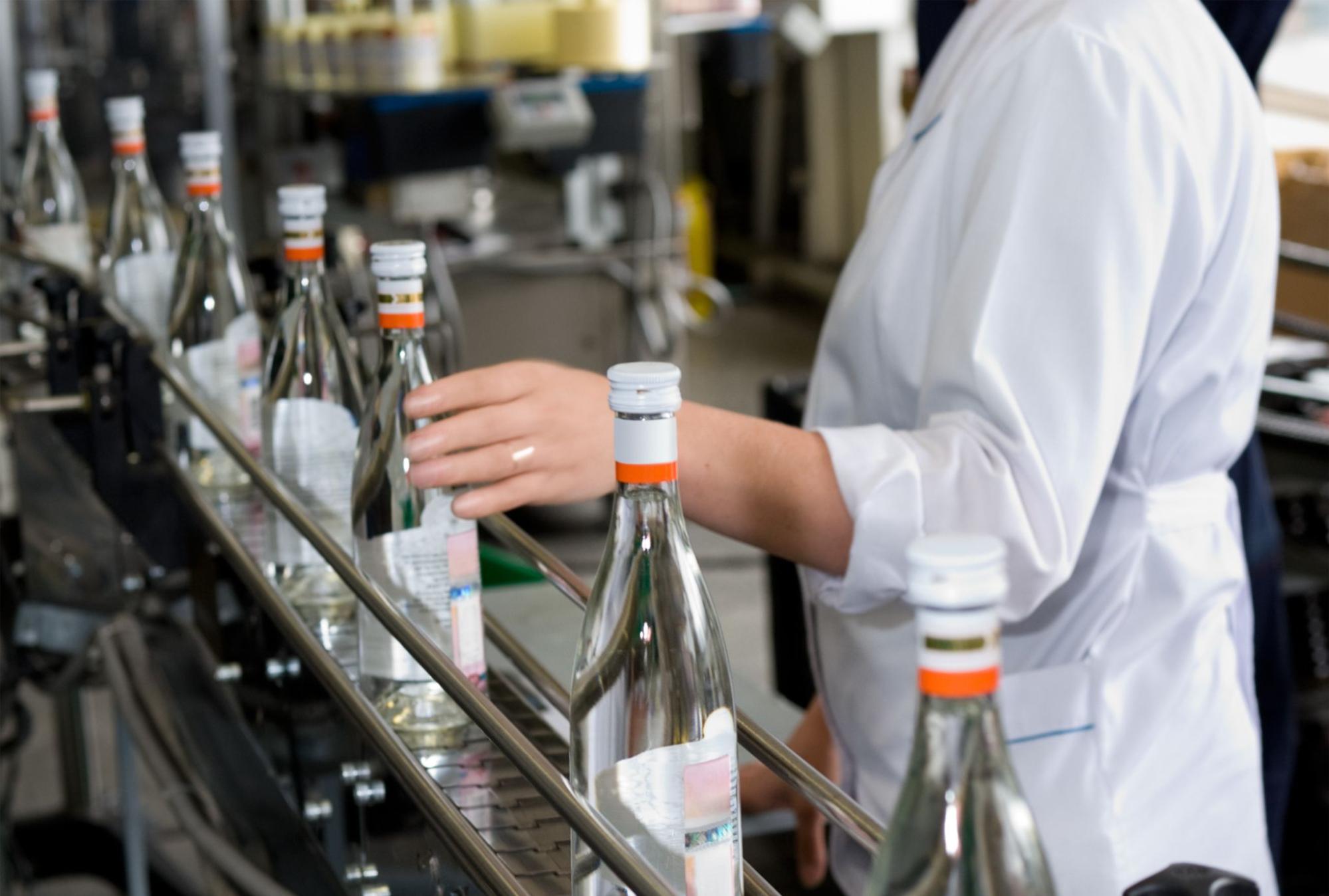
Glass finish, label material and storage conditions all affect adhesive selection.
Define storage and handling conditions
Beverage bottles may be chilled, placed in ice or exposed to condensation. Cosmetics and other products may have different temperature or handling requirements. Decide whether the label must resist water, release during bottle washing, or remain attached over a long shelf life. Test both dry and wet conditions where they are relevant.
Check the production process and total cost
Machine speed, glue application method, cleaning schedule and expected waste affect the practical cost of labeling. Compare options by the finished bottle quality and production reliability, not only adhesive price per kilogram. The broader industrial adhesives guide can help explain the differences among common technologies.
Discuss a labeling trial with TECHBOND
TECHBOND supplies industrial adhesive solutions and can help evaluate a glass bottle label adhesive against the customer’s bottle, label and equipment. Share target line speed, application temperature or drying process, exposure to water or refrigeration, and any packaging documentation required. A trial should establish the operating window and confirm label appearance and adhesion before wider production. The selected glass bottle label adhesive should then be checked against routine production samples.
TECHBOND MFG (Vietnam) Co., Ltd.
- Address: No. 18 VSIP II-A, Street 23, Vietnam–Singapore Industrial Park II-A, Vinh Tan Ward, Tan Uyen, Binh Duong, Vietnam
- Sales hotline: 0866 15 37 68
- Email: info@techbond.com.vn

TECHBOND Vietnam is a leading manufacturer of industrial adhesives in Vietnam. We specialize in providing a wide range of flexibly customized adhesive products to meet the diverse requirements of our customers.
Need advice on the right industrial adhesive?
Share your materials, application and production process. TECHBOND will help recommend a suitable solution.
Request a consultation







