
MDF edge banding adhesive bonds a protective strip to the exposed edge of a board and helps give finished furniture a clean, durable appearance. This guide explains the main adhesive options, their strengths and the practical checks to make before production. TECHBOND can help manufacturers match an adhesive to their board, edge material and equipment.
Nội dung bài viết
What is MDF edge banding adhesive?
Edge banding adhesive secures veneer, ABS, PVC or another edge strip to an MDF panel. A consistent bond helps protect the exposed core against everyday moisture and handling while creating a neat transition between the panel face and edge. Bond quality also depends on panel preparation, adhesive application, pressure and machine settings.

Edge banding adhesive helps finish and protect MDF furniture components.
Selecting the right formulation matters because production speed, heat exposure, humidity and the edge material can all affect the finished joint. An adhesive suited to one line may be unsuitable for another.
Common adhesive types for MDF edge banding
Three adhesive families are commonly considered for MDF edges. Compare them against the performance required by the finished product and the application method available in your factory.
EVA and polyolefin hot melt
Granular hot melt adhesive is melted in an edge banding machine and sets as it cools. EVA and polyolefin grades support fast, repeatable production. Formulations vary in open time, heat resistance and bond strength, so check the supplier’s operating range and test the result on the actual board and edge strip. For moisture-sensitive applications, confirm the grade’s resistance rather than assuming every hot melt performs equally.
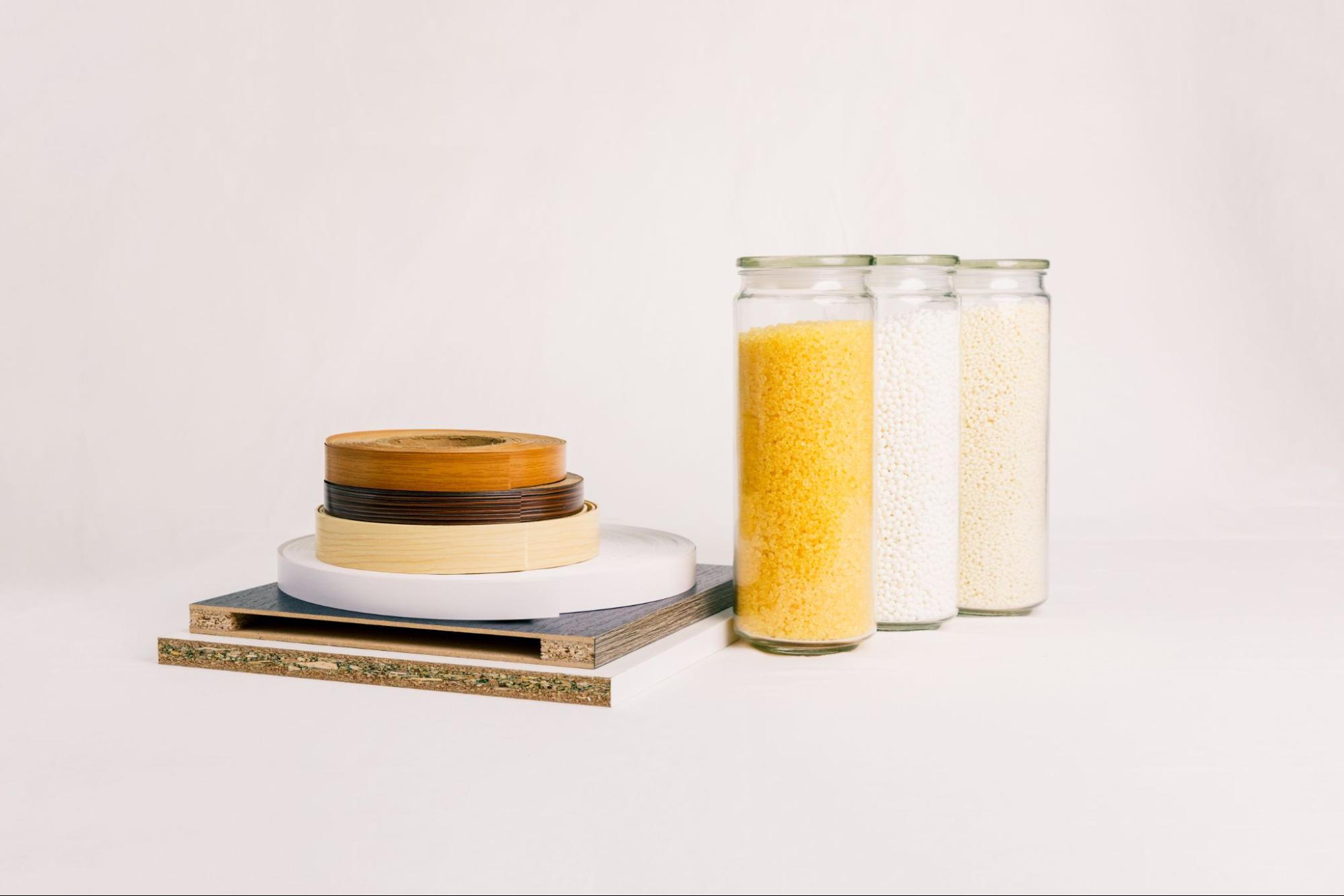
Granular hot melt becomes fluid in the machine and sets after application.
Reactive PUR hot melt
Reactive polyurethane (PUR) hot melt develops a durable bond after application and moisture curing. It is often considered when a thin glue line and stronger resistance to heat or moisture are required. It generally costs more and needs appropriate handling, cleaning and storage procedures. Follow the specific product technical data sheet for temperatures, open time and curing conditions.
Water-based PVA adhesive
PVA, often called white glue, may suit manual work or small-scale applications with compatible, prepared substrates. Its equipment needs and setting behavior differ from hot melt. Verify the required pressure, drying time and service conditions before using it for an edge banding job.
Why edge bond quality matters
A well-bonded edge supports the appearance of MDF furniture and helps reduce edge lifting during normal use. It also limits direct exposure of the board core at the edge. Adhesive alone cannot make an MDF panel waterproof: the board, edge strip, joint design and intended environment all matter.
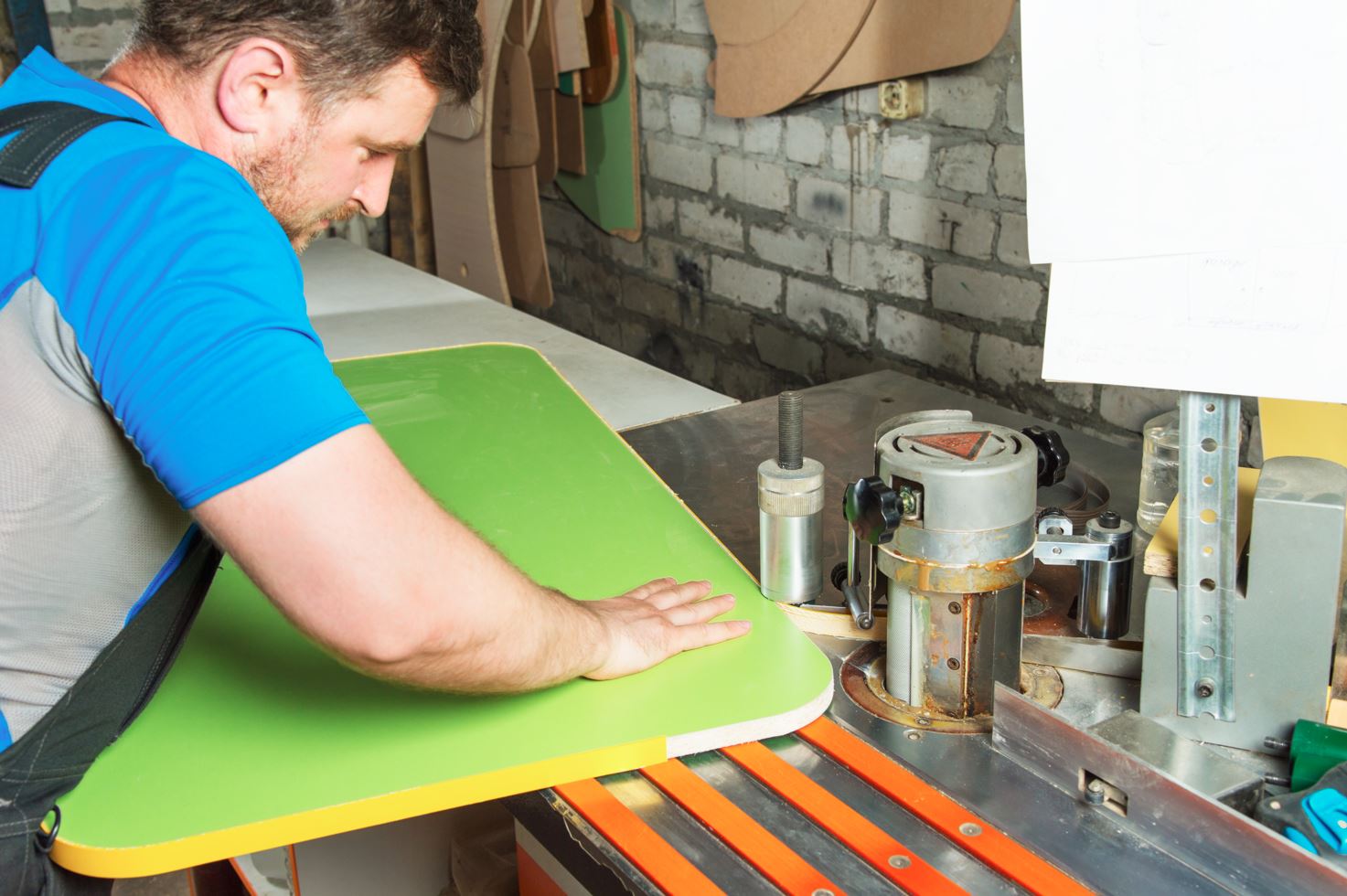
A clean, secure edge contributes to the finished panel’s appearance and durability.
For more on related bonding options, see TECHBOND’s guide to industrial wood adhesives. If the glue line is failing, review these edge banding hot melt problems and solutions.
How to choose and use MDF edge banding adhesive
Check the recommended application temperature
- Use the temperature range stated for the exact adhesive grade and equipment. Edge banding hot melts can have different recommended settings; a single range does not fit every product.
- Allow the adhesive to reach its specified working condition and monitor temperature at the point of application.
- Excessive or insufficient heat can change flow and wetting, leading to inconsistent bonds.
Match the glue line color
Choose a glue line color that suits the MDF face and edge strip, especially on visible premium furniture. A close match can make the joint less conspicuous. Evaluate color under the lighting in which the finished product will be used.
Control the full process
- Confirm compatibility with the MDF grade and the veneer, ABS or PVC edge material.
- Clean dust and contamination from the bonding surfaces.
- Set feed speed, adhesive quantity and pressure according to the product and machine guidance.
- Test finished samples after cooling or curing, including the conditions expected in service.
- For humid kitchens, bathrooms or other demanding areas, select the board, edge system and adhesive as a complete solution.
The best MDF edge banding adhesive is the one that meets your production requirements and the finished furniture’s service conditions. Contact TECHBOND for advice on suitable grades and application settings.
TECHBOND MFG (VIETNAM) CO., LTD.
- Address: No. 18 VSIP II-A, Street 23, Vietnam–Singapore Industrial Park II-A, Vinh Tan Ward, Tan Uyen City, Binh Duong Province, Vietnam
- Hotline: 0866 15 37 68
- Email: info@techbond.com.vn

TECHBOND Vietnam is a leading manufacturer of industrial adhesives in Vietnam. We specialize in providing a wide range of flexibly customized adhesive products to meet the diverse requirements of our customers.
Need advice on the right industrial adhesive?
Share your materials, application and production process. TECHBOND will help recommend a suitable solution.
Request a consultation







