
Preventing hot melt adhesive nozzle clogs helps a packaging or assembly line maintain a consistent glue pattern and avoid avoidable stoppages. A blocked nozzle may result from charred adhesive, contamination, unsuitable temperature or a worn applicator. These five practical checks help operators identify the cause and maintain reliable application.
Nội dung bài viết
Why do hot melt adhesive nozzles clog?
A hot melt adhesive nozzle has a small opening, so even a modest amount of residue can disrupt the flow. The specific opening size depends on the applicator and glue pattern; use the equipment manufacturer’s specification rather than a single assumed diameter. Common causes include:
- Adhesive char: prolonged exposure to excessive heat can degrade a hot melt and form particles that collect in the filter or nozzle.
- Cooled or hardened adhesive: material may stop flowing if the tank, hose or nozzle is below the grade’s specified working temperature.
- Foreign particles: dust, carton fibers, degraded adhesive and other debris can enter the melt system during filling or maintenance.
- Flow or pressure problems: an incorrect setting, blocked filter or worn pump may reduce output. Low flow is also a symptom of a clog, so diagnose the system before increasing pressure.
- Unsuitable grade or worn parts: adhesive viscosity, application equipment and nozzle condition must suit each other. Damaged seals or tips can cause leakage and inconsistent patterns.
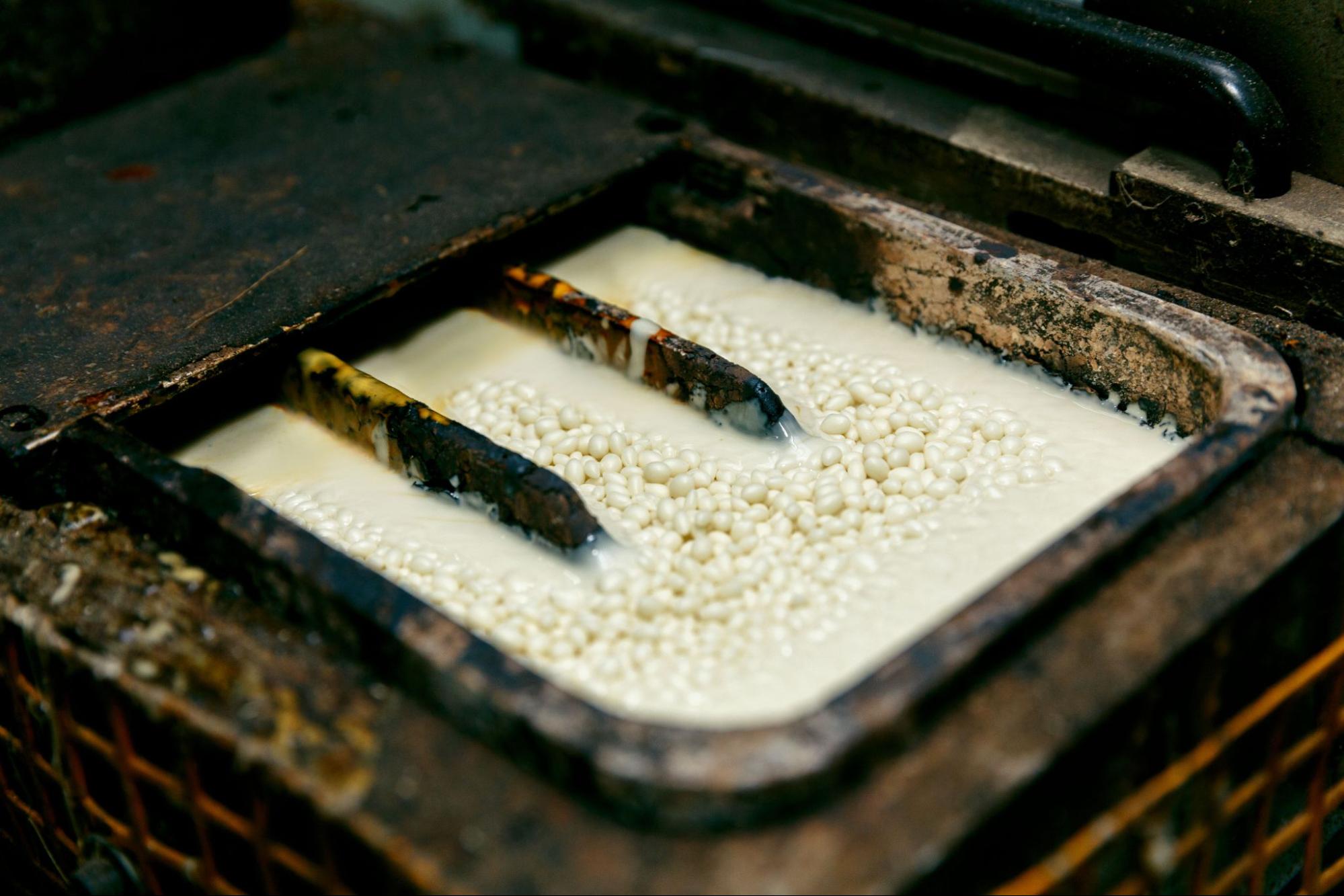
A blocked applicator nozzle can interrupt production and reduce the consistency of a glue pattern.
For a broader diagnostic checklist, see our guide to hot melt adhesive troubleshooting.
5 ways to prevent hot melt adhesive nozzle clogs
1. Use the correct application temperature
Set the tank, hose and nozzle within the range specified for the exact adhesive grade and equipment. The lowest workable setting can reduce unnecessary heat exposure, but it must still give the required viscosity and bond performance. Measure actual temperatures during production; a display setpoint alone may not reflect the temperature at the nozzle. Avoid leaving adhesive at an elevated temperature for longer than necessary.
2. Use standby mode during planned pauses
If the applicator offers a standby function, use it according to the equipment and adhesive instructions when the line will be idle. Lowering the tank temperature during a pause may reduce thermal degradation. The standby setpoint is product-specific; do not assume that a fixed percentage of the normal temperature is suitable for every adhesive. Before restarting, let the complete system return to its recommended operating condition.
If you are selecting a grade for a packaging line, review TECHBOND’s carton box adhesive guide.
3. Keep dust and debris out of the melt system
Store hot melt adhesive in its closed, clean packaging until use. Keep the tank lid closed when practical and avoid tipping dust or carton scraps into the tank during refilling. Inspect filters at the interval recommended by the applicator manufacturer; replace them when necessary. Follow the specified cleaning procedure so old char does not return to the nozzle.
4. Maintain the applicator regularly
Check the tank, heated hose, filter, pump and nozzle for leakage, buildup and wear. Confirm that solenoids and valves open and close properly, and inspect the actual glue pattern on a test substrate. Clean or replace nozzle parts using the manufacturer’s method, with the system made safe for maintenance. Keep a record of recurring clogs: repeated failures at one nozzle can point to a local temperature or component problem.
- Inspect nozzle tips and filters for char or foreign particles.
- Compare measured tank, hose and nozzle temperatures.
- Check pump output and pressure only after confirming the flow path is clear.
5. Reassess the adhesive and application process
If clogs persist despite good maintenance, review the adhesive’s viscosity, recommended temperature, residence time and compatibility with the applicator. Some lines can benefit from a different formulation or lower application-temperature grade, but the candidate must still meet the bond and speed requirements. Use the hot melt adhesive technical specifications to structure a trial with your supplier.
A controlled change is more useful than adjusting several settings together. Record the original conditions, change one variable, and verify the glue pattern and finished bond after each trial.
When to contact TECHBOND
If a nozzle repeatedly blocks, share the adhesive grade, applicator model, tank and nozzle temperatures, filter history, run time and photos of the defect. TECHBOND can help assess the adhesive and process. Call 0866 15 37 68 for product advice.
Learn more about hot melt glue versus tape for carton bonding and choosing an adhesive for carton boxes.
TECHBOND MFG (VIETNAM) CO., LTD.
- Address: No. 18 VSIP II-A, Street 23, Vietnam–Singapore Industrial Park II-A, Vinh Tan Ward, Tan Uyen City, Binh Duong Province, Vietnam
- Hotline: 0866 15 37 68
- Email: info@techbond.com.vn

TECHBOND Vietnam is a leading manufacturer of industrial adhesives in Vietnam. We specialize in providing a wide range of flexibly customized adhesive products to meet the diverse requirements of our customers.
Need advice on the right industrial adhesive?
Share your materials, application and production process. TECHBOND will help recommend a suitable solution.
Request a consultation







