
Industrial wood adhesives are essential bonding materials in furniture, panel processing and interior manufacturing. The right adhesive should be selected according to the wood substrate, joint design, production equipment, line speed and required resistance to heat, moisture and mechanical load.
Nội dung bài viết
What are industrial wood adhesives?
Industrial wood adhesives are formulated to bond solid wood, plywood, MDF, particleboard, veneer, laminate, edge bands and other materials used in woodworking. Unlike general household glue, industrial products are designed for controlled application, repeatable production and defined performance.
Each adhesive family has its own setting mechanism and operating conditions. A suitable product must be verified on the actual substrate and production line before full-scale use. For a broader introduction, see our guide to wood glue types and selection.
General composition of adhesives for engineered wood
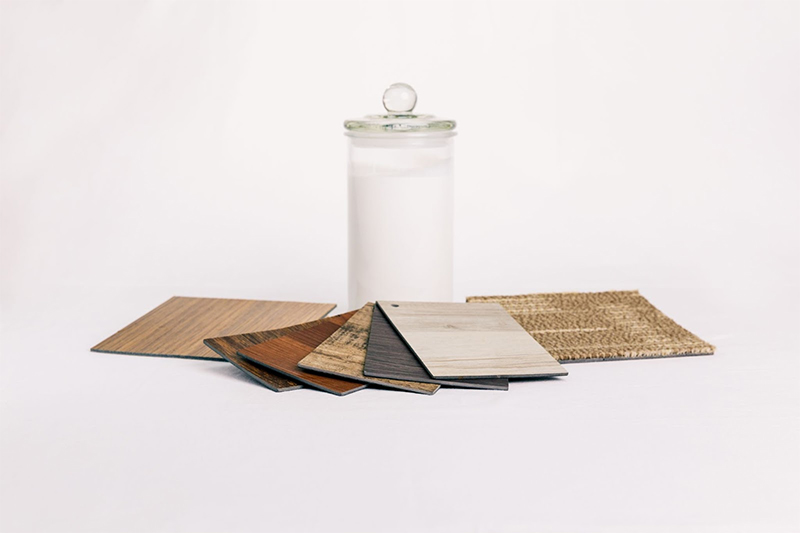
A wood adhesive normally contains a polymeric binder that forms the bond, together with water or another carrier and formulation additives. Depending on the product, additives may control viscosity, open time, wet tack, drying, heat resistance, water resistance and storage stability.
The formulation alone does not determine the result. Surface preparation, wood moisture, coating weight, assembly time, pressure, temperature and conditioning time also affect bond quality. Always follow the product technical data sheet and machine instructions.
Four common groups of industrial wood adhesives
PVAc white glue for wood assembly and lamination
PVAc dispersion adhesives are widely used for furniture assembly, dowel and mortise-and-tenon joints, finger jointing, veneer and laminating operations. They are easy to apply and suitable for many porous wood substrates. Available grades differ in setting speed, viscosity and resistance class.
Choose the grade according to the substrate, press cycle and service environment. Keep surfaces clean and control wood moisture. Pressure must be maintained until the joint develops sufficient initial strength.
Two-component AB adhesive for plywood and difficult joints
Two-component systems consist of a resin and a hardener that must be mixed at the specified ratio. Suitable products can provide strong bonding and improved resistance for selected wood, plywood and composite applications. Mixing ratio, pot life, coating amount, pressure and curing time must be controlled carefully.
Do not change the mixing ratio to adjust working time. Prepare only the quantity that can be used within the stated pot life, and follow the safety data sheet for handling and cleaning.
EVA hot melt for furniture edge banding
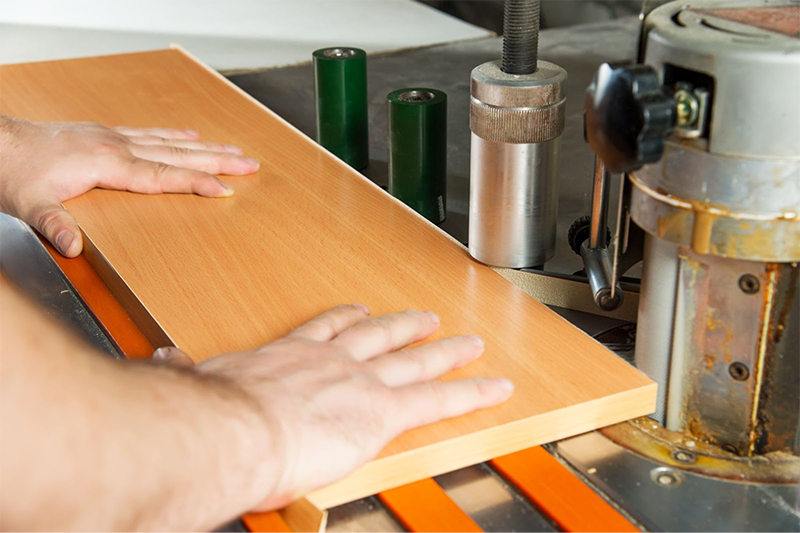
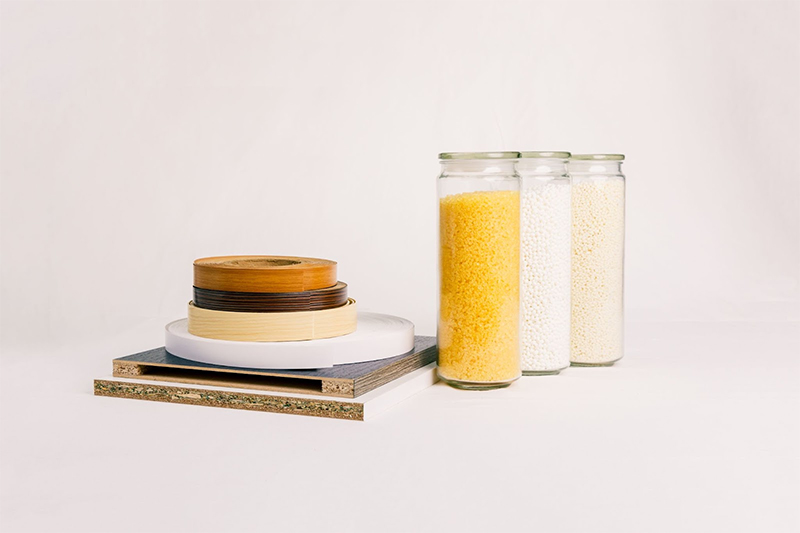
EVA hot melt adhesive is commonly applied in automatic edge-banding machines. It melts at the specified processing temperature, wets the board and edge band, and develops handling strength as it cools. EVA grades are available for different machine speeds, colors, substrates and temperature requirements.
Stable melt temperature, correct coating weight, adequate roller pressure and clean surfaces are important. Excessive heating or long residence time can degrade the adhesive and reduce performance.
Reactive PUR hot melt for demanding edge banding
Reactive polyurethane hot melt is applied in the molten state and then cures through reaction with moisture. After full cure, a suitable PUR product can provide high resistance to heat and moisture and a fine glue line. It is often selected for demanding furniture and interior components.
PUR requires compatible equipment, moisture-protected storage and a controlled cleaning process. Uncured material should be removed before it becomes chemically crosslinked.
What information is needed for an industrial wood adhesive quotation?
Industrial adhesive pricing depends on more than the price per kilogram. To recommend a suitable product and prepare an accurate quotation, provide:
- Wood, panel, veneer or edge-band materials and surface condition.
- Joint design and finished-product application.
- Machine type, line speed, application method and operating temperature.
- Required open time, press time and initial strength.
- Heat, moisture and durability requirements.
- Current consumption, package size and expected order quantity.
Total production cost should include adhesive consumption, energy, cleaning, downtime and rejected output. The lowest unit price does not always deliver the lowest manufacturing cost.
TECHBOND industrial wood adhesive support
TECHBOND manufactures and supplies adhesive solutions for furniture and wood-processing plants. Our technical team can review substrate samples, production parameters and performance requirements, then recommend a product and trial procedure.
For technical consultation, samples or a quotation, contact TECHBOND Vietnam at 0866 153 768 or info@techbond.com.vn.

TECHBOND Vietnam is a leading manufacturer of industrial adhesives in Vietnam. We specialize in providing a wide range of flexibly customized adhesive products to meet the diverse requirements of our customers.
Need advice on the right industrial adhesive?
Share your materials, application and production process. TECHBOND will help recommend a suitable solution.
Request a consultation







