Table of Contents
1. What is PUR Adhesive?
PUR Adhesive (Polyurethane Reactive Hot Melt) is a type of reactive hot melt adhesive based on polyurethane. It exists in a molten state during application and subsequently reacts with moisture in the air or substrates to create a durable bond.
Unlike conventional EVA or PO hot melt adhesives, PUR continues to cure after cooling. Adhesion, heat resistance and moisture resistance must be confirmed for the adhesive grade, substrates and test conditions.
In Summary:
-
Open time depends on the adhesive grade and must match the line’s adhesive application, assembly and holding times.
-
Substrate compatibility: wood, aluminum, PVC, veneer, laminate, melamine, acrylic, PET, MDF, HDF and particle board can be evaluated; test the actual pair of bonding surfaces before selecting a grade.
-
Assess bond durability, heat resistance and moisture resistance using the TDS and tests on the finished assembly.
2. Applications of PUR Adhesives
Currently, PUR adhesives are widely used in the interior design, woodworking, and new materials industries, especially in factories utilizing automated production lines. Below are the main applications:
2.1 Flat Lamination
PUR adhesive is applied in flat lamination for materials such as:
-
Laminating laminate onto MDF and HDF.
-
Laminating PVC, PET, and acrylic onto engineered wood boards.
-
Laminating natural veneer onto wood surfaces.
Test adhesion, flatness, heat resistance and moisture resistance on the actual laminated assembly. Blistering, edge lifting and delamination also depend on substrates, moisture and application conditions.
2.2 Profile Wrapping
In profile wrapping applications, PUR adhesive is used to bond PVC foils, veneers, and decorative papers onto moldings, trims, door frames, and MDF/PVC profiles.
Advantages of using PUR adhesive in profile wrapping:
-
Curved surfaces and corners can be evaluated according to the compatibility of the selected adhesive grade.
-
Check flexibility and bond durability when the substrates change dimensions.
-
Control adhesive quantity and pressing conditions to achieve the required appearance.
2.3 Edge Banding
Edge banding engineered wood with PUR adhesive requires selection and trials against the following criteria:
-
Glue-line uniformity, edge closure and appearance after bonding.
-
Adhesion, heat resistance and moisture resistance under the intended service conditions.
-
Compatibility with the PVC, ABS, acrylic or veneer edging actually used.
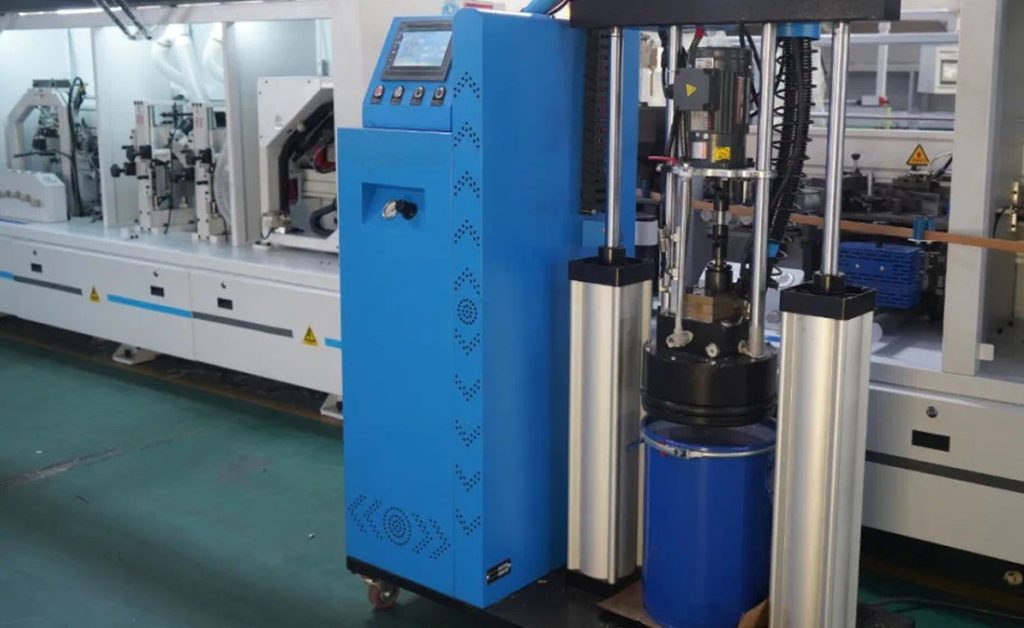
Edge banding engineered wood with PUR adhesive helps enhance product quality
PUR edge banding requires compatible adhesive application equipment and machinery. Export requirements must be assessed against customer specifications and finished-product documentation, rather than inferred from the adhesive family.
2.4 Composite and New Material Bonding
PUR adhesive is also applied for:
-
Bonding composite materials, foam, and aluminum honeycomb panels.
-
Bonding layers in suitable door assemblies; fire performance must be verified on the complete construction.
-
Bonding soundproofing and thermal insulation layers in specialized vehicle and cabin manufacturing.
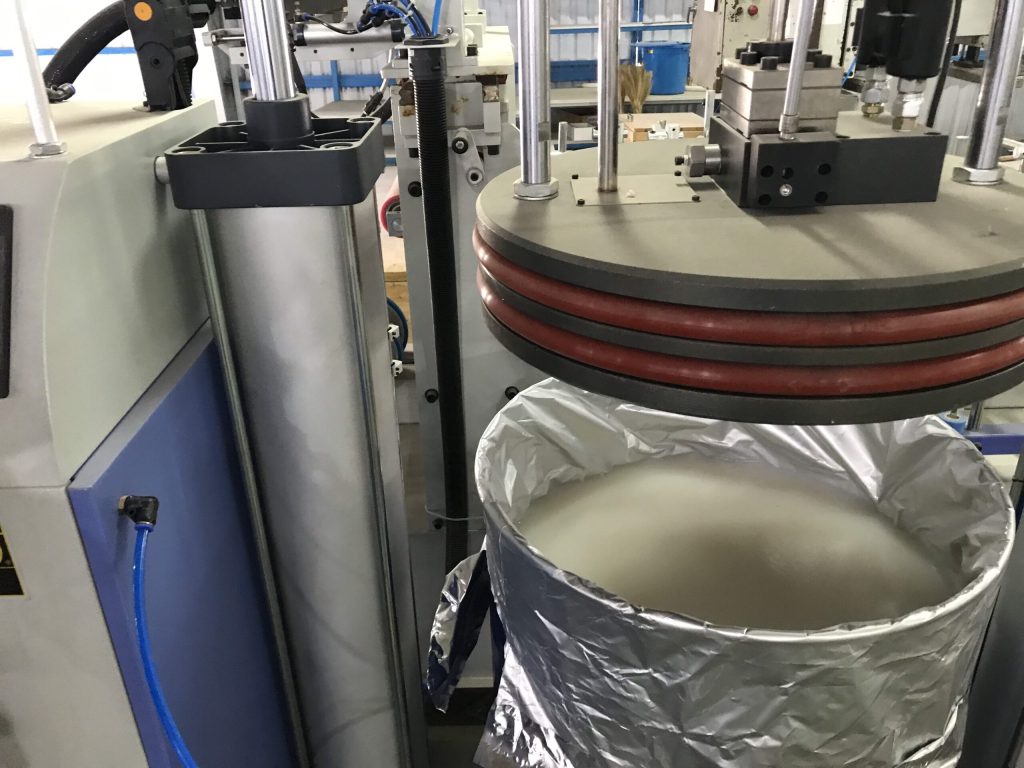
PUR adhesive heating and application equipment for production
3. Advantages of Using PUR Adhesive in Manufacturing
- Bond strength: Evaluate adhesion on the actual substrate pair, coating and surface preparation.
- Heat and moisture resistance: Check the grade documentation and test under actual storage, transport and service conditions.
- Appearance: Glue quantity, surfaces and pressing settings affect appearance; agree acceptance criteria before trials.
- Safe handling: Read the SDS for the selected grade to determine ventilation, protective equipment and hot-adhesive handling requirements. Do not infer safety from the PUR name alone.
- Cost in use: Compare adhesive consumption per accepted product, productivity, energy, cleaning and rework using the same substrates and acceptance criteria.
4. Comparison of PUR with EVA and PO Adhesives
| Criterion | Thermoplastic EVA and PO | Reactive PUR |
|---|---|---|
| Bond formation | Cools and solidifies after application. | Cooling develops the initial bond, followed by further curing according to the adhesive system. |
| Temperature and open time | Follow the TDS for the exact grade and the equipment requirements; do not apply one temperature range to an entire family. | |
| Adhesion, heat and moisture resistance | Compare tests on the same substrate pair under the same conditions; do not rank performance by adhesive family alone. | |
| Glue line and appearance | Depend on adhesive quantity, surfaces, application method and machine settings. | |
| Cost in use | Assess consumption per accepted product plus operation, cleaning and rework costs. | |
5. Considerations When Using PUR Adhesive
- Specialized Equipment Required: PUR adhesive requires dedicated edge banding, flat lamination, or profile wrapping machines featuring sealed tanks, precise heating, and glue volume control systems.
- Difficult to Re-melt: Once reacted and cured, PUR adhesive cannot be re-heated for reuse; proper equipment cleaning is essential to prevent clogging.
- Airtight Storage: PUR adhesive must be stored in sealed containers, avoiding exposure to air to maintain quality.
6. TECHBOND – A Quality Supplier of PUR Adhesives for Furniture and New Materials Production
Techbond Việt Nam accepts adhesive consultation requests for furniture and new-material manufacturing. For PUR selection, provide the bonding operation, both contact surfaces, equipment, line speed and finished-product requirements.
- Confirm the grade, manufacturer, origin and current availability in Vietnam.
- Request the current TDS/SDS and check application, storage and equipment-cleaning conditions.
- Discuss sample availability and support for trials on actual materials and production equipment.
- Compare quotations with consumption and trial results, rather than unit price per kilogram alone.
Conclusion
PUR adhesive is not just an adhesive, but a solution to elevate product quality, particularly in furniture, woodworking, and new material manufacturing. Selection should be based on the bonding operation, substrate pair, equipment and test results against finished-product requirements.
If you need detailed consultation on PUR adhesives for flat lamination, profile wrapping, edge banding, or other specialized applications, please contact TECHBOND for prompt assistance.
- TECHBOND MFG (VIETNAM) CO., LTD
- No. 18 VSIP II-A, Street 23, Vietnam – Singapore II-A Industrial Park, Vinh Tan Ward, Tan Uyen City, Binh Duong Province, Vietnam
- Ordering in Vietnam: 0866.15.37.68 (Hotline/ Zalo)
Looking to use PUR adhesive but unsure which type to choose? Contact us for expert consultation:

Techbond Việt Nam supplies industrial adhesives for woodworking, paper, packaging and other manufacturing applications. The team supports adhesive selection based on customer materials and production processes.
Need advice on the right industrial adhesive?
Share your materials, application and production process. Techbond Việt Nam will help recommend a suitable solution.
Request a consultation