Are you looking for a durable bonding solution for industrial products? PUR (Polyurethane) adhesive is the perfect answer. Do not miss the article below to clearly understand what PUR adhesive is, its structure, important properties, as well as how to apply this hot melt adhesive to improve the quality of finished products in industrial manufacturing!
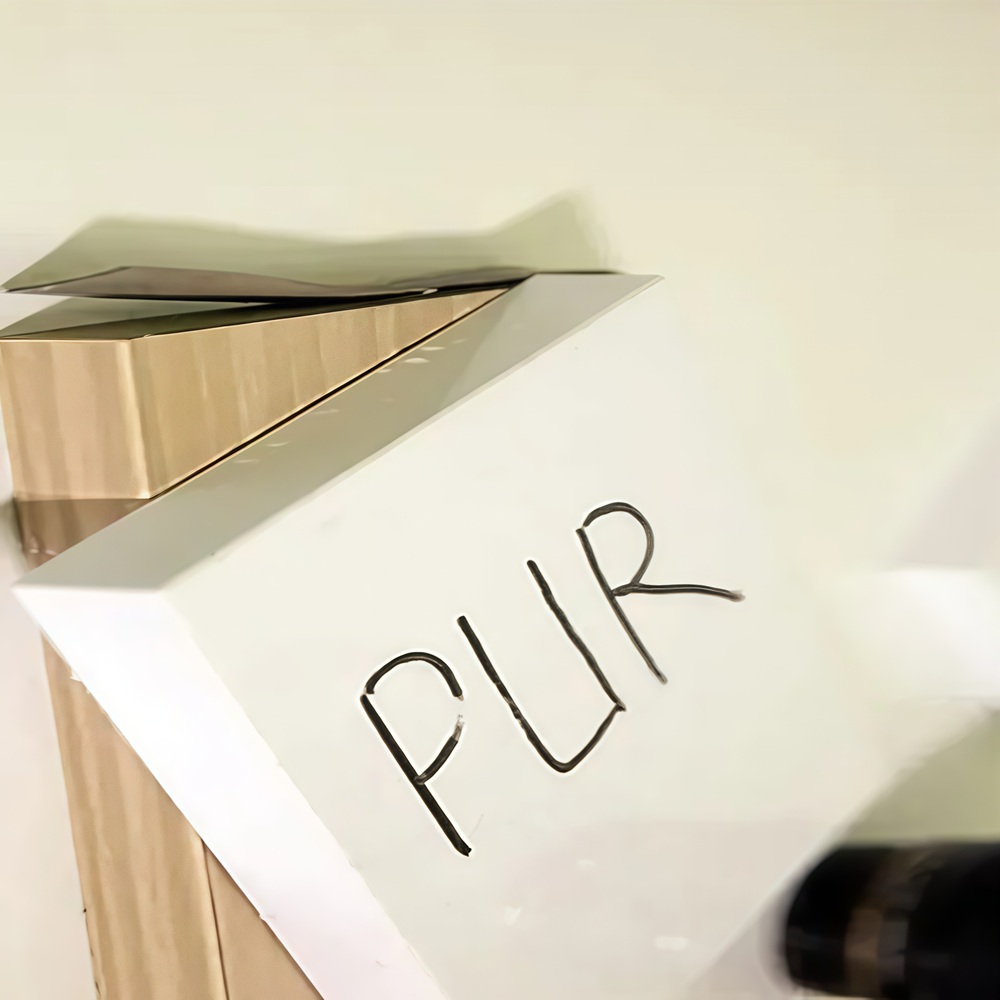
PUR (polyurethane) adhesive is gradually becoming the new standard in modern industries
Table of Contents
What is PUR adhesive? Understanding the true nature of polyurethane materials
Understanding the true nature of PUR adhesive is an important foundational step before choosing it for production or construction applications. The effectiveness of this material lies not only in its initial tack but also in the mechanism of forming long-term bonds after curing.
What is PUR (Polyurethane Reactive) adhesive?
PUR adhesive stands for Polyurethane Reactive Adhesive – a type of polyurethane adhesive capable of curing through a chemical reaction with moisture in the environment. Unlike solvent-evaporating or physically solidifying adhesives, PUR adhesive goes through two stages:
- Stage 1 (initial set): The adhesive melts or is in a liquid state, creating initial tack upon contact with the material surface.
- Stage 2 (chemical curing): It reacts with moisture in the air to form a durable polyurethane polymer network.
The result is a bond layer that not only “sticks” but also possesses a stable structure, high load-bearing capacity, and environmental resistance, making it highly suitable for industrial applications requiring long-term durability.
How is PUR adhesive different from traditional adhesives?
The core difference of PUR adhesive lies in its curing mechanism and the nature of the bond:
- Traditional adhesives (PVAc, EVA…): Primarily dry by water evaporation or cooling → mechanical bonding, which easily degrades when exposed to heat or moisture.
- PUR adhesive: Creates chemical bonds through a polymerization reaction → forms a durable 3D spatial network.
Thanks to this, PUR adhesive can maintain adhesion in humid environments or high temperatures, reducing peeling and cracking after long periods of use. It is also compatible with various materials such as wood, plastic, metal, foam, or fabric.
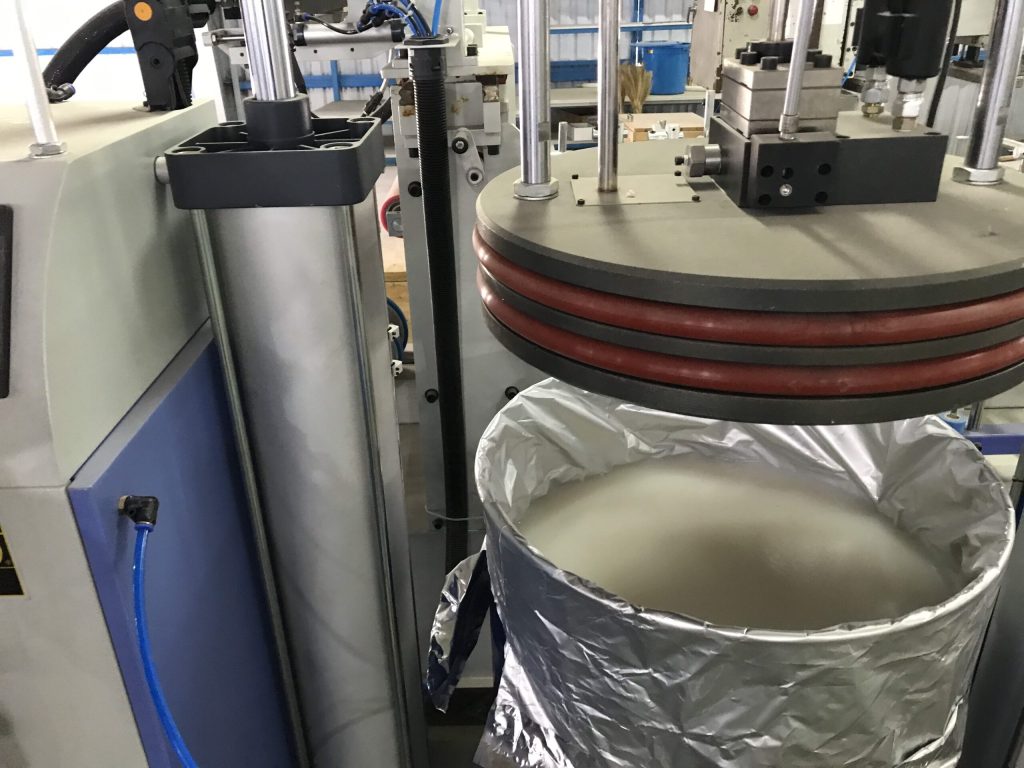
PUR adhesive creates chemical bonds through a polymerization reaction
Why is PUR adhesive called a “reactive adhesive”?
The term “reactive” in PUR adhesive originates from its chemical reaction characteristic with moisture (moisture curing). The isocyanate component in the adhesive reacts with water in the air to form urethane bonds while releasing CO₂ at a controlled level.
This process brings three important technical values:
- Increasing bond strength over time: The bond becomes more stable after the reaction is complete.
- Environmental adaptability: It is not completely dependent on dry conditions like conventional adhesives.
- Creating an elastic structure: Helps the adhesive layer absorb material deformation (especially in wood and foam).
It is this reaction mechanism that has made PUR adhesive one of the highest-performing industrial adhesives, perfectly meeting the requirements for durability, flexibility, and stability in modern production.
Structure and operating mechanism of PUR adhesive
Unlike adhesive systems that only “surface bond,” PUR adhesive operates on the principle of forming a cross-linked polymer network, creating an adhesive layer with properties akin to an intermediate material between the two surfaces.
* Main components in PUR adhesive
Inherently, PUR adhesive is composed of two main component groups:
✓ Polyol: A compound containing many hydroxyl (-OH) groups, acting as the “soft frame” of the polymer. This component determines: Elasticity, flexibility, and adaptability to material deformation.
✓ Isocyanate: The main reactive component containing the -NCO functional group, capable of reacting strongly with water and polyol to create urethane bonds.
This component determines: Mechanical strength, heat resistance, and chemical/environmental resistance.
Depending on the mixing ratio and production formula, manufacturers can adjust the properties of PUR adhesive for specific applications, ranging from rigid to flexible bonds.
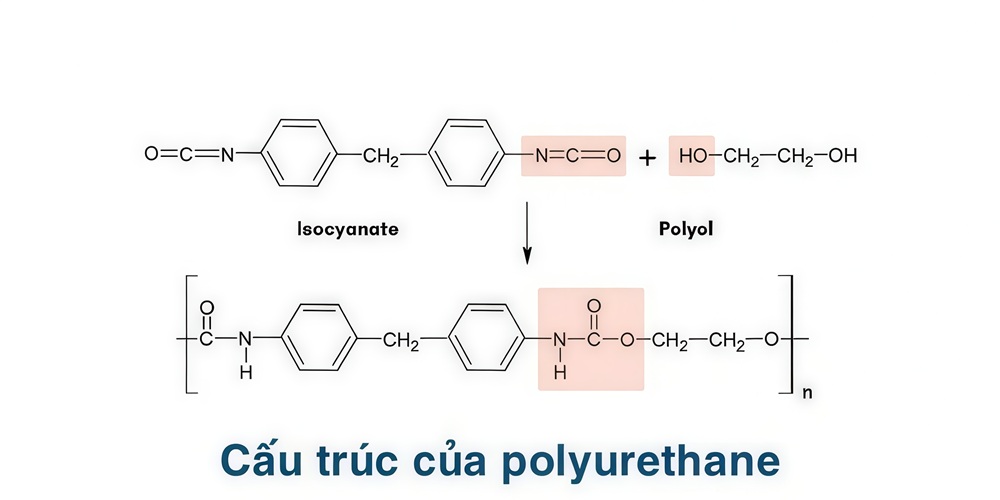 Main structural components of PUR adhesive
* Curing mechanism when exposed to moisture
The most characteristic feature of PUR adhesive is its curing mechanism via reaction with moisture in the air. This process takes place in two main stages:
⇢ Initial bonding stage (physical bonding): The adhesive in a liquid or molten state penetrates the material surface, creating an initial bond to help fix the position.
⇢ Chemical reaction stage (chemical curing): The isocyanate (-NCO) group reacts with water vapor (H₂O) in the environment, forming urethane and urea bonds while simultaneously building a cross-linked polymer network.
The results of this process are:
- The adhesive layer transforms from a plastic state → to a stable, durable state.
- Bond strength gradually increases over time (usually reaching maximum performance after 24 – 72 hours, depending on conditions).
Outstanding properties of PUR adhesive in industry
Overall, PUR adhesive is not just strong in a single property, but it strikes a balance between durability, flexibility, and environmental adaptability, helping to optimize production efficiency and product lifespan.
» High adhesion on multi-materials: Effective on wood, plastic, metal, foam, and fabric.
» Water resistance – meeting D4 standards: Stable in humid environments without peeling.
» Good heat resistance: Maintains bonding under heating or pressing conditions.
» High elasticity – crack and delamination resistance: Suitable for stretchable materials like wood and foam.
» Electrical insulation capability: Effectively applied in electronic components.
» Vibration and shock resistance: Protects structural integrity in operational environments.
» Low VOC – safe for indoor use: Reduces health and environmental impacts.
» Compatible with automated lines: Suitable for large-scale industrial production.
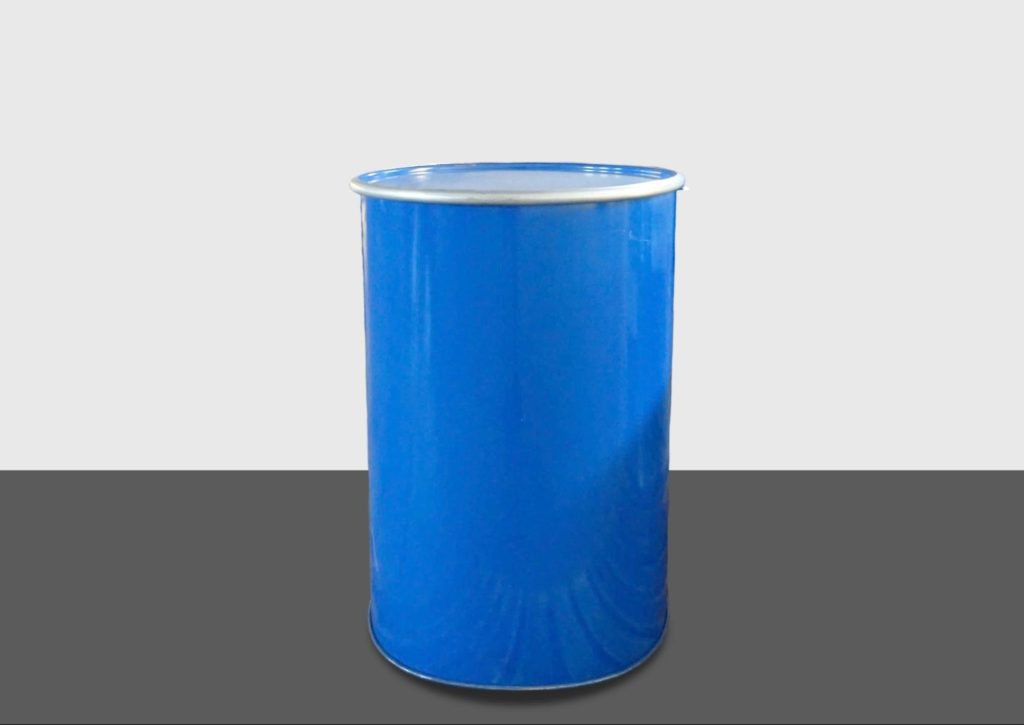
The strength of PUR adhesive lies in the balance between durability, flexibility, and environmental adaptability
Applications of PUR adhesive in 5 typical industries
Thanks to its high adhesion, moisture resistance, heat resistance, and ability to create elastic bonds, PUR adhesive is not limited to a specific field but is widely deployed according to the technical requirements of each industry.
1/ Applications in the woodworking and engineered wood flooring industry
In the field of wood flooring and furniture, PUR adhesive is used for engineered wood flooring systems, parquet, and jointed wood, where bonds are required to be not only strong but also stable under continuously changing humidity conditions.
Thanks to its ability to meet D4 water resistance standards and its high elasticity, the adhesive layer can adapt to the natural expansion and contraction of wood, minimizing cracking or peeling after long periods of use.
Simultaneously, the low VOC content makes PUR adhesive for wood flooring highly suitable for enclosed interior spaces such as apartments, hotels, or civil works, where health safety and air quality are top priorities.
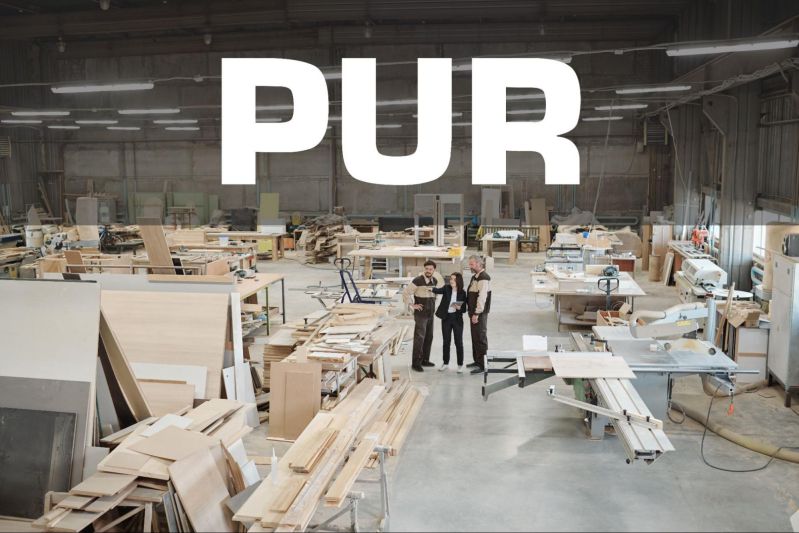 PUR adhesive is a great choice for the woodworking industry
2/ Applications in the electronics and precision components industry
In the electronics sector, especially PCB boards, small components, and devices like TWS earbuds, PUR adhesive acts as both a bonding material and a functional protective layer. Its good electrical insulation properties ensure circuit safety, while its vibration and shock resistance help maintain component stability during operation.
A notable advantage is its fast curing ability and compatibility with automatic dispensing systems. This allows for direct integration into production lines, thereby improving productivity and ensuring uniform quality control across products.
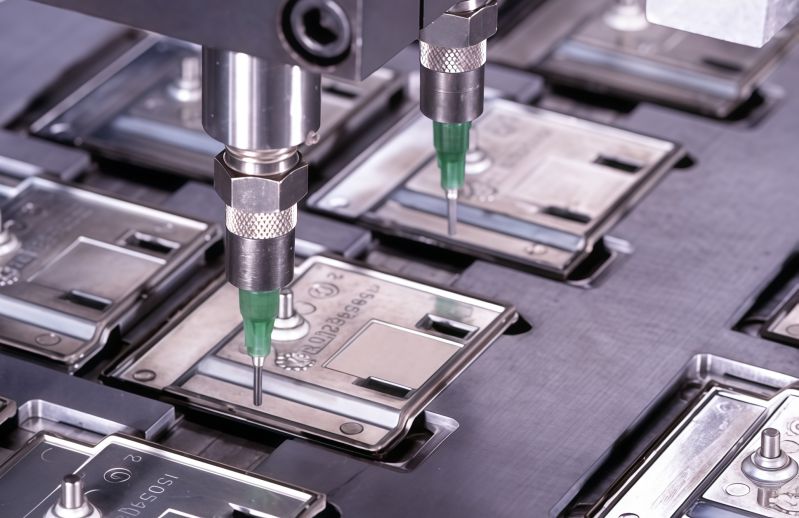 Applications of PUR adhesive in the electronics and precision components industry
3/ Applications in foam, mattress, and sofa production
In the production of mattresses, sofas, and foam products, PUR adhesive is used as an optimal bonding solution that balances performance and the end-user experience.
Unlike many traditional adhesives that tend to stiffen the material after curing, PUR adhesive creates a soft bond, maintaining the natural elasticity of the foam – a factor that directly determines the quality of the final product.
Additionally, mattress and sofa adhesives need to meet fast-tack requirements to shorten fixing times, thereby accelerating production speeds on the assembly line.
The excellent heat resistance of PUR adhesive also allows for effective application in vacuum foam pressing processes, where materials must withstand both pressure and heat without experiencing peeling or structural deformation.
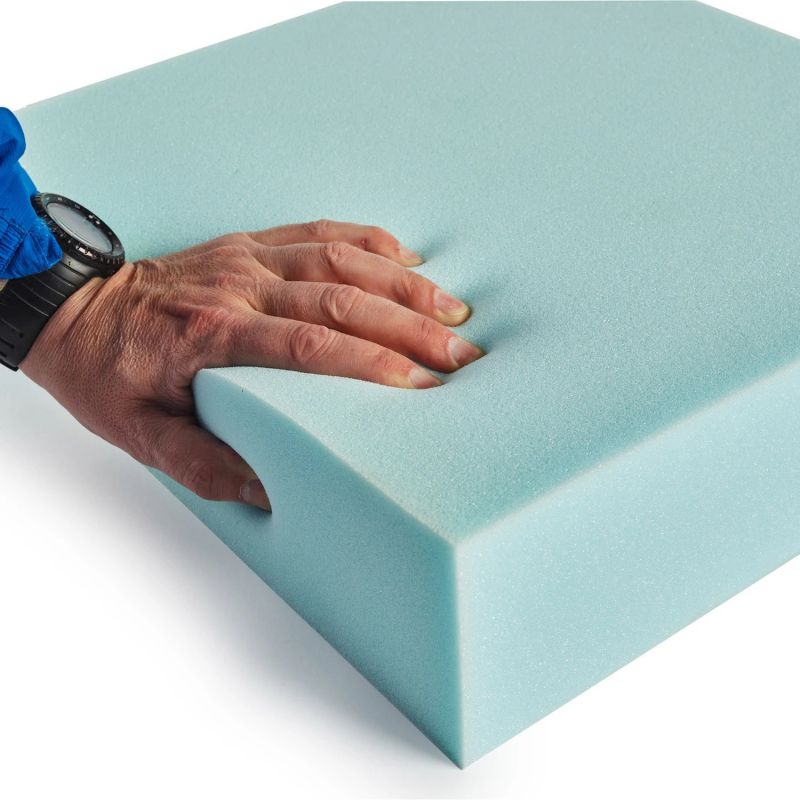 PUR adhesive also allows for effective application in vacuum foam pressing processes
4/ Applications in surface lamination (HPL, CPL, MDF)
In industrial furniture production lines, especially when laminating on MDF or particleboard, PUR laminating adhesive plays a pivotal role in ensuring the quality of the finished surface.
Its strong adhesion on various materials helps the coating bond stably, minimizing bubbles or delamination after pressing.
For materials like HPL and CPL, using HPL or CPL adhesives requires the glue to withstand high temperatures and pressures during processing. PUR adhesive meets these conditions effortlessly while maintaining long-term stability, preventing the product from degrading during use.
As a result, surface lamination adhesives and engineered wood adhesives are increasingly prioritized in high-speed production lines, where high precision and consistency are mandatory.
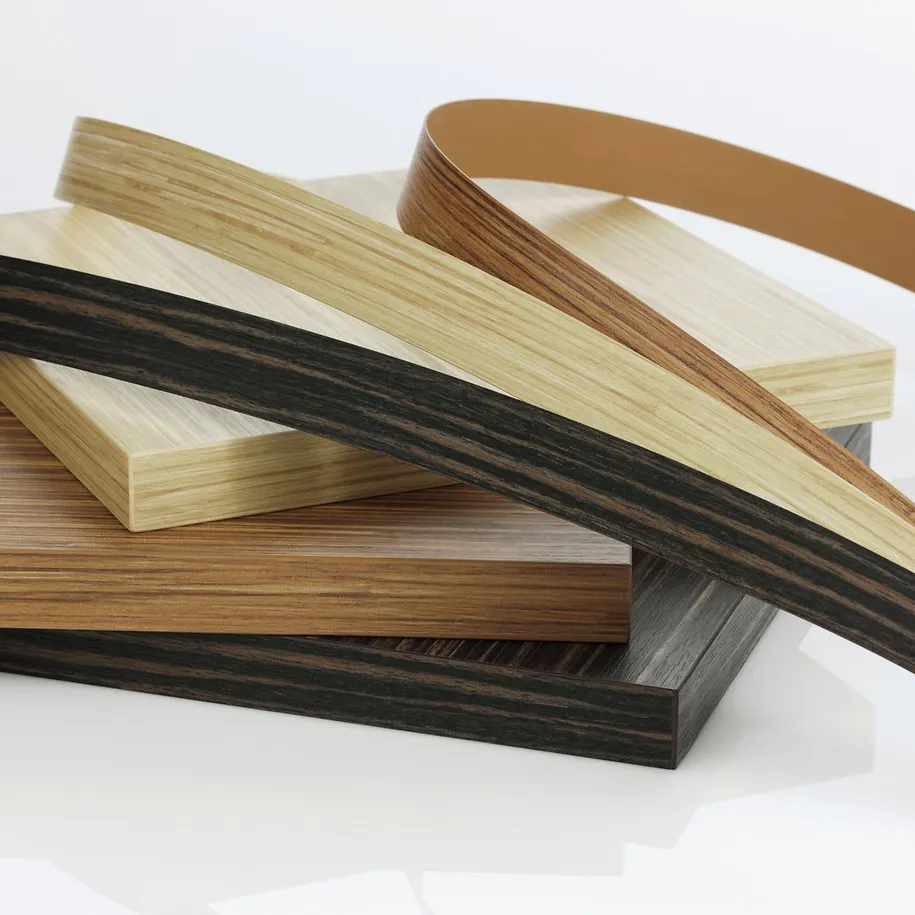 PUR adhesive meets the requirements for withstanding high temperatures and pressure during processing
5/ Applications in the textile industry and seamless products
In the textile sector, especially for products requiring high aesthetics and flexibility, PUR adhesive is gradually replacing traditional sewing methods.
For product lines such as underwear or seamless garments, bra adhesives and seamless clothing adhesives help create thin, soft, and highly stretchable bonds, bringing a comfortable feeling during wear.
Another critical advantage is the ability to laminate fabric without exposing glue marks, ensuring high aesthetic appeal for the finished product. At the same time, the created bond has excellent durability, withstanding multiple washes without peeling, helping maintain product quality throughout its lifecycle.
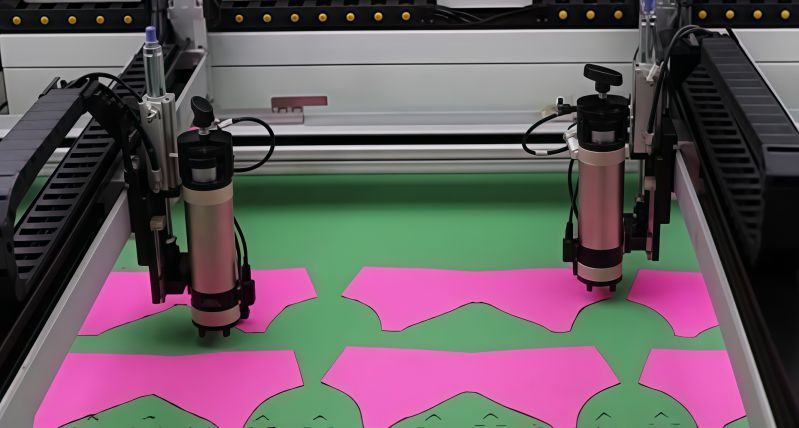 Applications of PUR adhesive in the textile sector
Suggestions for choosing the suitable PUR adhesive for each application
Choosing the right PUR adhesive not only helps optimize product quality but also reduces production errors, saves costs, and improves assembly line stability.
| Application | Priority adhesive properties | Suggested choice |
| Wood flooring, furniture | Moisture resistance, elasticity | D4 PUR adhesive |
| Foam, mattresses | Soft, non-rigid | Elastic PUR adhesive |
| Electronics | Electrical insulation, vibration resistance | Technical PUR adhesive |
| Laminating | Heat resistance, no delamination | Laminating PUR adhesive |
| Textiles | Stretch, aesthetics | Textile PUR adhesive |
Suggestions for choosing the suitable type of PUR adhesive for each application
Where to buy reputable PUR adhesive?
In a market saturated with various PUR adhesive lines of differing qualities and formulas, choosing a supplier should not stop at price. It requires an evaluation of consulting capacity and technical companionship.
A reputable supplier must clearly understand each specific application, thereby proposing tailored solutions rather than pushing mass-produced products.
At Techbond Vietnam, PUR adhesive is not approached as a standalone product, but as part of an overarching material bonding optimization solution for each manufacturing industry. Enterprises are supported from material analysis and operating condition assessments to practical testing before official deployment.
The key difference lies in our application-specific consulting, helping customers choose the exact type of PUR adhesive for their specific needs, rather than using a one-size-fits-all approach. Parallel to this is an in-depth technical support system, ensuring that the construction or production process achieves maximum efficiency while minimizing errors.
Beyond simply supplying products, Techbond Vietnam acts as a technical partner, collaborating with enterprises to build adhesive solutions perfectly suited to their production lines, environments, and business goals. This is a crucial factor in optimizing long-term costs and elevating output quality.
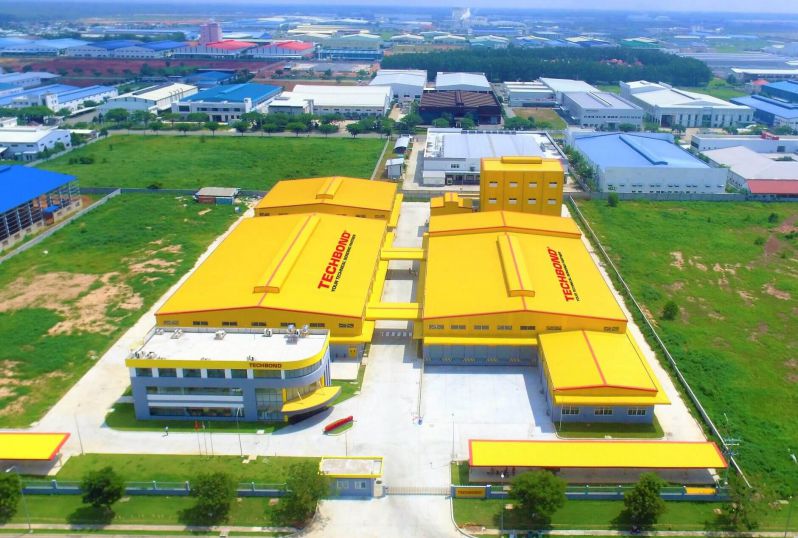 Techbond Vietnam
Ultimately, PUR adhesive is not merely an industrial adhesive, but a highly technical material bonding solution capable of adapting to various industries and complex production conditions.
If you are facing problems with bond strength, production speed, or are unsure which PUR adhesive is suitable for your assembly line, let Techbond Vietnam provide free support today by contacting us via the following channels:
Read more: Learn more about TECHBOND D4 adhesive and refer to the wood flooring adhesive solution.
SEE MORE:
——————————–
TECHBOND MFG (VIETNAM) CO., LTD.
Address: No. 18 VSIP II-A, Street 23, Vietnam – Singapore Industrial Park II-A, Vinh Tan Ward, Ho Chi Minh City
Phone: 0274 3803 963
Hotline: 0866 15 37 68
Email: info@TECHBOND.com.vn

Need advice on the right industrial adhesive?
Share your materials, application and production process. TECHBOND will help recommend a suitable solution.
Request a consultation