
Granular hot melt adhesive vs PUR: the main difference is how the bond develops. Conventional granular hot melt becomes liquid when heated and sets as it cools. Reactive PUR hot melt also undergoes a moisture-driven curing step after application. Select a product using the materials, line conditions, technical data sheet (TDS) and trials on the actual process.
Nội dung bài viết
How granular hot melt adhesive and PUR differ
Granular hot melt adhesive is supplied as solid pellets or granules. Heating brings it into a flowable state for application to the substrate; cooling forms the initial bond. Typical polymer families include EVA and polyolefin (PO), with other ingredients selected to adjust tack, viscosity and stability.
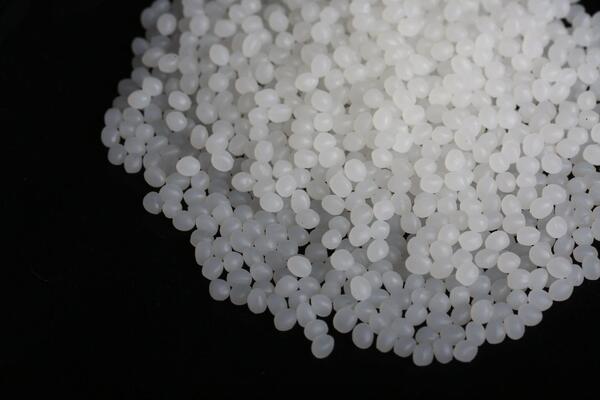
Granular hot melt is solid before heating and sets as it cools.
Common features of granular hot melt
- Setting time depends on the formulation, application amount, substrates and line conditions.
- Bond strength and substrate compatibility must be checked for the selected grade.
- Application equipment may include nozzles, spray systems, rollers or wheels, depending on the product and process.
- Follow the product safety data sheet (SDS) and the manufacturer’s guidance for temperature and ventilation.
Typical applications
Suitable granular grades can be used in carton packaging, paper products, bookbinding, labels, mattress assembly and woodworking. The exact grade and process determine where a product is suitable.
EVA-based granular hot melt
EVA hot melts are available in formulations for a range of manufacturing uses. Some set quickly enough for continuous production. Adhesion, heat performance and moisture resistance vary by grade, so compare the product TDS and trial results. Read more about EVA hot melt adhesive.
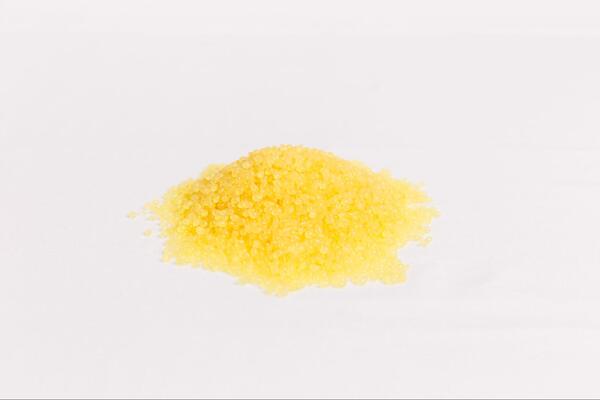
EVA granular hot melt grades are selected for the specific process.
Polyolefin-based granular hot melt
PO hot melts are another option. Viscosity, elasticity and adhesion to surfaces such as OPP, PE or coated materials depend on the formulation. Neither PO nor EVA should be ranked as universally stronger or more heat-resistant without comparing specific grades under the same conditions. See polyolefin hot melt adhesive types.
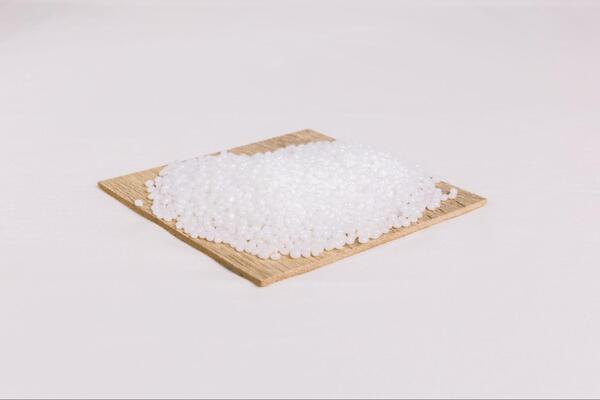
Check PO hot melt properties against the application requirements.
What is reactive PUR hot melt?
In a granular hot melt adhesive vs PUR comparison, the PUR curing stage is a key process difference. For general polymer background, see polyurethane.
PUR adhesive is based on polyurethane chemistry. Reactive PUR hot melt is applied warm like a hot melt, forms an initial bond as it cools, then reacts with available moisture as it cures. The required cure time depends on the grade and conditions. Keep reactive PUR protected from unintended moisture exposure during handling and follow its TDS and SDS.
Properties and applications of PUR
- Adhesion depends on the formulation, substrates and surface preparation.
- Moisture, heat and chemical resistance must be confirmed for the specific cured grade and service conditions.
- PUR may be considered for edge banding, lamination and furniture applications when the technical and appearance requirements are met.
- Colour and glue-line appearance depend on the adhesive, materials and process.
Granular hot melt adhesive vs PUR: comparison
This granular hot melt adhesive vs PUR table summarizes the main selection factors.
| Criterion | Granular hot melt | Reactive PUR hot melt |
|---|---|---|
| Typical chemistry | EVA or PO, depending on grade | Polyurethane |
| Application temperature | Follow the specific product TDS | Follow the specific product TDS |
| Bond development | Sets on cooling | Initial set on cooling, then moisture-driven cure |
| Adhesion | Depends on formulation and substrates | Depends on formulation, substrates and cure conditions |
| Heat and moisture performance | Check the polymer, grade and service conditions | Check the fully cured grade and service conditions |
| Example uses | Packaging, labels, mattresses and woodworking | Selected furniture, lamination and edge-banding processes |
To choose between granular hot melt adhesive vs PUR, compare the actual grades on the materials and equipment used in production. Review line speed, open time, bond requirements and operating environment before a trial.
TECHBOND support for industrial adhesive selection
TECHBOND supplies adhesives for woodworking, paper and packaging and other manufacturing applications. Share the substrate combination, application method and performance target with the technical team to identify a suitable product for testing.
TECHBOND MFG (VIETNAM) CO., LTD.
- Address: No. 18 VSIP II-A, Street 23, Vietnam–Singapore Industrial Park II-A, Vinh Tan Ward, Tan Uyen City, Binh Duong Province, Vietnam.
- Sales hotline: 0866 15 37 68
- Email: info@techbond.com.vn

TECHBOND Vietnam is a leading manufacturer of industrial adhesives in Vietnam. We specialize in providing a wide range of flexibly customized adhesive products to meet the diverse requirements of our customers.
Need advice on the right industrial adhesive?
Share your materials, application and production process. TECHBOND will help recommend a suitable solution.
Request a consultation







