
Choosing the best adhesive for MDF edge banding depends on the edge material, production equipment and service conditions. This guide compares conventional hot melt, reactive PUR hot melt and water-based PVA adhesive, then explains the application steps and common defects to check.
Nội dung bài viết
How to choose the best adhesive for MDF edge banding
No single adhesive is best for every line. Conventional hot melt suits fast automated production; PUR is often chosen when moisture and heat resistance are priorities; and a compatible PVA adhesive can suit manual work and selected indoor products. Learn about medium-density fibreboard, then compare the three options with our MDF edge banding adhesive comparison before testing a grade on your own board and edge tape.
Conventional hot melt adhesive
Hot melt adhesive is widely used for MDF edge banding. Grades are available for different application temperatures and equipment, including automatic and semi-automatic edge banders. Depending on the formulation and primer, they can bond veneer, ABS or PVC edge tape. A thermoplastic hot melt sets as it cools, supporting short production cycles. Confirm the adhesive, edge tape and machine settings as a system.

Conventional hot melt is a common choice for high-throughput MDF edge banding.
Reactive PUR hot melt adhesive
PUR edge banding adhesive first develops handling strength as it cools, then reacts with moisture to form a durable bond. A suitable PUR grade can offer strong adhesion and improved resistance to moisture, heat and some chemicals. It is a useful option for premium furniture and parts exposed to demanding indoor conditions, such as kitchens and bathrooms. Actual performance depends on the formulation, substrates, process and cure conditions; verify it with production trials.
PUR generally costs more and needs appropriate handling, cleaning and moisture control. Compare the full production requirements before choosing it.
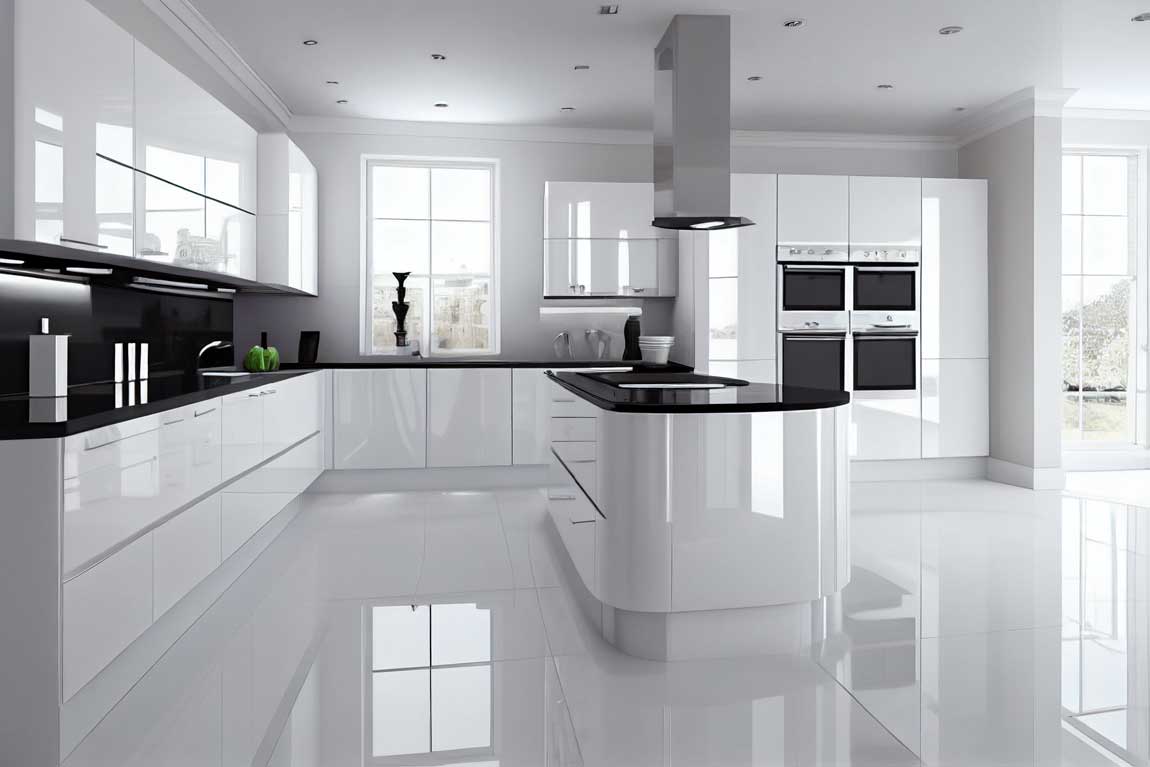
PUR hot melt can be selected where the bond must tolerate more demanding conditions.
Water-based PVA adhesive
Water-based PVA (polyvinyl acetate) adhesive is usually a white liquid. A compatible grade is easy to handle and can be practical for manual edge banding or selected indoor applications. Its drying time depends on the board, coating amount, temperature, humidity and press conditions. PVA grades differ in water resistance, so check the product specification rather than treating all white glues as equivalent.
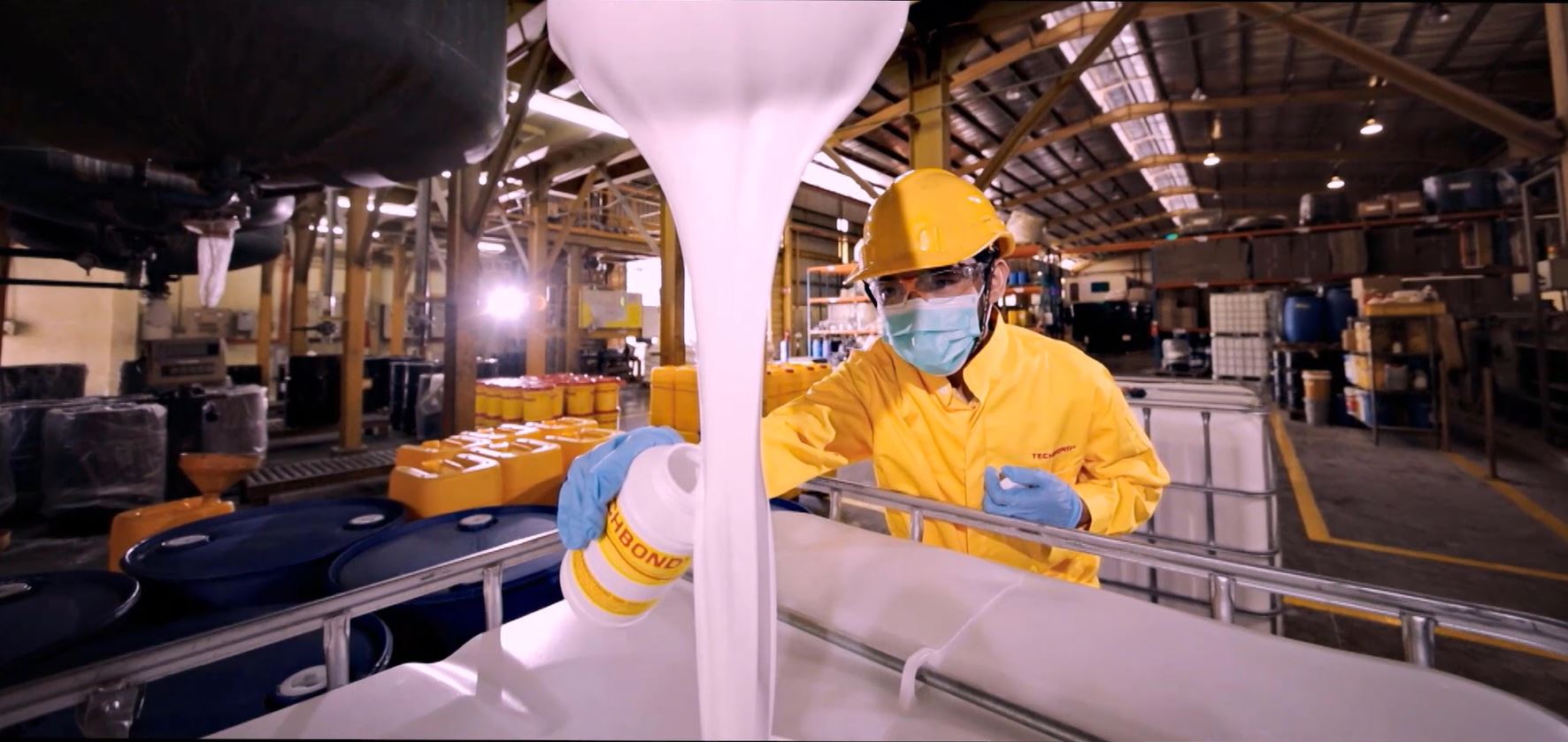
A suitable PVA grade can support manual edge banding for indoor products.
Selection tip: Specify the MDF, edge tape, line speed and expected moisture or heat exposure. Then compare test bonds, glue-line appearance and the cost of each process.
How to apply MDF edge banding adhesive
A consistent process helps create a neat, durable edge. Set each parameter according to the adhesive supplier and equipment instructions.
1. Prepare the MDF edge
- Keep the MDF edge clean, smooth and free of dust, oil and loose fibres.
- Sand or machine uneven edges where necessary so the edge tape can contact the board evenly.
2. Select and prepare the adhesive
- Choose an adhesive compatible with the MDF, edge tape and application machine.
- For hot melt or PUR, use the temperature stated in the selected grade’s technical data sheet. Do not apply one generic temperature range to every product.
- For water-based adhesive, follow the mixing and application instructions and check the open time.
3. Apply, position and press the edge tape
- Apply a controlled, even amount of adhesive to the intended bonding area.
- Position the edge tape accurately and press it against the MDF with the equipment or roller specified for the process.
- Maintain contact until the adhesive has enough handling strength; allow any required cure or drying time before further processing.
4. Inspect and finish
- Check for lifting, blisters, gaps and an uneven glue line.
- Remove excess adhesive using a cleaning method suitable for the adhesive and surface.
- Test bond strength after the recommended conditioning time, especially when changing materials or settings.
Common MDF edge banding problems and fixes
Peeling edges
Check for dust or loose fibres, insufficient adhesive coverage, incompatible primer, low pressure and incorrect application temperature. Change one variable at a time and retest. See our guide to MDF edge banding adhesive options for a deeper checklist.
Lumps or uneven application
Check melt temperature and viscosity, adhesive condition, tank cleanliness and the applicator or nozzle. Overheating or contamination can impair flow. Follow the manufacturer’s cleaning instructions instead of increasing temperature without a product-specific reason.
Slow setting or premature setting
Check whether the adhesive matches the line speed and ambient conditions. For hot melt, compare the specified open time with the time between application and pressing. For PVA, allow for water evaporation and the recommended press and drying time.
Visible or uneven glue line
Check adhesive colour, coating weight, edge alignment and machine calibration. Accurate application can reduce squeeze-out while maintaining enough adhesive for a sound bond.
If you need help choosing the best adhesive for MDF edge banding for your production line, contact TECHBOND with your board, edge material, machine model and operating conditions. Our team can recommend a suitable grade for trials.
TECHBOND MFG (VIETNAM) CO., LTD.
- Address: No. 18 VSIP II-A, Street 23, Vietnam–Singapore Industrial Park II-A, Vinh Tan Ward, Tan Uyen City, Binh Duong Province, Vietnam.
- Sales hotline: 0866 15 37 68
- Email: info@techbond.com.vn
Related guides: Hot melt adhesive troubleshooting and how to use PUR hot melt adhesive.

TECHBOND Vietnam is a leading manufacturer of industrial adhesives in Vietnam. We specialize in providing a wide range of flexibly customized adhesive products to meet the diverse requirements of our customers.
Need advice on the right industrial adhesive?
Share your materials, application and production process. TECHBOND will help recommend a suitable solution.
Request a consultation







