
PUR edge banding adhesive is used to attach decorative edge strips to wood-based panels. For furniture manufacturers, the edge must look neat and remain bonded during handling and service. This guide explains how reactive PUR hot melt works, where it is used and the main steps to control on an edge-banding line.
Nội dung bài viết
What is PUR edge banding adhesive?
Reactive polyurethane (PUR) hot melt is heated for application. It develops initial strength as it cools and then continues to cure through a reaction with moisture. The result can be a durable bond when the adhesive grade, board, edge strip and machine settings are compatible. PUR products differ in viscosity, open time, cure speed and finished performance, so the technical data sheet for the chosen grade should guide production settings.
A typical formulation uses polyurethane prepolymers and may include additives that adjust processing or stability. It is inaccurate to assume every PUR grade contains the same curing agents or fillers. See TECHBOND’s English PUR adhesive overview and this general polyurethane reference for background.
How the bond forms
- Heat: compatible melting equipment brings the PUR adhesive to the grade’s specified application condition.
- Apply: the adhesive is spread onto the prepared board edge, where it can wet the surface before the open time ends.
- Press: rollers bring the edge strip into close, even contact with the panel.
- Cool and cure: the bond gains handling strength on cooling, followed by further moisture-driven curing over the time specified for the product.
PUR edge banding includes heating, application, pressing and final curing.
Potential advantages
- Clean edges: controlled adhesive spread and pressure can create a narrow, consistent glue line.
- Initial handling: cooling helps the edge move to trimming and other downstream operations.
- Service performance: an appropriately selected and cured grade can offer useful resistance to heat and moisture.
- Material choice: suitable products can be evaluated with different panels and edge materials.
These benefits are conditional. Performance depends on the full panel construction and processing, and any required heat or water resistance must be tested. A fast initial set does not mean final cure is complete.
Where PUR edge banding is used
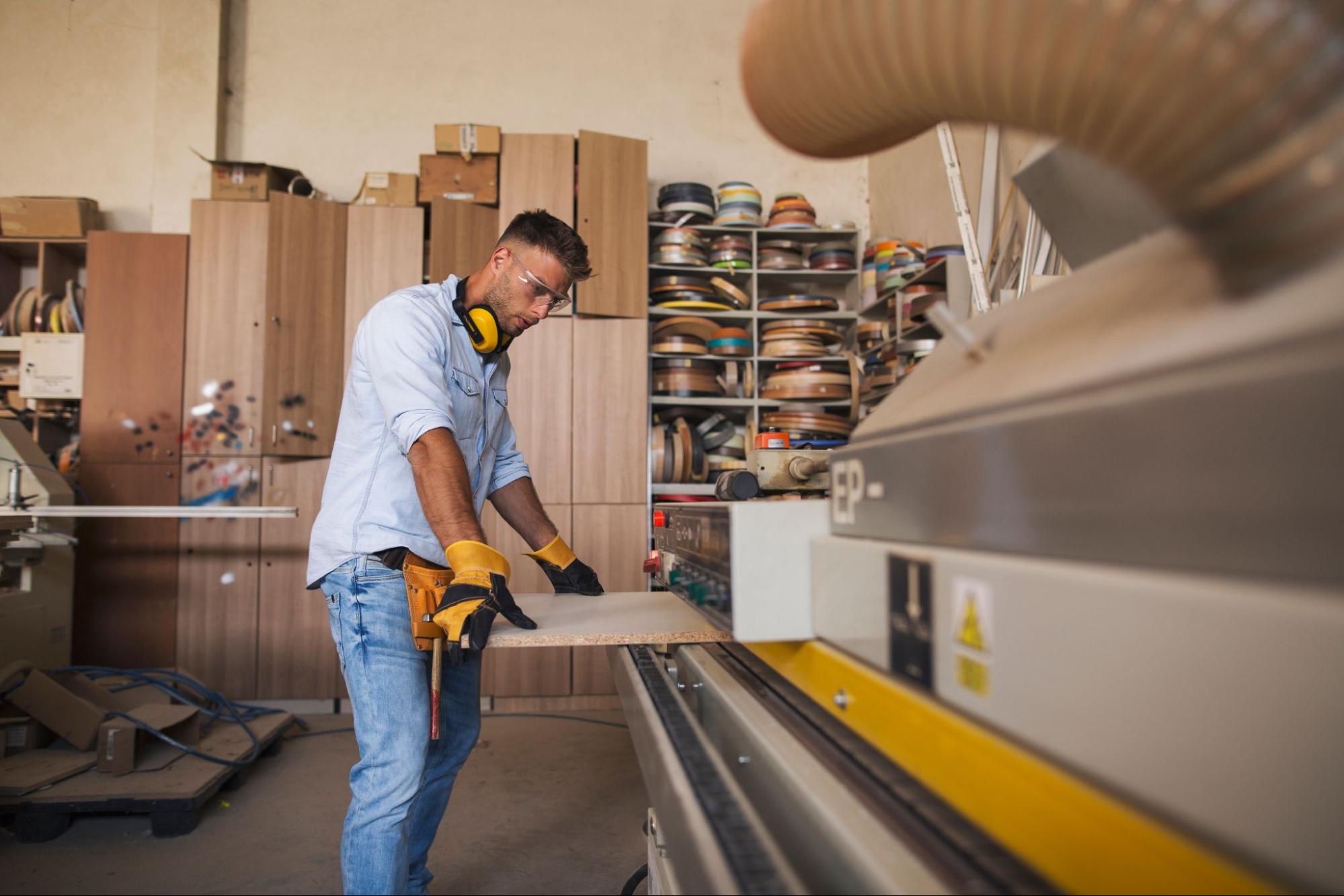
Edge banding covers the exposed sides of MDF, HDF, particleboard, plywood and other panels used in cabinets, doors, shelving and interior furniture. Common edge materials include PVC, ABS, melamine and wood veneer. A strip can improve the panel’s appearance and help protect the exposed edge, but the complete edge design and finished bond determine how well it performs in humid service.

Edge banding gives wood-based furniture panels a finished appearance.
The strip’s backing and any primer are as important as the panel surface. Confirm compatibility on the actual production materials. TECHBOND’s woodworking adhesives guide gives a wider view of bonding options used in furniture manufacturing.
A practical PUR edge-banding process
1. Prepare the materials and equipment
Choose an adhesive grade for the board and strip. Check that the panel edge is accurately machined, clean and free of dust or oil. Size the edge strip correctly and inspect its backing. Use equipment designed for PUR and keep the feed, application and roller systems maintained.
2. Set the adhesive temperature
Follow the selected product’s recommended melt and application temperatures. The Vietnamese source mentions a broad 120–180°C range, but it should not be applied to every PUR formulation. Too much heat can degrade the adhesive or damage sensitive materials; too little can impair flow and wetting. Confirm temperature at the relevant point in the machine, not only at the tank display.
3. Apply and press within the open time
Apply a uniform coating and bring the strip into contact before the adhesive loses its working tack. Set roller pressure to achieve continuous contact along the edge, including corners. Excess adhesive can leave a visible line or require more cleanup, while too little can create unbonded sections.
4. Finish and inspect
Allow the edge to cool enough for trimming and handling, then follow the grade’s final cure guidance before performance testing. Remove excess adhesive without damaging the decorative surfaces. Inspect for gaps, lifting, uneven trimming and glue-line defects. Test adhesion after the intended curing period and after any relevant heat or humidity exposure.
Choosing a TECHBOND PUR grade
A suitable PUR edge banding adhesive should be selected against the actual panel, strip, line speed and finished-product requirements. Share those details with TECHBOND for a trial and processing recommendations. This makes it possible to compare appearance, bond strength and production stability on representative parts before routine use.
TECHBOND MFG (Vietnam) Co., Ltd.
- Address: No. 18 VSIP II-A, Street 23, Vietnam–Singapore Industrial Park II-A, Vinh Tan Ward, Tan Uyen, Binh Duong, Vietnam
- Sales hotline: 0866 15 37 68
- Email: info@techbond.com.vn

TECHBOND Vietnam is a leading manufacturer of industrial adhesives in Vietnam. We specialize in providing a wide range of flexibly customized adhesive products to meet the diverse requirements of our customers.
Need advice on the right industrial adhesive?
Share your materials, application and production process. TECHBOND will help recommend a suitable solution.
Request a consultation







