
Choosing the best lamination adhesive starts with the film, substrate, production method and finished product requirements. No single water-based, hot melt, solvent-based or polyurethane adhesive is best for every printed package or decorative panel. This guide compares the main options and explains what to test before ordering. The lamination overview explains the broader joining process.
Nội dung bài viết
Common types of lamination adhesive
Lamination brings a film or facing together with paper, board or another substrate. Film surface treatment, inks, coatings and machine conditions can all affect the bond. The best lamination adhesive for the actual assembly depends on those contact surfaces, rather than a broad product category alone.
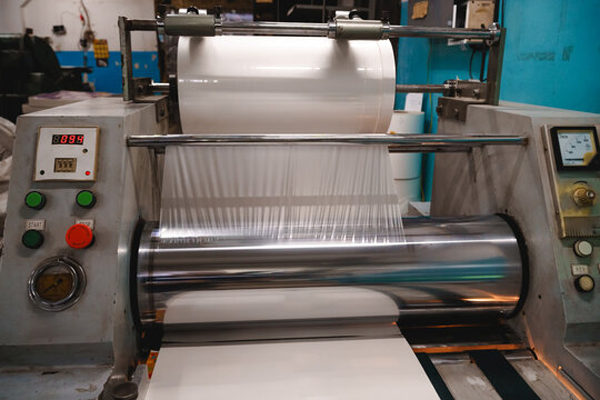
Compare adhesive options using samples of the intended film and substrate.
Water-based lamination adhesive
A water-based system uses water as its main carrier and may contain a polymer dispersion and other formulation ingredients. It can suit some paper and film lamination processes when the coating equipment, drying capacity and surfaces are appropriate. It is not automatically solvent-free in every component, and its emissions and handling requirements must be checked in the safety data sheet.
- Potential strengths: practical coating and clean-up options, depending on the grade, and a process that may avoid a large amount of organic solvent carrier.
- Key checks: film surface energy, drying time, residual moisture, adhesion to printed or coated surfaces and resistance after full drying.
- Limitations: some films or metallized surfaces need surface treatment or a specially qualified formulation. Water-based does not mean compatible with every BOPP, PET or metallized structure.
Hot melt lamination adhesive
A conventional hot melt is applied in a heated state and develops handling strength as it cools. Formulations can use polymers such as EVA or polyolefins, with properties that vary by grade. Hot melt may suit selected paper, board and film bonding operations where the applicator and substrate can tolerate the process temperature.
- Potential strengths: fast setting and a process without a drying stage for a liquid carrier.
- Key checks: application temperature, viscosity, open time, coat weight, heat sensitivity of the film and final bond strength.
- Limitations: heated equipment and temperature control are necessary. A general hot melt grade cannot be assumed to bond all UV-coated, BOPP or metallized materials.
See TECHBOND’s guide to temperature and hot melt adhesive when setting up a heated process.
Solvent-based lamination adhesive
A solvent-based adhesive contains a polymer system carried in one or more organic solvents. Certain grades are used where the laminate structure and performance demands justify this process. Suitable drying, ventilation, solvent handling and quality control are essential. Neither high bond strength nor resistance to heat and chemicals should be assumed without testing the exact grade and finished laminate.
Polyurethane (PU) lamination adhesive
Polyurethane describes a family of polymers rather than one interchangeable product. PU lamination systems may be one-component or two-component, and some are reactive hot melts. The preparation, mixing, cure schedule and applicable substrates depend on the grade. A two-component adhesive requires the specified mixing ratio; a one-component grade may require moisture or another cure condition. Request the technical data sheet before use.
PU systems may be selected for particular flexible packaging or decorative-panel structures, but claims such as a universal D4 rating, fixed shelf life or guaranteed resistance to water, solvents and heat do not apply to every PU adhesive. Compare product-specific test data, storage requirements and total production cost. For a related wood-panel process, read PUR hot melt adhesive for acrylic lamination.
How to choose the best lamination adhesive
Identify both bonding surfaces
Specify the film type, such as BOPP, PET or CPP, as well as the paper, board or panel underneath. Note any printing ink, coating, metallization or surface treatment. An adhesive may contact a coating or backing layer rather than the base polymer. Ask the supplier to confirm that interface.
Match the adhesive to the line
Check the applicator, coating weight, line speed, drying capacity, temperature, pressure and time available for curing. Test with production samples and the intended settings. A strong laboratory bond is of limited value if the grade cannot be applied consistently on the real machine.
Define performance and safety requirements
Measure peel strength and appearance after the specified cure period. Add heat, humidity, chemical or aging tests where relevant to the finished package. For food-contact packaging or regulated uses, request documentation for the exact adhesive and complete laminate; do not infer compliance from the adhesive family. Review the safety data sheet and controls for workers and emissions.
Compare total process cost
The purchase price alone does not identify the best lamination adhesive. Compare coat weight, scrap, drying or heating energy, cleaning, storage and line downtime. Trial at least the shortlisted grades under the same conditions and record both bond quality and output.
Discuss your lamination trial with TECHBOND
The best lamination adhesive for a specific job is the grade that works with the intended surfaces and process while meeting the finished-product requirements. TECHBOND can review your film, substrate, machine settings and target performance to help plan a trial. Our industrial adhesive selection guide provides a broader checklist.
TECHBOND MFG (VIETNAM) CO., LTD.
- Address: No. 18 VSIP II-A, Street 23, Vietnam–Singapore Industrial Park II-A, Vinh Tan Ward, Tan Uyen City, Binh Duong Province, Vietnam
- Hotline: 0866 15 37 68
- Email: info@techbond.com.vn

TECHBOND Vietnam is a leading manufacturer of industrial adhesives in Vietnam. We specialize in providing a wide range of flexibly customized adhesive products to meet the diverse requirements of our customers.
Need advice on the right industrial adhesive?
Share your materials, application and production process. TECHBOND will help recommend a suitable solution.
Request a consultation







