
PUR hot melt adhesive for acrylic lamination can be considered when a furniture manufacturer bonds an acrylic decorative surface to a suitable wood-based panel. Acrylic surfaces and backing layers vary, so a successful bond depends on the exact materials, surface preparation, applicator and curing conditions. This guide explains the adhesive system, potential benefits and the checks to make before production.
Nội dung bài viết
What is a PUR hot melt adhesive?
A reactive polyurethane (PUR) hot melt is heated for application and develops initial handling strength as it cools. It then reacts with moisture and continues to cure. That second stage distinguishes it from many conventional thermoplastic hot melts. Read the polyurethane overview for background on the polymer family.
PUR hot melts are supplied in moisture-protected packaging and require equipment suitable for the grade. Open time, application temperature, viscosity and cure rate vary by product. A PUR label alone cannot confirm that an adhesive will bond a particular acrylic sheet, film or coated panel. For a broader comparison, see traditional hot melt vs PUR adhesive for wood.
Potential benefits for acrylic surface bonding
When the grade and process are suitable, PUR hot melt may provide a clean bond line and useful handling strength for a continuous lamination process. The cured joint may also offer improved performance under defined heat or moisture conditions. These outcomes need to be validated for the finished panel rather than assumed for every PUR formulation.
- Bond performance: assess adhesion to both the acrylic surface or backing and the wood-based substrate. Surface treatment, protective films and contamination can change the result.
- Appearance: control coat weight, pressure and panel flatness to reduce visible lines, bubbles or telegraphing through a glossy face.
- Process speed: match the adhesive’s open time and initial set to the line speed and nip or press arrangement.
- Service conditions: test the cured assembly for its intended temperature, humidity and cleaning exposure.
- Material use: compare applied coat weight and finished-panel yield; a general percentage comparison with water-based adhesives is not reliable without a defined test.
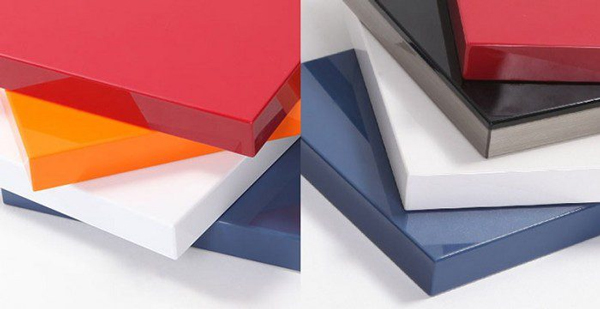
Trial the exact acrylic surface and panel before choosing a PUR hot melt grade.
Do not assume that every PUR grade is flame-retardant, electrically insulating, solvent-free in all respects or safe for every exposure. Request the exact technical and safety data sheets and any product-specific test documentation needed for the application.
Applications of PUR hot melt in acrylic-faced panels
In furniture production, a suitable PUR hot melt may be used to laminate certain acrylic decorative surfaces to MDF, HDF or other engineered boards. The acrylic construction matters: a rigid sheet, thin film and pre-coated laminate can have different bonding surfaces. Confirm whether the adhesive is meant to contact the acrylic itself or a backing layer.
- Bonding a compatible acrylic face or film to a prepared wood-based board.
- Producing a smooth decorative panel when the coating, pressure and substrate are controlled.
- Using a separately qualified grade for edge-banding or other woodworking joints.
A grade selected for an acrylic face is not automatically suitable for PVC, ABS, PP, veneer or every edge band. For edge applications, use the MDF edge-banding adhesive guide and test the intended material. Moisture resistance of the adhesive alone cannot make the entire panel waterproof; the substrate and exposed edges also need evaluation.
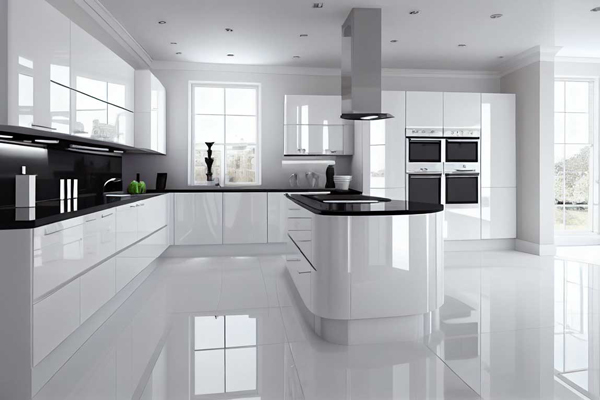
Acrylic-faced furniture requires a consistent adhesive film and controlled pressing.
What to check before buying
- Materials: identify the acrylic construction, backing, board type, coating and surface cleanliness.
- Equipment: confirm application temperature, roller or slot-coater compatibility, coat weight, pressure and approved cleaning procedure.
- Timing: match open time, initial handling strength and full cure to the production and packing schedule.
- Performance: trial bond strength, appearance, dimensional stability and service-condition resistance on real panels.
- Documentation and cost: request technical data, safety information, storage guidance and total process cost for the exact grade.
Discuss an acrylic lamination trial with TECHBOND
TECHBOND can help assess a PUR hot melt adhesive for acrylic lamination when you provide sample acrylic material, board details, equipment settings, target line speed and end-use requirements. The right choice should be confirmed by a controlled trial and inspection after the intended cure period.
TECHBOND MFG (VIETNAM) CO., LTD.
- Address: No. 18 VSIP II-A, Street 23, Vietnam–Singapore Industrial Park II-A, Vinh Tan Ward, Tan Uyen City, Binh Duong Province, Vietnam
- Hotline: 0866 15 37 68
- Email: info@techbond.com.vn

TECHBOND Vietnam is a leading manufacturer of industrial adhesives in Vietnam. We specialize in providing a wide range of flexibly customized adhesive products to meet the diverse requirements of our customers.
Need advice on the right industrial adhesive?
Share your materials, application and production process. TECHBOND will help recommend a suitable solution.
Request a consultation







