When an adhesive bond fails after pressing, is the adhesive really the problem?
In production, bond failure often leads companies to consider changing to another adhesive immediately. However, the same adhesive can produce different results when the material, temperature, pressing pressure or line speed changes.
Before changing the adhesive, check all conditions that create the bond. Identifying the true cause reduces trial time, limits scrap and prevents incorrect process adjustments.
Table of Contents
7 common causes of adhesive bond failure
1. The material surface has not been properly cleaned
Dust, oil, release agents or a thin layer of contamination can prevent direct contact between the adhesive and the material. Check the surface condition and confirm that the cleaning method is suitable.
2. The material moisture content is unsuitable
Excessive moisture can affect wetting and bond formation. For wood, paper, fabric or other absorbent materials, control storage conditions and measure moisture before production.
3. Pressing temperature is too low or uneven
Low temperature may prevent the adhesive from reaching the required state. Excessive or unstable temperature can change viscosity, open time and application performance. Check temperature distribution at the pressing area, not only the machine display.
4. Pressing pressure or time is insufficient
Insufficient pressure may prevent even contact between the two surfaces. Pressing time that is too short can leave the bond unstable. Compare actual pressure, time and pressing area with the material and adhesive requirements.
5. Adhesive quantity or viscosity is unsuitable
A coating that is too thin may not cover the surface; a coating that is too thick may extend setting time or create defects. Check dosage, viscosity, temperature, storage time and mixing conditions.
6. The production line speed is too high
When line speed increases, contact time, pressing time or curing time may no longer be suitable. Evaluate speed changes together with the adhesive open time and setting time.
7. Curing or storage conditions are unsuitable
The product may not reach final strength immediately after pressing. Temperature, humidity, waiting time and stacking method can affect the result. Distinguish failure immediately after pressing from failure after use.
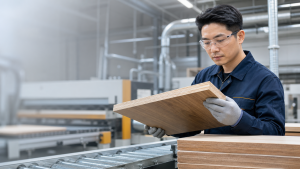
What should you check first?
To avoid uncontrolled trials, check in this order:
- Identify where and when the bond failure appears.
- Check the surface, moisture and material condition.
- Record temperature, pressure, pressing time and line speed.
- Check adhesive quantity, viscosity and application method.
- Review curing, storage and waiting conditions.
- Run a controlled trial before changing the adhesive.
Quick checklist for bond failure
| Item | Warning sign | Check |
|---|---|---|
| Material surface | Dust, oil or release agent | Clean and verify before application |
| Moisture | Variation between batches | Measure and record before production |
| Pressing parameters | Unstable temperature, pressure or time | Compare actual values with the process standard |
| Adhesive quantity | Coating too thin or too thick | Check dosage and viscosity |
Frequently asked questions
Why does adhesive fail after pressing?
The cause may be the surface, material moisture, temperature, pressure, pressing time or curing conditions—not only the adhesive itself.
Should you change the adhesive immediately?
Not necessarily. Check the material and process parameters first so that the same failure does not continue after the adhesive is changed.
How do you choose a suitable adhesive?
Compare the material, equipment, line speed and pressing conditions with the adhesive technical data. TECHBOND can support application-specific evaluation.
See also this woodworking process guidance when building a production checklist.
Conclusion
Adhesive bond failure after pressing does not always originate from the adhesive itself. A correct diagnosis should consider the material, equipment, process parameters and post-bond conditions together.
TECHBOND can help evaluate the next steps using actual production information. Share the material, equipment, line speed, pressing parameters and photos of the failed area to receive a suitable recommendation.
Related articles: how to choose industrial adhesive by material and production process, water-based adhesive, and industrial wood adhesive.

TECHBOND Vietnam is a leading manufacturer of industrial adhesives in Vietnam. We specialize in providing a wide range of flexibly customized adhesive products to meet the diverse requirements of our customers.
Need advice on the right industrial adhesive?
Share your materials, application and production process. TECHBOND will help recommend a suitable solution.
Request a consultation