When manufacturing and assembling mattresses, choosing the right pocket spring mattress adhesive plays a core role in ensuring product durability and structure. To meet processing needs on automated lines, Techbond Vietnam introduces TECHBOND HM 15-7010 (EVA-based hotmelt adhesive, low odor). Additionally, for bonding foam, fabric, felt, or non-woven fabric layers in mattresses, Techbond Vietnam recommends TECHBOND HM 15-7004 (PP-based hotmelt adhesive, long open time). Before mass production, businesses must conduct trials on actual materials and equipment, and thoroughly consult the technical TDS/SDS documentation.
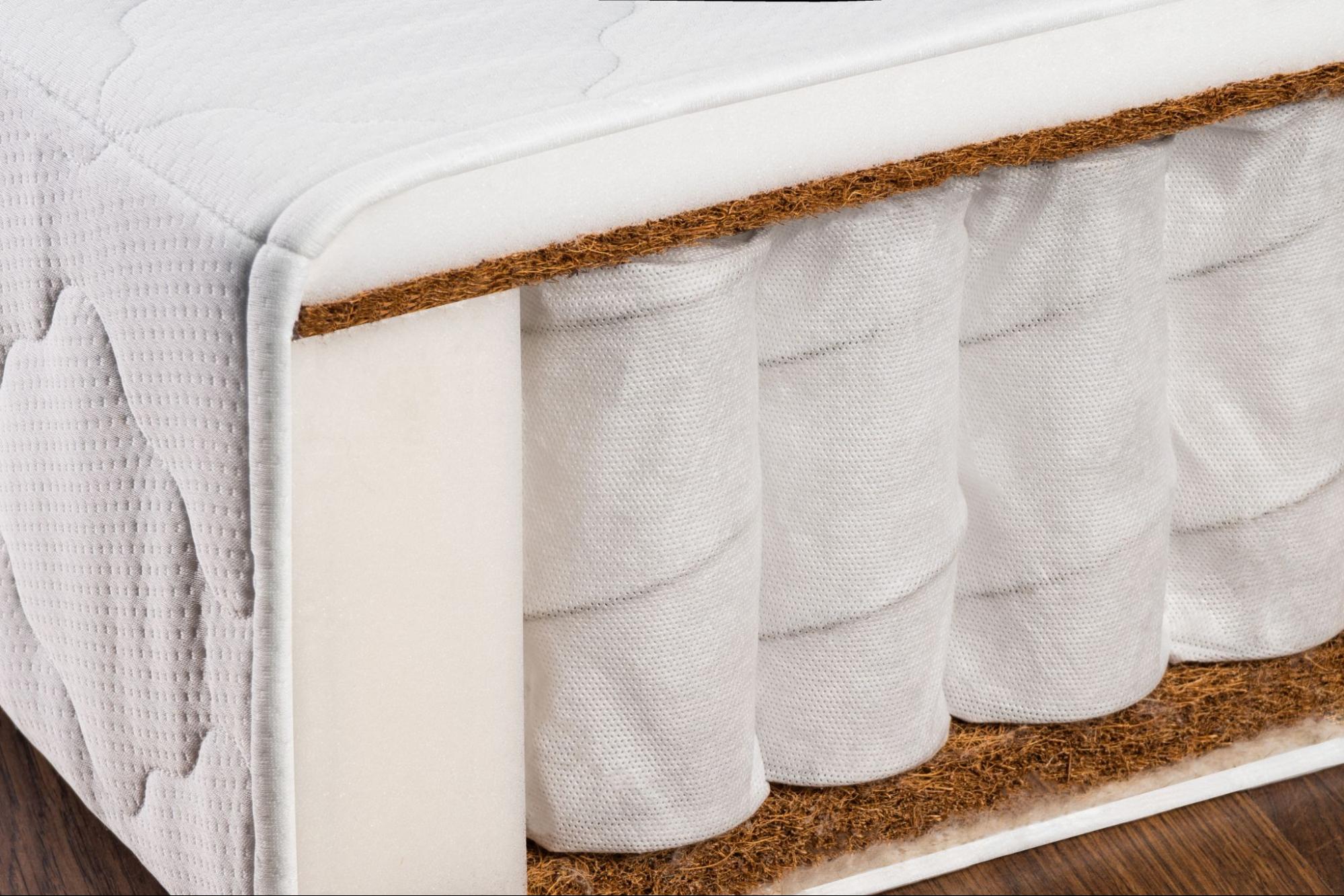
Table of Contents
Distinguishing Pocket Spring Assembly When Choosing Pocket Spring Mattress Adhesive
In the pocket spring assembly stage, it is necessary to accurately identify the actual surface in contact with the adhesive (such as the pocket material). Note that the term “pocket spring adhesive” does not mean gluing directly to the metal part of the springs, nor should pocket forming/sealing be confused with bonding finished pockets into a cohesive unit. The adhesive bead placement and application method must be verified against the actual machine design.
For the mattress layer assembly stage, the material pairs can be foam, fabric, felt, or non-woven fabric. The adhesive used for non-automated pocket spring assemblies is fully suitable for these material pairs. However, adhesive absorption, deformation rate, springback resistance, and visual appearance must be checked on actual samples.
Mattress Adhesive Grades Provided by Techbond Vietnam
| Product Code | Group & Application | Characteristics Published by Techbond Vietnam |
|---|---|---|
| TECHBOND HM 15-7010 | EVA-based Hotmelt; Pocket Spring Assembly | Suitable for automated machines; Low Odor. |
| TECHBOND HM 15-7004 | PP-based Hotmelt; Mattress Assembly | Materials: foam, fabric, felt, non-woven fabric; long open time. |
| TECHBOND CA 22001 | Water-based Adhesive; Mattress | Applied by roller or spray; suitable for flat lamination. |
| TECHBOND CA 22002 | Water-based Adhesive; Mattress | Spray application; Techbond Vietnam describes fast-setting capability and good springback resistance. |
Source: TECHBOND Product Catalogue, 2026 document provided by Techbond, page 12. For additional technical information, refer to international material standards at ISO. This is a selective list based on company documentation, not a commitment for all available or locally produced grades in Vietnam. This information does not replace the TDS/SDS technical data sheets of individual products.
How to Read Temperature, Viscosity, and Open Time?
Application temperature and softening point are two completely different parameters. Techbond Vietnam records an application temperature of 170°C for both HM 15-7010 and HM 15-7004; while their corresponding softening points are 119 ± 5°C and 101 ± 5°C. These figures do not represent the service temperature limit of the finished mattress and must not be used as general settings for all tanks, hoses, or spray nozzles. Therefore, machine settings must be directly cross-referenced with TDS documents and actual equipment conditions.
Viscosity must be evaluated based on specific measurement conditions. Techbond Vietnam publishes a viscosity of 3,600 ± 600 cps (HM 15-7010) and 3,000 ± 500 cps (HM 15-7004), but the data table does not specify the exact measurement method and temperature. Therefore, customers should not rely solely on these two numbers to determine pumpability through nozzles, adhesive consumption, or machine pressure.
Open time is the allowable time window after adhesive application during which surfaces can still be joined to form a standard bond; it is not the time required to reach maximum bond strength. Setting time / handling strength time refers to the moment when the bond is strong enough to hold materials together for the next processing step. Both parameters must be practically verified using the exact materials, coating weight, temperature, and production line speed.
Adhesive Trial Process for Pocket Spring Mattresses
- Identify the process: Clarify whether it is pocket spring bonding or mattress layer assembly, determine adhesive path locations, and specify bond requirements.
- Prepare actual samples: Provide exact pocket materials, foam, fabric, or felt currently in use, along with mattress sample structures and surface treatment information (if any).
- Check equipment: Provide machine types, spraying or roll-coating methods, line speed, waiting time from application to pressing, pressing methods, and transition times between stages.
- Confirm trial conditions: Agree on adhesive grades, TDS/SDS sheets, coating weights, and application conditions; strictly avoid unauthorized mixing or changing setups outside technical guidelines.
- Evaluate results: Check adhesion strength, peeling locations, stringing, strike-through, adhesive bead rigidity, and holding capacity under springback forces. Re-evaluate after sample stabilization under agreed storage and transportation conditions.
- Assess cost-effectiveness: Monitor adhesive consumption, cleaning downtime, and product yield rates before deciding on mass production.
Does “Low Odor” Mean Non-Toxic?
No. The “Low Odor” attribute is merely a characteristic published by Techbond Vietnam for grade HM 15-7010, and it is by no means a certification that the product is non-toxic, VOC-free, or compliant with every strict requirement of finished mattresses. Businesses must carefully check safety data sheets (SDS), related testing documents, and specific customer requirements for each adhesive grade and mattress structure. Never generalize the low-odor property of one specific grade to all other product lines.
What Information Is Needed for Techbond Consultation and Quotation?
Techbond Vietnam is a specialized industrial adhesive manufacturer providing comprehensive solutions for the mattress manufacturing industry and other sectors. You can visit the official website at techbond.com.vn.
When contacting us, businesses should provide clear details: application process, material samples, machinery used, line speed, expected production volume, packaging conditions, and delivery location. Additionally, request the supplier to confirm the proposed adhesive grade, latest TDS/SDS documents, trial sample availability, origin, packaging specifications, minimum order quantity, and delivery timeline. These conditions must be finalized for each specific requirement.
Explore further solutions at Techbond Mattress Adhesive Solutions or Contact Us for Pocket Spring Adhesive Consultation for direct support. Cost per kilogram is only one contributing factor; more importantly, comparing actual adhesive consumption per standard product and optimizing total line operating costs is essential.

Techbond Việt Nam supplies industrial adhesives for woodworking, paper, packaging and other manufacturing applications. The team supports adhesive selection based on customer materials and production processes.
Need advice on the right industrial adhesive?
Share your materials, application and production process. Techbond Việt Nam will help recommend a suitable solution.
Request a consultation