
PUR adhesive applications in woodworking include edge banding, laminate bonding and profile wrapping. Reactive polyurethane hot melt combines an initial set on cooling with further moisture-driven curing. TECHBOND explains where this technology can be useful and which process details to validate for a reliable finished product.
Nội dung bài viết
Adhesive needs in wood manufacturing
Wood manufacturers join natural wood and engineered panels to make furniture, doors, flooring and decorative components. The bond has to suit the substrate, equipment and intended service conditions. Appearance can matter as much as strength: a poorly applied adhesive may leave a visible glue line, allow a covering to lift or slow production.
Common choices include water-based wood glues, conventional hot melts and reactive PUR systems. Each technology has a different processing window and finished-bond behavior. TECHBOND’s woodworking adhesives overview provides a broader comparison, while its PUR adhesive guide explains the chemistry and use cases.
How reactive PUR hot melt works
A typical reactive PUR hot melt contains polyurethane prepolymers. It is heated for application, develops initial handling strength as it cools and then cures further through a reaction with moisture. This two-stage behavior can help a production line handle a component before the bond reaches its final properties. The exact open time, application temperature and cure time depend on the selected formulation and working conditions.
Polyurethane chemistry is varied, and individual adhesives may use different additives to control viscosity, stability and final performance. A manufacturer should rely on the specific product’s technical data sheet rather than assume every PUR grade contains the same fillers or offers the same heat and water resistance. This polyurethane reference offers general background.
Practical benefits and limits
- Adhesion: suitable grades can bond wood-based panels and selected covering materials after appropriate surface preparation.
- Handling: the initial set may support efficient downstream processing, while full cure requires additional time.
- Durability: cured bonds can offer useful heat and moisture resistance, but the level must be verified for the grade, substrate and finished part.
- Process choice: available viscosities and open times allow selection for different lines; equipment and storage requirements still need attention.
The Vietnamese source refers to a temperature of 120°C as a possible performance level. That should not be treated as a universal PUR rating. If a furniture part must withstand a specified temperature or moisture exposure, test the assembled part against that requirement. Likewise, an adhesive does not make a wood surface scratch-resistant by itself.
Key PUR adhesive applications in woodworking
Edge banding on engineered panels
Edge banding covers the cut edge of MDF, HDF, particleboard or plywood with a decorative strip. A suitable PUR hot melt can help attach the strip and create a neat finished edge. Evaluate the actual panel and banding material, including any primer or backing. Control temperature, adhesive spread, pressure and feed speed so the edge is fully bonded without excess squeeze-out.
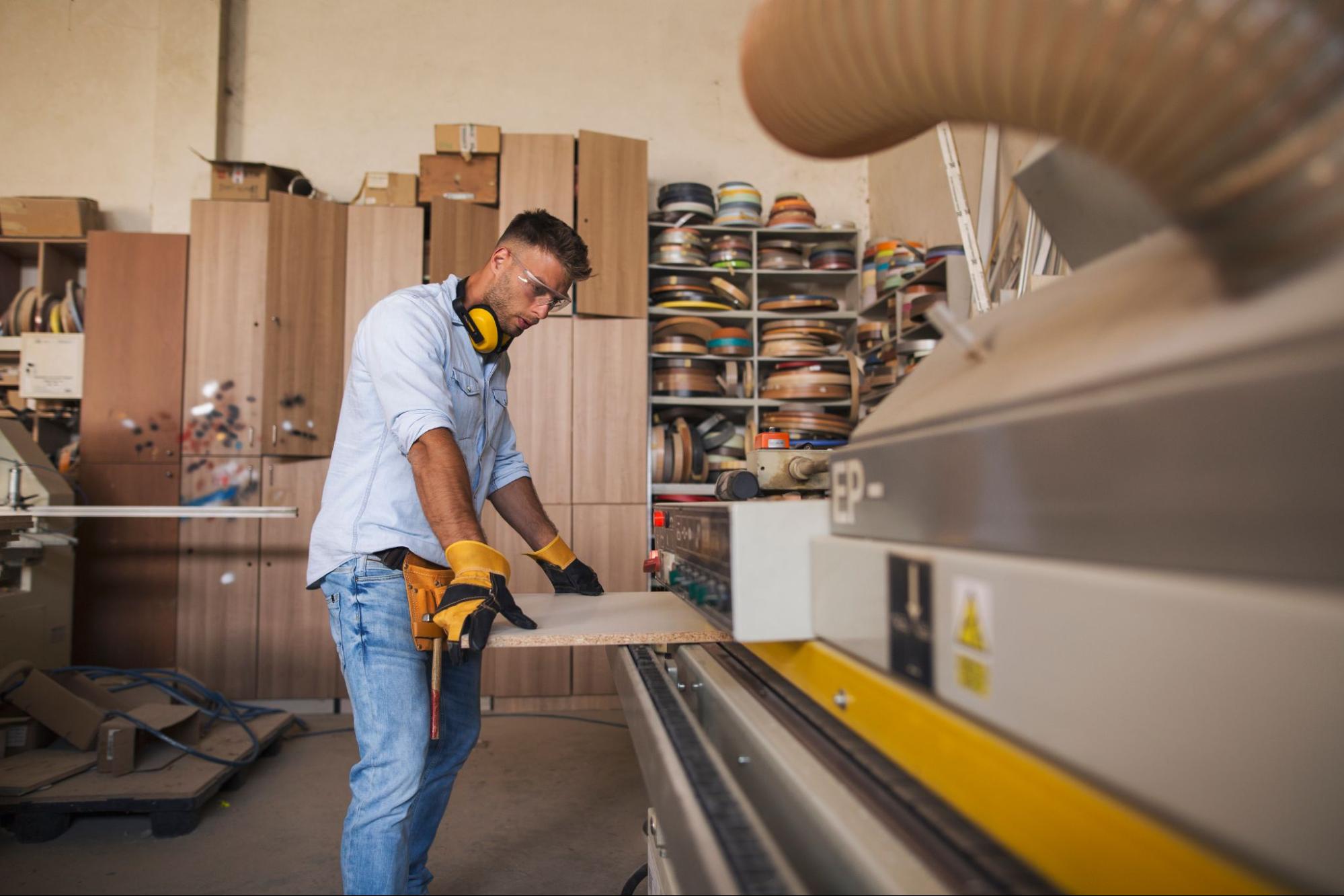
PUR hot melt can be evaluated for edge banding on engineered wood panels.
Inspect the edge after processing and after any expected heat or humidity exposure. A clean appearance alone does not prove the bond is strong; peeling and service-condition tests remain important. The right edge-banding grade also depends on the shape and width of the band.
Laminate and surface bonding
Another use is bonding a decorative laminate or other suitable facing to a wood-based substrate. The adhesive layer must be uniform so the surface remains smooth. Substrate flatness, coating weight, pressing and moisture content can all affect the result. Select a product and application method approved for the particular laminate and panel construction.
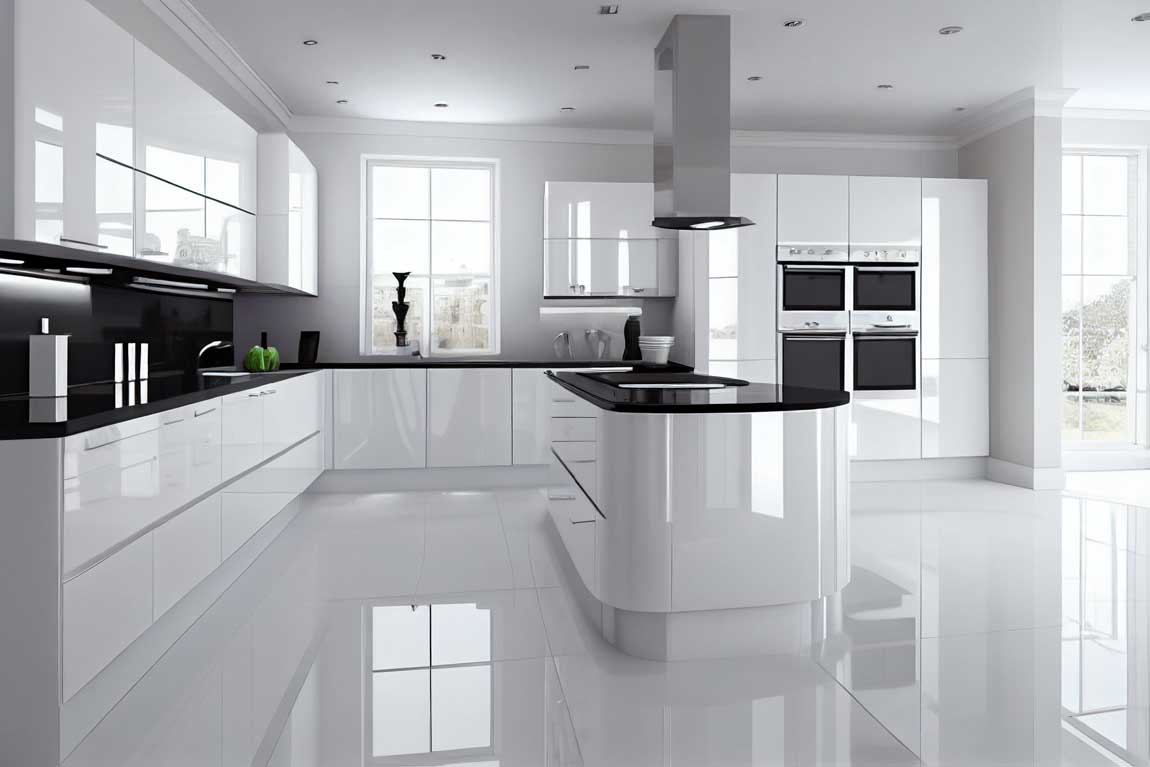
Surface bonding can improve the appearance of laminated furniture panels when the process is controlled.
Trial panels should be checked for bubbles, visible defects and bond strength after curing. If the panel will be used in a kitchen or another demanding environment, include the relevant moisture and temperature checks. Do not rely on the adhesive alone for the face material’s wear or scratch properties.
Profile wrapping
Profile wrapping applies a decorative film or veneer around a shaped wood-based profile. The covering must follow corners, grooves and curves without lifting. PUR hot melt can be considered when its open time, tack and cured flexibility match the profile geometry and material. Accurate coating and pressure at each contour are essential for a consistent finish.
For complex profiles, test the exact covering and substrate combination. Check corners after cooling and final cure, then repeat under expected service conditions. These checks help establish whether the chosen grade and machine settings are appropriate.
Production checks before choosing a PUR grade
- Material compatibility: record wood species or panel grade, surface coatings, and the type of edge band, laminate or wrapping film.
- Application window: follow the adhesive supplier’s melt temperature, open time, coating weight and pressure guidance.
- Moisture control: protect uncured PUR from uncontrolled moisture during storage and application, then allow the specified cure after bonding.
- Equipment care: use compatible melting and delivery equipment and maintain it to prevent char or inconsistent glue spread.
- Finished-part testing: check appearance, peel resistance and any required heat or humidity performance.
These checks help turn the potential benefits of PUR adhesive applications in woodworking into repeatable production results. Share the materials, machine type and performance target with TECHBOND to discuss an appropriate adhesive trial.
TECHBOND MFG (Vietnam) Co., Ltd.
- Address: No. 18 VSIP II-A, Street 23, Vietnam–Singapore Industrial Park II-A, Vinh Tan Ward, Tan Uyen, Binh Duong, Vietnam
- Sales hotline: 0866 15 37 68
- Email: info@techbond.com.vn

TECHBOND Vietnam is a leading manufacturer of industrial adhesives in Vietnam. We specialize in providing a wide range of flexibly customized adhesive products to meet the diverse requirements of our customers.
Need advice on the right industrial adhesive?
Share your materials, application and production process. TECHBOND will help recommend a suitable solution.
Request a consultation







