
For high-gloss furniture, the adhesive must hold an acrylic facing to its wood-based substrate while keeping the visible surface clean. This guide explains how PUR hot melt adhesive for acrylic panels works, what to check before production, and where it can help furniture manufacturers. TECHBOND can help match the adhesive and process to the actual materials.
Nội dung bài viết
Acrylic furniture surfaces and bonding requirements
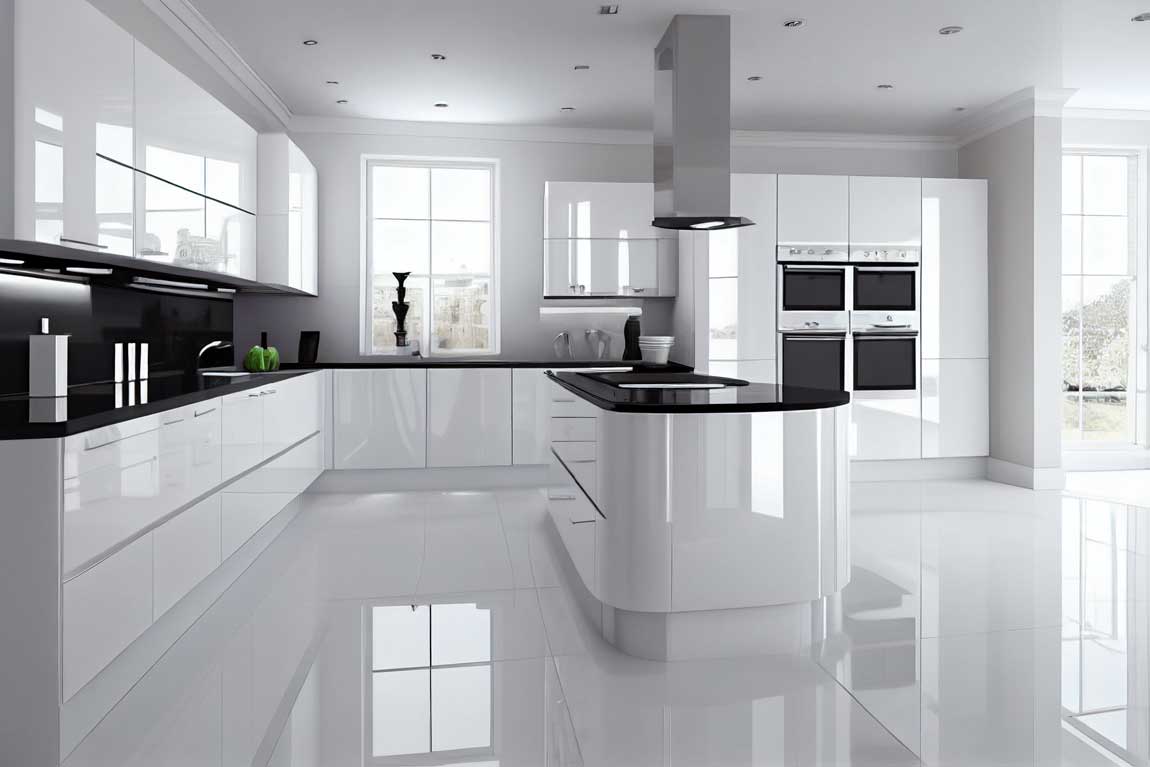
Acrylic-faced boards are used for glossy cabinet doors, kitchen units, bathroom furniture and other interior panels. Clear, mirror-gloss, colored and wood-grain finishes offer different looks. The acrylic layer has a smooth, relatively nonporous surface, so bonding it to MDF, plywood or another wood-based board requires a suitable adhesive and controlled surface preparation.
A good bond needs to meet several practical requirements:
- Adhesion to both materials: test the actual acrylic sheet, any backing layer or primer, and the chosen board. Similar-looking acrylic products can have different bonding surfaces.
- Resistance to service conditions: consider heat and humidity in the intended room, especially around kitchens and bathrooms.
- Clean appearance: apply a uniform, controlled coat to avoid visible defects, squeeze-out or contamination of the high-gloss face.
- Dimensional movement: allow for the different expansion behavior of acrylic and wood-based panels without loss of adhesion.
What is PUR hot melt adhesive for acrylic panels?
Reactive polyurethane (PUR) hot melt is applied in a heated state. It develops initial handling strength as it cools and then continues to cure through a reaction with moisture. This combination can make PUR hot melt adhesive for acrylic panels useful on a lamination line, provided the adhesive grade is compatible with the facing, substrate and equipment. For a wider overview of the chemistry and applications, see TECHBOND’s English guide to PUR adhesives and this polyurethane reference.
The Vietnamese source cites a typical application range of 100–140°C and discusses strong heat and moisture resistance. These are useful starting points, but the correct processing temperature and the finished bond’s performance depend on the specific adhesive, coating weight, substrates and curing conditions. Follow the chosen product’s technical data sheet and validate the finished panel before setting production specifications.
Benefits for acrylic-faced furniture
Durable adhesion
With compatible surfaces and correct processing, a cured PUR bond can help reduce delamination as panels experience normal handling and changes in indoor temperature or humidity. Adhesion should be checked on the exact production materials, particularly when an acrylic sheet has a protective film, coating or special backing.
A clean, high-gloss finish
A consistent adhesive layer helps preserve the intended appearance of glossy furniture. Keep the decorative face protected, prepare the substrate evenly and control glue spread and pressing so that the finish remains smooth. Where bond lines are visible, assess color and appearance on a sample panel before full production.
Efficient production flow
The initial set of a hot melt adhesive can support faster handling after lamination. Final cure takes longer, so a panel should not be judged only by its immediate handling strength. Coordinate open time, line speed and pressing conditions with the adhesive supplier and equipment settings. TECHBOND’s woodworking adhesives guide provides more context for furniture production.
Responsible handling
A hot melt process does not require the same solvent evaporation step as many solvent-based systems. Operators still need appropriate temperature control, ventilation and protective equipment. Review the product safety data sheet and any emissions requirements for the finished furniture; safety cannot be assumed from the adhesive category alone.
Production checks when bonding acrylic panels
- Confirm compatibility: make test panels using the actual acrylic facing and substrate. Check peel resistance, surface appearance and performance after expected heat or humidity exposure.
- Set the correct temperature: use the adhesive maker’s recommended melt and application range. Excess heat can damage the adhesive or sensitive facing, while insufficient heat may impair coating.
- Prepare surfaces: remove dust, grease and any release contamination. Confirm whether the acrylic backing needs a primer or special treatment.
- Control moisture and cure: PUR reacts with moisture, but deliberately wetting the surface is not a universal remedy. Follow the grade’s specified storage, application and curing conditions.
- Maintain the equipment: use compatible melting and coating equipment, control coating weight and pressure, and clean the line according to the equipment and adhesive instructions.
For manufacturers comparing adhesive technologies, TECHBOND also explains hot melt adhesive and its advantages. Selection should reflect the acrylic construction, production line and required finished-panel performance.
To discuss PUR hot melt adhesive for acrylic panels and arrange an application assessment, contact TECHBOND MFG (Vietnam) Co., Ltd.
- Address: No. 18 VSIP II-A, Street 23, Vietnam–Singapore Industrial Park II-A, Vinh Tan Ward, Tan Uyen, Binh Duong, Vietnam
- Sales hotline: 0866 15 37 68
- Email: info@techbond.com.vn

TECHBOND Vietnam is a leading manufacturer of industrial adhesives in Vietnam. We specialize in providing a wide range of flexibly customized adhesive products to meet the diverse requirements of our customers.
Need advice on the right industrial adhesive?
Share your materials, application and production process. TECHBOND will help recommend a suitable solution.
Request a consultation







