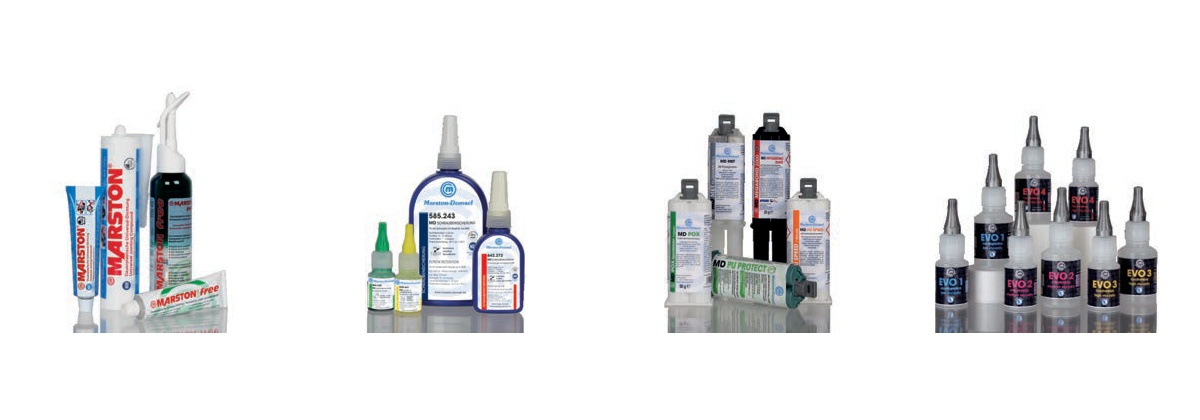
Techbond Vietnam is a distributor of Marston-Domsel adhesives, offering additional options for assembly, threadlocking, sealing and industrial equipment maintenance. The range includes anaerobic adhesives, instant adhesives, two-component adhesives, flexible adhesives, silicones and UV-curing adhesives.
Nội dung bài viết
More adhesive options for industrial assembly and maintenance
Every joint has its own requirements for materials, clearance, loads and operating conditions. Alongside Techbond Vietnam industrial adhesives for manufacturing, Marston-Domsel products provide additional options for component assembly and machinery maintenance.
Techbond Vietnam reviews information about materials, processes and operating conditions to advise on suitable adhesive ranges. Marston-Domsel products are distributed alongside adhesives manufactured by Techbond.
Marston-Domsel adhesive ranges
Anaerobic adhesives: threadlocking, retaining and sealing
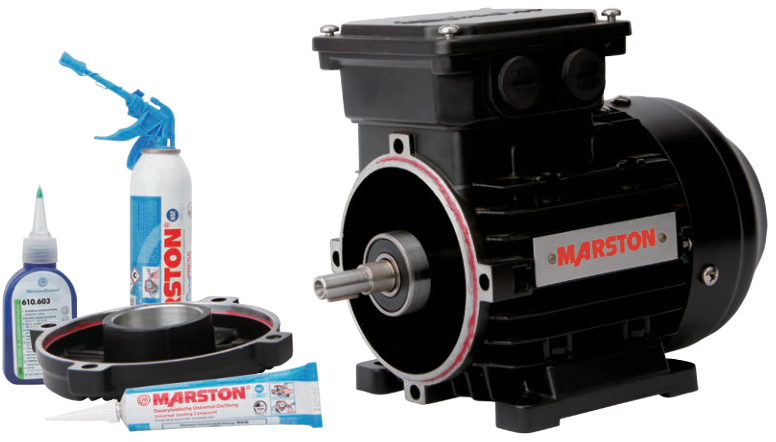
The MD Anaerobic range includes MD Screw Retention threadlockers, MD Bushing & Bearing Retention retaining compounds, MD Pipe Thread Sealant and MD Surface Sealant for flange sealing. These products serve different joints within machinery and equipment.
Selection requires information about joint dimensions, metal substrates, clearance and maintenance disassembly requirements. Bond strength and curing conditions should be checked against the documentation for the specific product.
MD GLUE RAPID instant adhesives
The cyanoacrylate (CA) instant adhesive range includes MD GLUE RAPID, RAPID EVOLUTION and specialist products. These adhesives are intended for rapid component bonding; the specific grade should be selected according to the substrate surface, viscosity and required working time.
Two-component adhesives for assembly and repair
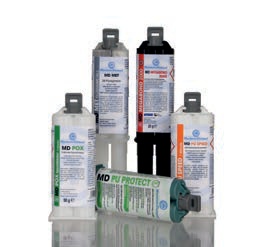
The range includes MD MEGABOND, MD POX, MD MET and MD PU SPEED. Two-component products use different chemistries, so selection should follow the requirements of the joint rather than the general description “two-part adhesive”.
Relevant factors include the pair of substrates, bonding area, gap-filling requirements, working time, time before service and loads. For epoxy products, see our guide to using epoxy adhesive for preparation and application steps. Mixing ratios, mixing nozzles and application methods must follow the instructions for the specific grade.
Flexible adhesives, silicones and sealing products
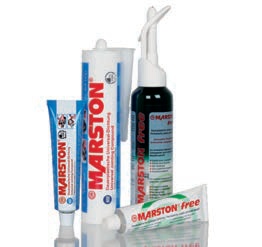
MD MS POLYMER, MD FLEX PU and MD MS 2K provide options for joints requiring flexibility. MARSTON, MARSTON Free and MD SIL serve different sealing needs depending on the specific grade.
Product selection should consider joint movement, substrates, operating environment and surface finish requirements. Temperature resistance, chemical resistance and certifications must be verified for the exact product under consideration.
UV adhesives and application accessories
MD MUV and UV STAR cure using UV light. When considering an application, check whether UV light can reach the adhesive layer and whether suitable curing equipment is available.
Marston-Domsel also offers cleaners, surface primers, adhesive removers, dispensing guns and mixing nozzles. These accessories should be considered alongside surface preparation and application procedures.
What information is needed for adhesive selection advice?
Businesses can prepare the following information when contacting Techbond Vietnam:
- Materials to be bonded or sealed, surface condition and photographs of the components.
- Joint dimensions, clearance and load-bearing or leak prevention requirements.
- Operating temperature, humidity and fluids or substances the joint will contact.
- Working time, dispensing method and maintenance disassembly requirements.
- The adhesive currently used, pack size and expected demand.
Before production use, review the technical data sheet (TDS), safety data sheet (SDS) and trial results on the actual substrates. Pricing, available pack sizes and lead times are discussed for the specific grade and requirements.
Assessing the application before choosing a grade
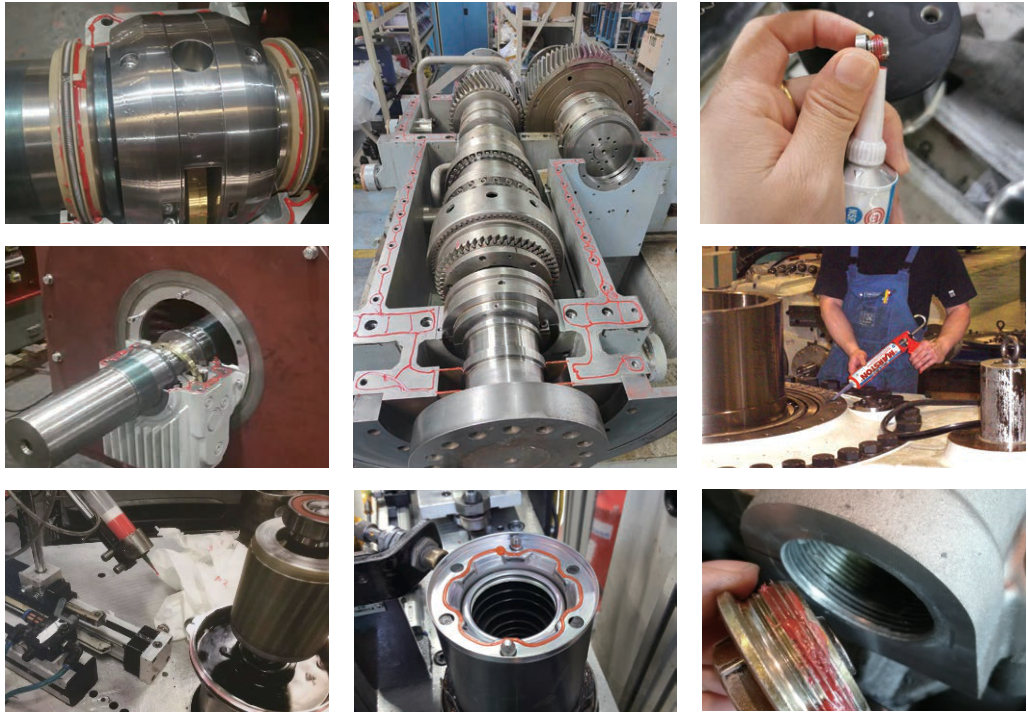
Start with the purpose of the joint: threadlocking, retaining, sealing or assembly bonding. Similar-looking joints may require different solutions because their materials, clearances or maintenance requirements differ. Identify the appropriate product family, then check the specific grade against its TDS.
Information to record at the point of use
Prepare component photographs, dimensional drawings if available and a description of the actual surface condition. For an application with an existing problem, record where separation or leakage occurs and any suspected cause. Detailed information helps the assessment reflect production and maintenance needs.
Distinguish application conditions from equipment operating conditions. Describe surface preparation, dispensing tools, the time available for curing and the operating environment. If the joint will contact water, oil or chemicals, provide the substance and expected temperature so the documentation for the specific grade can be checked.
Disassembly and maintenance requirements
Before trials, establish whether the joint must be dismantled periodically. Maintenance frequency, available tools and the ability to replace components should be discussed alongside bonding or sealing requirements. Do not choose by bottle colour or assume that similarly named products are direct substitutes.
Product trials and cost-in-use assessment
Agree on evaluation criteria before testing an adhesive. Samples should represent the actual substrates and process. Surface preparation, mixing ratio, working time and curing conditions must follow the selected product’s instructions. Recording these factors makes trial results easier to compare.
- Describe the substrates, joint geometry and required outcome.
- Review the TDS, SDS, pack sizes and application tools.
- Test representative samples using the agreed procedure.
- Record adhesive consumption, application time and evaluation results.
- Obtain approval from the responsible team before wider implementation.
Assess cost per completed component or joint. In addition to purchase price, consider actual adhesive consumption, waste, mixing nozzles, cleaning supplies, application time and rework rates. This allows businesses to compare performance within their own process rather than looking only at the price per bottle.
Product grades and selection specifications
These tables help compare grades by viscosity, gap, timing and operating temperature. “≈” means approximate; “—” means no value is listed here. Handling strength, functional strength, skin formation and full cure are different milestones. For production selection, check the current TDS and test on actual substrates. Techbond Vietnam confirms pack sizes and availability for each enquiry.
MD Screw Retention threadlockers
| Product grade / range | Viscosity (mPa·s) | Max. thread size | Gap (mm) | Breakaway torque (N·m) | Handling strength (min) | Functional strength (h) | Temperature range (°C) |
|---|---|---|---|---|---|---|---|
| MSS.541.241 | 100–150 | M12 | 0.10 | 10–15 | 10–20 | 1–3 | −55…+150 |
| MSS.550.222 | 900–1100 | M24 | 0.20 | 4–8 | 15–30 | 1–3 | −55…+150 |
| MSS.581.242 | 900–1100 | M24 | 0.20 | 15–25 | 10–20 | 1–3 | −55…+150 |
| MSS.585.243 | 2000–7500 | M36 | 0.25 | 17–22 | 10–20 | 1–3 | −55…+150 |
| MSS.5850K.2400 | 1700–9000 | M36 | 0.25 | 13–18 | ≈30 | 6–12 | −55…+150 |
| MSS.681.262 | 3000–6000 | M36 | 0.25 | 20–25 | 10–15 | 1–3 | −55…+150 |
| MSS.520.290 | 70–90 | M6 | 0.07 | 15–25 | 10–20 | 1–3 | −55…+150 |
| MSS.587.245 | 6000–20000 | M80 | 0.30 | 10–15 | 15–30 | 1–3 | −55…+150 |
| MSS.641.270/1 | 400–700 | M20 | 0.15 | 28–35 | 15–30 | 1–3 | −55…+150 |
| MSS.642.272 | 8000–15000 | M36 | 0.30 | 20–35 | 20–40 | 3–6 | −55…+230 |
| MSS.6410K.2700 | 500 | M20 | 0.15 | 20–30 | 20–40 | 6–12 | −55…+150 |
MSS.550.222 is low strength; MSS.541.241, 581.242, 585.243, 5850K.2400 and 681.262 are medium strength. Grades 520.290, 587.245, 641.270/1, 642.272 and 6410K.2700 are high strength and harder to dismantle. Many grades have 20 g, 50 g and 250 g bottles; confirm the order code for each option.
MD Bushing & Bearing Retention compounds
| Product grade / range | Viscosity (mPa·s) | Gap (mm) | Breakaway torque (N·m) | Handling strength (min) | Functional strength (h) | Temperature range (°C) |
|---|---|---|---|---|---|---|
| MBL.610.603 | 100–150 | 0.10 | 25–30 | 10 | 1–3 | −55…+150 |
| MBL.630.641 | 500–700 | 0.12 | 12–15 | 10–20 | 1–3 | −55…+150 |
| MBL.650.648 | 400–600 | 0.15 | 30–35 | 5–10 | 1–3 | −55…+175 |
| MBL.665.620 | 8000–15000 | 0.30 | 25–30 | 20–40 | 3–6 | −55…+230 |
| MBL.690.638 | 1500–2500 | 0.20 | 30–40 | 5–10 | 1–3 | −55…+150 |
MBL.630.641 is medium strength and removable; the other four grades are high strength. The listed torque does not replace load assessment of a cylindrical joint.
MD Pipe Thread Sealant
| Product grade / range | Viscosity (mPa·s) | Max. thread size | Gap (mm) | Breakaway torque (N·m) | Handling strength (min) | Functional strength (h) | Temperature range (°C) |
|---|---|---|---|---|---|---|---|
| MRG.678.511 | 60000–90000 | M80 | 0.30 | 7–10 | 20–40 | 1–3 | −55…+150 |
| MRG.670.542 | 500–700 | M20 | 0.15 | 12–16 | 10–20 | 1–3 | −55…+150 |
| MRG.675.577 | 4000–70000 | M80 | 0.50 | 18–22 | 15–30 | 1–3 | −55…+150 |
| MRG.676.576 special | 15000–25000 | M56 | 0.25 | 8–12 | 10–15 | 1–4 | −55…+180 |
| MRG.6750K.5770 | 24000–70000 | M80 | 0.50 | 18–22 | 15–30 | 1–3 | −55…+150 |
| MRG.666.620 | 3000–5000 | M56 | 0.25 | 28–36 | 20–40 | 1–3 | −55…+200 |
MD Surface Sealant
| Product grade / range | Viscosity (mPa·s) | Gap (mm) | Shear strength (MPa) | Handling strength (min) | Full cure (h) | Temperature range (°C) |
|---|---|---|---|---|---|---|
| MFD.2000.573 | 17000–50000 | 0.50 | 4–6 | 20–40 | 1–3 | −55…+150 |
| MFD.3000.518 | 50000–250000 | 0.50 | 8–13 | 10–20 | 1–3 | −55…+150 |
| MFD.4000.574 | 30000–100000 | 0.50 | 5–10 | 15–30 | 1–3 | −55…+150 |
| MFD.5000.510 | 70000–300000 | 0.50 | 5–10 | 15–30 | 3–6 | −55…+200 |
Shear strength is listed to DIN 54452. Times are grade-specific reference values; check the TDS and joint conditions before deciding when to leak-test or return equipment to service.
MD GLUE RAPID and EVO instant adhesives
| Product grade / range | Viscosity (mPa·s) | Gap (mm) | Handling strength (s) | Temperature range (°C) |
|---|---|---|---|---|
| MD GLUE EVO 1 | 25–55 | 0.10 | — | −40…+100 |
| MD GLUE EVO 2 | 150–250 | 0.15 | — | −40…+100 |
| MD GLUE EVO 3 | 1100–1500 | 0.30 | — | −40…+100 |
| MD GLUE EVO 4 | 2400–2600 | 0.35 | — | −40…+125 |
| MGL.101.4062 | ≈2–5 | 0.05 | 2–5 | −50…+80 |
| MGL.111.495 | ≈35–70 | 0.07 | 5–15 | −50…+80 |
| MGL.150.424 | ≈50–100 | 0.10 | 8–20 | −50…+80 |
| MGL.200.435 | ≈200–350 | 0.15 | 10–20 | −50…+80 |
| MGL.300.431 | ≈1200–1500 | 0.20 | 10–30 | −50…+80 |
| MGL.BS.406 | ≈3–10 | 0.05 | 2–10 | −50…+80 |
| MGL.BS100.401 | ≈100 | 0.07 | 2–10 | −60…+80 |
| MGL.BS-SP | ≈15–25 | 0.05 | 2–10 | −50…+80 |
| MGL.310.415 | ≈1200–1700 | 0.30 | 10–30 | −60…+80 |
| MGL.GA.460 | ≈30–50 | 0.03 | 5–20 | −60…+80 |
| MGL.SQ.414 | ≈90–120 | 0.10 | 3–30 | −50…+80 |
| MGL.M.493 | ≈10–30 | 0.05 | 20–70 | −50…+80 |
| MGL.M100.496 | ≈90–120 | 0.10 | 5–15 | −60…+80 |
| MGL.BZ Blitzschnell | 250–300 | 0.15 | 4–10 | −40…+80 |
| MGL.RS Rapid Secure | ≈120–170 | 0.15 | 5–90 | −40…+80 |
| MGL.FL.403 | 90–120 | 0.07 | 5–15 | −50…+80 |
| GLUE EL.4850 | ≈90–120 | 0.05 | 3–10 | −60…+80 |
| MGL.SW.480 black | ≈500–1000 | 0.10 | 5–40 | −50…+120 |
| MGL.SW15 black | ≈1500 | 0.15 | 10–30 | −60…+120 |
| MGL.PD Duplex | ≈90–230 | 0.15 | 10–130 | −50…+80 |
| MGL.GEL 454 | ≈55000 | 0.50 | 5–60 | −60…+80 |
| MGL.405 | 2500–3000 | 0.15 | 20–50 | −50…+135 |
Handling time depends on the substrate and surface conditions. “—” means no value is listed here. EVO 1–4 are listed in 20 g and 50 g packs. For PP, PE, PTFE or silicone, assess suitable surface treatment and primer before trials.
MEGABOND and CLEARBOND two-component acrylic adhesives
| Product grade / range | Mixing ratio | Working time (min) | Handling strength (min) | Full cure (h) | Gap (mm) | Temperature range (°C) | Short-term temperature (°C) |
|---|---|---|---|---|---|---|---|
| MMB / MEGABOND 2000 | 1:1 | 5–7 | 15 | 24 | 1–10 | −55…+120 | +140 |
| MMB.L / MEGABOND 2030 | 1:1 | 10–20 | 60 | 24 | 1–10 | −55…+120 | +140 |
| MMB.SW / MEGABOND black | 1:1 | 5–7 | 15 | 24 | 1–10 | −55…+120 | +140 |
| MMB.3 / MEGABOND 3000 | 10:1 | 4–6 | 15 | 24 | ≤10 | −55…+150 | +180 |
| MMB.3L / MEGABOND 3030 | 10:1 | 10–15 | 45 | 24 | ≤10 | −55…+150 | +180 |
| MMB.C / CLEARBOND | 1:1 | ≈1 | 10 | 24 | 0.15 | −55…+120 | +140 |
PU SPEED, PU PROTECT, POX, POLY and MET
| Product grade / range | Mixing ratio | Working time (min) | Handling strength (min) | Full cure (h) | Gap (mm) | Temperature range (°C) | Short-term temperature (°C) |
|---|---|---|---|---|---|---|---|
| MD PU SPEED 1 min | 1:1 | ≈1 | ≈1 | ≈2 | ≈5 | −40…+120 | +140 |
| MD PU SPEED 5 min | 1:1 | ≈5 | ≈6 | ≈4 | ≈5 | −40…+120 | +140 |
| MD PU PROTECT | 1:1 | ≈1.5 | ≈5 | ≈4 | ≈5 | −40…+120 | +150 |
| MD POX 5 min | 1:1 | 5 | 10–12 | 24 | ≤3 | −50…+80 | — |
| MD POX 30 min | 1:1 | 30–35 | 60–120 | 24 | ≤2 | −50…+80 | — |
| MD POLY 1:1 / MPE | 1:1 | 2–4 | 18–22 | 24 | 1.5 | −50…+100 | — |
| MD MET | 1:1 | ≈5–10 | 15 | 24 | — | −40…+120 | — |
PU SPEED/PROTECT viscosities are approximately 50,000/50,000/55,000 mPa·s at +23°C, 50% RH. MD POX initial strength at 20°C is 20–30 min and 4–6 h respectively; Shore D is 60 and 75. MD POLY handling time of 18–22 min is specified at 23°C to 0.3 N/mm²; application temperature is +15…+25°C. MD MET: Shore D 60 ±10, density 1.4 g/cm³, shear strength approximately 16 N/mm² (DIN 53283).
MD MIX epoxy repair compounds
| Product grade / range | Mixing ratio | Working time (min) | Handling strength (min) | Full cure (h) | Shear strength (MPa) | Gap (mm) | Temperature range (°C) | Short-term temperature (°C) |
|---|---|---|---|---|---|---|---|---|
| MD MIX.M | 1:1 | 3–4 | 8–10 | 24 | 4.5 | 15 | −50…+180 | +300 |
| MD MIX.A | 1:1 | 3–4 | 8–10 | 24 | 4.5 | 15 | −50…+180 | +300 |
| MD MIX.H | 1:1 | 3–4 | 8–10 | 24 | 5.5 | 15 | −50…+180 | +300 |
| MD MIX.K | 1:1 | 3–4 | 8–10 | 24 | 7.0 | 15 | −50…+180 | +300 |
| MD MIX.W | 1:1 | 3–4 | 8–10 | 24 | 6.0 | 15 | −50…+180 | +300 |
MIX.M: metal; MIX.A: aluminium; MIX.H: wood; MIX.K: copper; MIX.W: water applications. Shear strength is to DIN 53283. Working temperature +10…+30°C; curing temperature +6…+30°C. Reassess timings for actual temperature conditions.
CA-STAR 2K two-component CA adhesives
| Product grade / range | Mixing ratio | Gap (mm) | Full cure (h) | Handling on aluminium (s) | Handling on PC (s) | Handling on wood (s) | Temperature range (°C) | Short-term temperature (°C) |
|---|---|---|---|---|---|---|---|---|
| CA-STAR 2K | 4:1 | ≤6 | 24 | 20–40 | 25–45 | 45–80 | −40…+80 | +120 |
| CA-STAR 2K FLEX | 4:1 | ≤6 | 24 | 90 | 60 | 90–180 | −40…+80 | +120 |
Handling times are separated for aluminium, polycarbonate (PC) and wood. Use a dispenser and nozzle compatible with the 4:1 ratio. CA-STAR 2K and FLEX are listed in 50 g and 10 g packaging formats.
MD MUV UV-curing adhesives
| Product grade / range | Viscosity (mPa·s) | Temperature range (°C) | Pack size |
|---|---|---|---|
| MD MUV 20 | 1200–2000 | −40…+120 | 50 g; 250 g |
| MD MUV 21 | 500–1000 | −40…+120 | 50 g; 250 g |
| MD MUV 22 | 2500–5000 | −40…+120 | 50 g; 250 g |
| MD MUV 23 | 50–100 | −40…+120 | 50 g; 250 g |
Determine cure time from the UV source, wavelength, irradiance, bond-line thickness and light transmission. Do not apply one curing time to all four grades.
MS Polymer, FLEX PU and MK 3000 flexible adhesives
| Product grade / range | Density (g/cm³) | Skin time (min) | Cure rate (mm/24 h) | Shore A | Elongation (%) | Tensile strength (MPa) | Temperature range (°C) | Pack size |
|---|---|---|---|---|---|---|---|---|
| MD MS POLYMER G/S/W | 1.48 | ≈10 | 3 | 60 | 300 | 2.7 | −40…+100 | 440 g |
| MD MS POLYMER T | 1.05 | ≈10 | 2 | 45 | 250 | 2.4 | −40…+100 | 300 g |
| MD MS ULTRA FLEX | 1.46 | ≈10 | 3 | 60 | 280 | 4.2 | −40…+110 | 440 g |
| MD MS STEEL FLEX | 1.05 | ≈10 | 2 | 45 | 250 | 2.4 | −40…+100 | 300 g |
| MD MS POOL FLEX | 1.48 | ≈10 | 3 | 60 | 300 | 2.7 | −40…+100 | 440 g |
| MD FLEX PU | 1.18 | ≈60 | 4 | 50 | — | — | −40…+90 | 360 g |
| MD MK 3000 | 1.5 | 10–15 | 3 | 58 | 335 | 2.18 | −40…+100 | 450 g |
G/S/W: grey/black/white; T: transparent. MS POLYMER G/S/W and POOL FLEX list +130°C short-term; MK 3000 lists +120°C for 2–3 h. FLEX PU skin/cure rate conditions: 23°C, 50% RH; MK 3000 skin time: 23°C, 55% RH. A mm/24 h rate is not a universal full-cure time for every thickness.
Two-component MS Polymer adhesives
| Product grade / range | Mixing ratio | Working time (min) | Skin time (min) | Handling strength (h) | Full cure (h) | Shore A | Elongation (%) | Tensile strength (MPa) | Temperature range (°C) |
|---|---|---|---|---|---|---|---|---|---|
| MD MS 2K G | 1:1 | 10 | ≈20 | 1 | 24 | 40 | 350 | 2.2 | −40…+100 |
| MD MS 2K S | 1:1 | 30 | ≈20 | 1 | 24 | 45 | 300 | 2.4 | −40…+100 |
| MD MS 2K T | 1:1 | 15 | ≈20 | 1 | 24 | 35 | 180 | 1.2 | −40…+100 |
G/S/T: grey/black/transparent. Application temperature +5…+40°C; skin time at 23°C, 55% RH. Grey/black packs include 65 g, 500 g and 300 g; transparent 50 g, 500 g and 300 g. Confirm the order code.
MD SIL and MD SIL OXIM silicones
| Product grade / range | Skin time (min) | Cure rate (mm/24 h) | Tensile strength (MPa) | Elongation (%) | Temperature range (°C) |
|---|---|---|---|---|---|
| MD MSI.T | ≈10 | 3 | 1.8 | 400 | −60…+260 |
| MD MSI.S | ≈10 | 3 | 1.8 | 300 | −50…+260 |
| MD MSI.R | ≈10 | 3 | 2.1 | 400 | −60…+300 |
| MD MSI.A | ≈10 | 3 | 1.8 | 400 | −50…+260 |
| MD MSI.T-O | ≈5–10 | 3 | 3.4 | 350 | −50…+250 |
| MD MSI.S-O | ≈5–10 | 3 | 3.4 | 350 | −60…+250 |
| MD MSI.R-O | ≈5–10 | 3 | 3.4 | 300 | −60…+300 |
| MD MSI.G-O | ≈5 | 3 | 3.4 | 330 | −60…+250 |
T/S/R/A: transparent/black/red/aluminium; -O denotes OXIM (G-O: grey). Skin times at 23°C, 55% RH; cure rate 3 mm/24 h. Tensile strength and elongation to DIN 53504.
MARSTON, MARSTON Free and LIQUID BLOCK
| Product grade / range | Gap (mm) | Temperature range (°C) | Short-term temperature (°C) | Pack size |
|---|---|---|---|---|
| MARSTON / MMD | ≈0.20 | −55…+270 | +300 | 20 g; 85 g; 250 g; 330 g; 850 g |
| MARSTON Free / MMD.F | ≈0.25 | −55…+200 | — | 85 g; 200 g; 330 g |
| MD LIQUID BLOCK / MLB.G | — | −40…+90 | — | 80 g; 440 g; 1.2 kg; 7 kg; 14 kg |
MARSTON and MARSTON Free remain permanently plastic; do not treat them as curing silicone. LIQUID BLOCK: skin time 20–40 min; approximately 3 h cure for a 1 mm layer at 23°C, 50% RH; Shore A 35, elongation 300–400%, tensile strength 1.4 MPa. Listed pack sizes do not imply stock availability.
Frequently asked questions about Marston-Domsel adhesives
Which Marston-Domsel adhesive ranges does Techbond Vietnam distribute?
The ranges presented include anaerobic products for threadlocking, retaining and sealing; CA instant adhesives; two-component adhesives; flexible adhesives, silicones and UV adhesives. Specific grades and available pack sizes should be discussed according to the application.
Are Marston-Domsel adhesives manufactured by Techbond Vietnam?
These products carry the Marston-Domsel brand. Techbond Vietnam is a distributor of these adhesives, alongside Techbond-branded products manufactured by Techbond.
How should I choose between a threadlocker and a pipe thread sealant?
First establish whether the aim is to lock a threaded fastener or seal a pipe thread. Then provide the materials, dimensions, operating conditions and disassembly requirements to identify the appropriate product family. The two groups should not be assumed to be interchangeable.
Can one adhesive grade be used for every material?
Do not assume that one grade suits every material. Check the intended uses in the TDS, the surface condition and trial results. For a new application, identify both substrates and the requirements of the bond.
What documents are needed before production use?
Obtain the TDS and SDS for the exact grade to review use, storage and safety instructions. Where an application requires specific certification, verify the documentation for that product. Certifications must be confirmed for the specific product grade.
How can I request advice and a quotation for Marston-Domsel adhesives?
Send Techbond Vietnam the product code, if known, or describe the application with materials, photographs, operating conditions and estimated quantity. Pack sizes, prices and lead times need to be confirmed for the specific enquiry.
Contact Techbond Vietnam about Marston-Domsel adhesives
Businesses interested in Marston-Domsel adhesives can contact Techbond Vietnam to discuss applications, request technical documents and obtain supply information. Send photographs of the joint and details of operating conditions to support product selection.

Techbond Việt Nam supplies industrial adhesives for woodworking, paper, packaging and other manufacturing applications. The team supports adhesive selection based on customer materials and production processes.
Need advice on the right industrial adhesive?
Share your materials, application and production process. Techbond Việt Nam will help recommend a suitable solution.
Request a consultation